The Ghana Cocoa Board (COCOBOD) has raised GH¢3.39 billion through a domestic commercial-paper issuance to finance cocoa purchases for the 2026/27 season, offering some relief to licensed buying companies struggling to pay farmers. However, the amount raised fell short of its target, raising questions about the sustainability of the new financing model.
The short-term debt, equivalent to approximately US$288 million, was issued at an interest rate of 11% and is expected to mature in June 2027.
COCOBOD had targeted GH¢4 billion but secured GH¢3.39 billion, leaving a shortfall of GH¢610 million. The amount raised represents approximately 84.8% of the target and forms the first of three proposed tranches under a broader GH¢16.3 billion domestic financing programme.
Although the funds should help COCOBOD provide liquidity to licensed buying companies (LBCs), the shortfall means the regulator must attract significantly more investment to meet the sector’s financing needs.
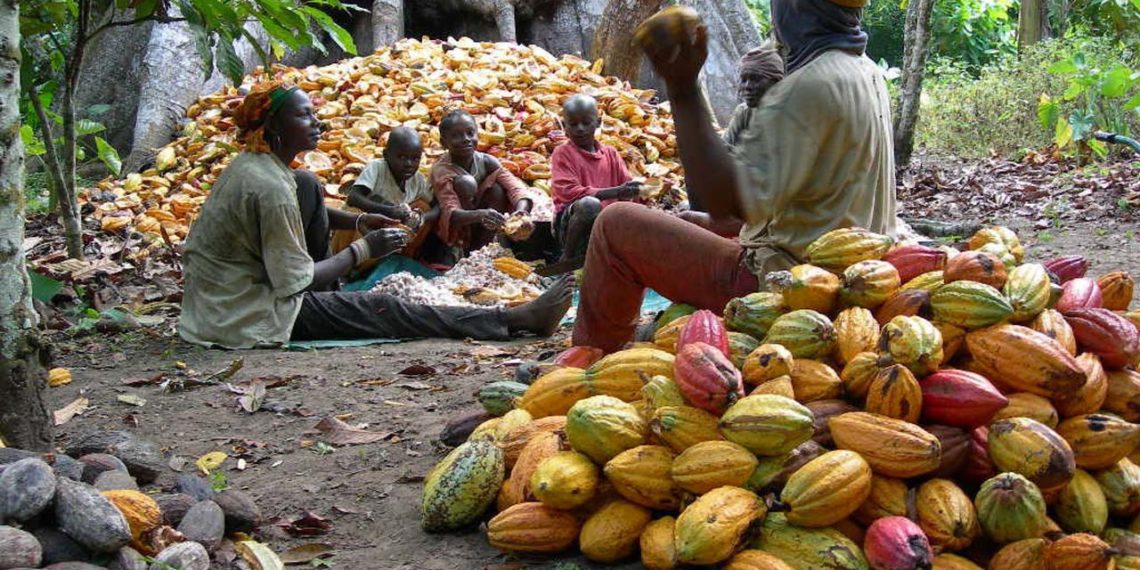
The pressure became evident when Ghana opened the 2026/27 cocoa season on September 25. Some licensed buying companies indicated that they could not use their own funds to purchase cocoa and wait months for reimbursement from COCOBOD. This threatened to leave farmers with harvested beans but no adequately financed buyers.
The new funds are expected to ease that immediate problem by enabling buying companies to resume or increase purchases. However, the financing comes at a time when Ghana’s cocoa production faces significant challenges.
Output is expected to decline by at least 16% during the season, amid adverse weather conditions, crop diseases, ageing farms and the destruction of cocoa-growing land through illegal mining. The possibility of El Niño-related weather disruptions presents an additional risk.
This creates a difficult situation for COCOBOD. The regulator is borrowing to finance cocoa purchases while the volume of beans available may be shrinking. Lower production could reduce export earnings, making it more difficult to repay the debt and meet other financial obligations.
The funds can help purchase available cocoa, but they cannot reverse the damage caused by disease, replace ageing trees or restore farmland lost to illegal mining. Addressing those problems will require sustained investment in production and farm rehabilitation.
For more than three decades, Ghana relied on an annual syndicated loan from international banks to finance cocoa purchases. Introduced during the 1992/93 season, the arrangement allowed COCOBOD to borrow foreign currency before the crop year and repay the facility with proceeds from cocoa exports.
That model began to weaken during the 2023/24 season. A subsequent attempt to secure advance financing from international commodity traders also failed, contributing to payment delays affecting farmers and licensed buying companies.
COCOBOD has since turned to the domestic capital market through Cocoa Capital Plc, a special-purpose vehicle established to issue commercial paper and longer-term debt. The new arrangement is intended to use short-term instruments to finance seasonal cocoa purchases while longer-term bonds help restructure existing short-term obligations.
The shift could reduce Ghana’s dependence on a single annual offshore financing transaction and create investment opportunities for local banks, pension funds, insurers and other institutional investors. It could also help align borrowing with cocoa sales during the season.
However, moving from foreign syndicated loans to domestic borrowing does not eliminate the risks facing the sector. Instead, it changes where those risks are carried.
Local financial institutions could become more exposed to COCOBOD’s financial performance, while the regulator must generate sufficient export revenue to repay investors without repeatedly refinancing maturing debt.
With the latest facility due in June 2027, COCOBOD has a limited period to purchase the beans, export them, collect the proceeds and repay investors.
The 11% interest rate may appear attractive compared with returns available on some other cedi-denominated investments. However, the actual cost and risk of the facility must also be assessed against its repayment structure, maturity and the extent to which cocoa export receivables secure the debt.
The shortfall in the amount raised also deserves attention. Although one auction cannot establish a lasting trend, COCOBOD’s failure to meet its target suggests that the remaining financing cannot be taken for granted.
The domestic market must absorb nearly GH¢13 billion more for the regulator to achieve its GH¢16.3 billion financing ambition. Raising that amount could prove challenging, particularly as the government and private businesses also compete for funding from the same pool of domestic capital.
Beyond securing the money, COCOBOD must ensure that it reaches the farmers who supply the beans.
Earlier in 2026, the regulator announced multibillion-cedi disbursements to licensed buying companies to clear outstanding arrears. Yet some farmers and purchasing clerks continued to report delays in receiving payments. Some buying companies were also burdened with bank debts after borrowing to finance cocoa purchases.
As a result, money transferred to a licensed buying company may first go towards settling overdue bank facilities, operating expenses or earlier obligations before reaching farmers.
COCOBOD will therefore need to monitor not only the amount disbursed but also how quickly the funds move through the purchasing chain. Tracking payments to licensed buying companies, purchasing clerks and individual farmers would help establish whether the new financing is achieving its intended purpose.
Without such oversight, the regulator could successfully raise billions of cedis while farmers continue to wait for payment.
For cocoa farmers, the real measure of success will be whether they receive their money promptly after delivering their beans, rather than the amount COCOBOD manages to raise from investors.
The broader challenge also extends beyond financing. Ghana’s cocoa sector must balance producer prices, production volumes and the cost of purchasing the crop.
A higher producer price can support farmer incomes and discourage smuggling, but sustaining it becomes difficult when international cocoa prices and export earnings cannot adequately cover the cost. Conversely, lowering the producer price could improve the sector’s commercial position but weaken incentives for farmers already facing rising production costs.
Declining output makes the situation more complicated. Smaller harvests mean fewer beans for export and potentially lower revenues to service debt and meet other obligations.
Borrowing can help bridge temporary financing gaps, but it cannot permanently resolve a mismatch between producer prices, export earnings and production levels. If the cost of purchasing cocoa exceeds the revenue generated from sales, continued borrowing could leave COCOBOD increasingly dependent on refinancing.
The GH¢3.39 billion issuance is therefore an important intervention at the start of the new season. It should help ease immediate liquidity constraints and reduce the risk of farmers being unable to sell their cocoa because buyers lack funds.
However, it does not resolve the deeper financial challenges confronting the regulator. COCOBOD must still secure the remaining financing, address outstanding obligations, ensure timely payments to farmers and manage a season in which production is expected to fall.
It must also demonstrate that export earnings will be sufficient to repay the new securities without creating another cycle of borrowing to settle maturing debt.
Ghana’s transition from offshore syndicated loans to domestic capital-market financing marks a significant change in how its cocoa sector is funded. Whether the new approach succeeds will depend on more than the amount of money raised.
The ultimate test will be whether cocoa purchases proceed without disruption, farmers are paid on time and the debt is repaid from the sector’s actual earnings.
For now, the first tranche has provided COCOBOD with some much-needed liquidity. But with GH¢610 million still missing from its initial target and nearly GH¢13 billion left to raise under the broader programme, restoring confidence in the new financing model remains a major challenge.