

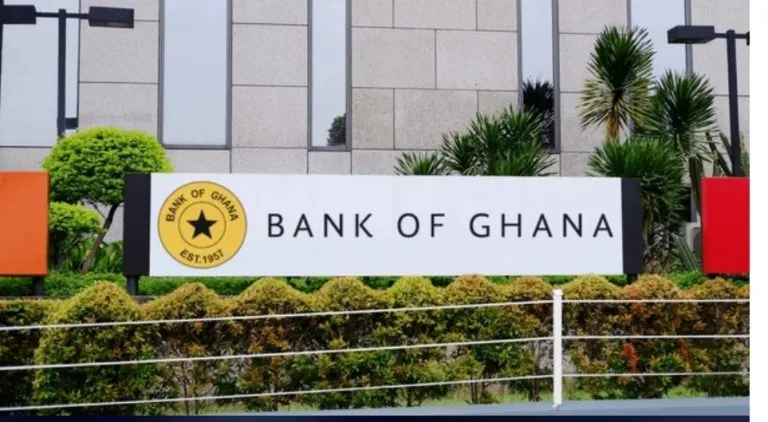
The Bank of Ghana (BoG) has absorbed GH¢14.72 billion from the financial system through the sale of 14-day central bank bills, in a major short-term liquidity management operation.
The bills were issued under Tender 881 on September 28 and cleared at a weighted average interest rate of 10.5% per annum, according to the central bank’s official results.
The corresponding weighted average discount rate was 10.4578%, with bids submitted within an exceptionally narrow range of 10.4577% to 10.4578%. Interest-rate bids also ranged between 10.4999% and 10.5%.
The limited variation in the bids suggests that participating financial institutions had a strong consensus on the rate at which they were prepared to place funds with the central bank.
BoG bills are monetary policy instruments used to manage liquidity in the banking system. Unlike Treasury bills, which are issued by the government primarily to finance public expenditure, central bank bills are designed to temporarily withdraw excess liquidity and influence short-term monetary conditions.
The GH¢14.72 billion placed under the latest tender will therefore remain with the Bank of Ghana for 14 days before the bills mature.
However, the size of the operation should not automatically be interpreted as GH¢14.72 billion of new liquidity being removed from the financial system.
Some of the funds could be replacing BoG bills that matured around the same period. Without details on the value of maturing instruments, the net liquidity impact of the operation cannot be determined from the gross tender figure alone.
If the entire GH¢14.72 billion represented a fresh withdrawal, the operation would amount to significant tightening. If a substantial portion simply refinanced maturing bills, its impact would instead be closer to maintaining existing liquidity conditions.
The 10.5% interest rate is 3.5 percentage points, or 350 basis points, below the Bank of Ghana’s current 14% monetary policy rate. The difference reflects the fact that the policy rate serves as a broader signal of monetary conditions, while the rate on the 14-day bill reflects the price accepted in a specific liquidity-management operation.
The strong placement also indicates that financial institutions had significant short-term funds available and were willing to commit them to a low-risk instrument with a two-week maturity.
This does not necessarily mean banks are unwilling to lend to businesses and households. Banks may prefer central bank instruments because of regulatory liquidity requirements, credit-risk concerns, limited demand from qualified borrowers or the structure of their balance sheets.
The scale of the operation nevertheless raises a broader question about how much liquidity in Ghana’s financial system is reaching the productive economy and how much is being held in government and central bank securities.
The latest operation comes as the Bank of Ghana manages monetary conditions amid relatively low inflation, pressure on the cedi and changes in the country’s international reserves.
By withdrawing excess cedi liquidity, the central bank can reduce the amount of domestic currency potentially available for foreign-exchange purchases, while also helping to moderate demand and inflationary pressures.
The 14-day maturity gives the Bank of Ghana flexibility to reassess market conditions relatively quickly. However, it also means the central bank may need to roll over the instruments if the liquidity it has absorbed remains in the system when the bills mature.
Repeated rollovers can create interest costs for the central bank, particularly when large amounts are involved.
At an annualised rate of 10.5%, the interest cost on a single 14-day placement is considerably smaller than the GH¢14.72 billion principal. But repeated issuance over time could create a significant cumulative cost.
The central question, therefore, is whether the large-scale use of BoG bills is part of routine liquidity management or reflects a more persistent need to sterilise liquidity entering the financial system through other operations.
Greater transparency on outstanding BoG bills, maturities, net issuances and associated interest costs would help analysts assess the longer-term impact of these operations.
For now, Tender 881 shows that financial institutions were willing to place GH¢14.72 billion with the central bank for two weeks at 10.5%.
The full monetary-policy impact, however, will depend on how much of that amount represents a fresh withdrawal after accounting for BoG bills that matured during the period.
Until that figure is known, GH¢14.72 billion should be viewed as the gross amount absorbed rather than a measure of the net tightening of liquidity in the financial system.