

Amazon is considering Ghana as a potential partner as it expands its satellite broadband network across Africa, raising the prospect of improved internet connectivity for underserved communities.
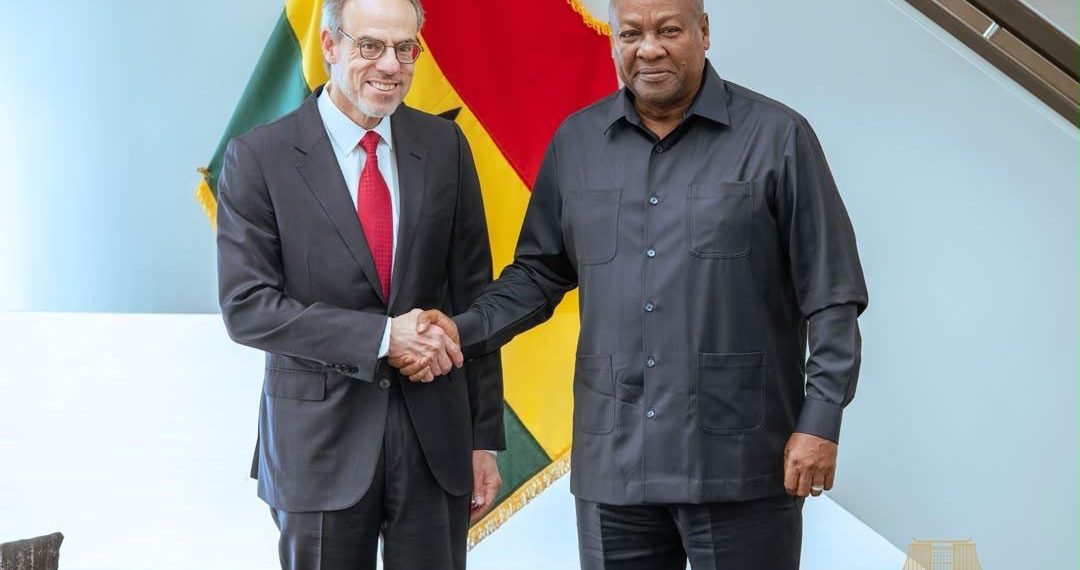
The discussions were held between President John Dramani Mahama and senior Amazon executives on the sidelines of the 81st United Nations General Assembly in New York.
David Zapolsky, Amazon’s Senior Vice-President and Chief Global Affairs and Legal Officer, described the engagement as productive and said Ghana could become a partner in the company’s efforts to expand broadband access across West Africa and the wider continent.
“Amazon Leo, our low-Earth-orbit satellite network, can help bring fast, reliable internet to communities across West Africa and the continent,” Mr Zapolsky said after the meeting.
Amazon Leo, formerly known as Project Kuiper, uses a network of low-Earth-orbit satellites to provide broadband connectivity, particularly in areas where extending fibre-optic networks or conventional telecommunications infrastructure can be difficult or costly.
However, the discussions with Ghana remain at an exploratory stage. No formal agreement, investment figure, implementation timeline or coverage target has been announced.
For Ghana, a potential partnership could support efforts to close the country’s digital divide, particularly in rural and underserved communities where access to reliable and affordable high-speed internet remains a challenge.
While cities such as Accra continue to attract significant investment in telecommunications and digital services, some communities outside major urban centres still face weak coverage, inconsistent internet speeds and relatively high data costs.
Satellite broadband could provide an alternative in areas where traditional infrastructure is difficult to deploy. Improved connectivity could support digital education, telemedicine, financial services, agriculture, e-commerce and remote work.
The affordability of the service, however, will be important. The cost of equipment, installation and monthly subscriptions could determine whether satellite broadband becomes accessible to ordinary households and small businesses or remains largely a service for wealthier consumers and corporate clients.
The discussions with Amazon form part of President Mahama’s broader push to strengthen Ghana-US relations around trade, investment, technology, skills development and job creation.
At a separate US-Ghana Presidential Roundtable in New York, President Mahama called for the relationship between the two countries to be placed on a more commercially productive footing.
A potential Amazon partnership could align with that objective, particularly if it creates opportunities for Ghanaian companies to participate in the supply and delivery of the service.
Amazon has already been pursuing partnerships to expand its connectivity operations in Africa. In South Africa, the company has agreed to work with fixed-internet provider Herotel on a satellite broadband service expected to launch commercially in 2027.
Under that arrangement, Herotel’s local presence will support installation, customer service and field operations, while Amazon provides the satellite technology.
A similar model could potentially be explored in Ghana, with local companies playing a role in distribution, installation and customer support.
Any eventual partnership would also have to address regulatory issues, including licensing, spectrum use, competition, cybersecurity, taxation and data protection.
Ghana’s growing focus on artificial intelligence and computing infrastructure also makes data governance an important consideration. The government is committing US$250 million towards national AI and computing infrastructure as part of efforts to improve access to high-performance computing for researchers, universities and technology businesses.
The country will therefore need to balance access to global technology with efforts to develop local digital capabilities and protect strategic data.
Ghana’s position as host of the African Continental Free Trade Area Secretariat could also strengthen its appeal to technology companies looking to expand across the continent.
For now, however, the Amazon engagement remains preliminary. The significance of the discussions will depend on whether they lead to a formal investment, affordable connectivity, local job creation and wider access to reliable internet.
Key questions will include how much Amazon intends to invest, which communities could be prioritised, what consumers would pay and how Ghanaian businesses would participate in the eventual partnership.
If an agreement is reached, Amazon Leo could add another option to Ghana’s connectivity landscape and potentially help extend broadband access to communities that remain underserved by traditional telecommunications infrastructure.