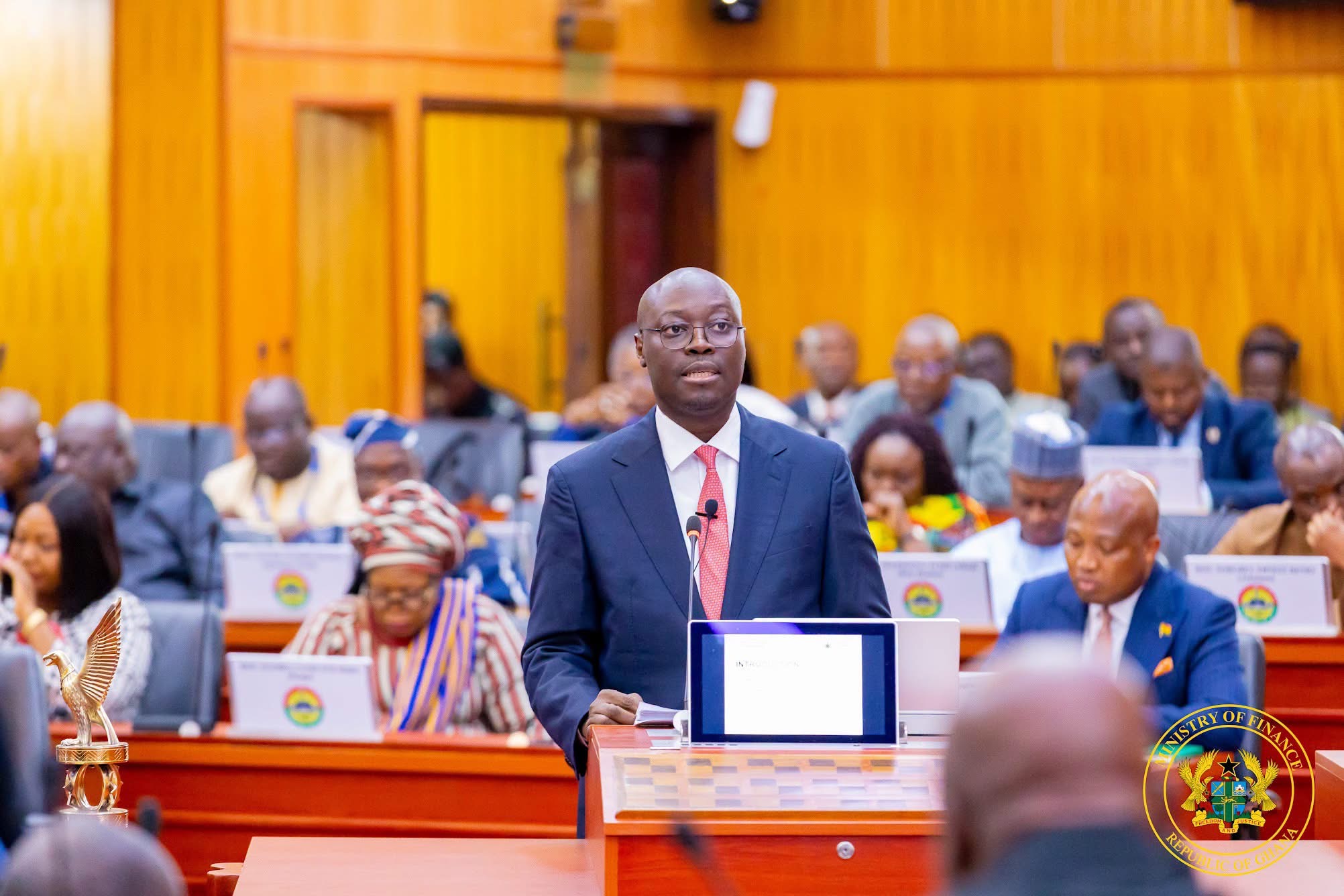



Finance Minister Dr Cassiel Ato Forson has announced plans to establish four major rice development hubs across Ghana, with the aim of creating about 125,000 jobs and boosting local rice production.
The hubs will be located in the Afram Plains, Volta Basin, Western Ghana and Northern Ghana, with each designed to support the entire rice production chain, from irrigation and mechanisation to storage, processing, packaging and distribution.
Presenting the 2027 Budget Statement and Economic Policy to Parliament on Thursday, November 12, Dr Ato Forson said the initiative would bring an additional 100,000 hectares of land under rice cultivation.
He said the government was targeting yields of between five and six metric tonnes per hectare to increase domestic supply and reduce Ghana’s dependence on imported rice.
To attract private sector investment, the Finance Minister announced targeted tax incentives for businesses investing in irrigation systems, mechanisation equipment, silos, modern rice mills, packaging facilities and logistics.
According to him, the incentives are expected to lower investment costs, reduce post-harvest losses and improve the competitiveness of locally produced rice.
Dr Ato Forson also announced plans to amend public procurement laws to make it mandatory for public institutions, including schools and hospitals, to prioritise locally grown foodstuffs in purchases funded with public money.
He explained that the policy would provide farmers with a reliable market for their produce while ensuring that government expenditure supports local businesses, agricultural growth and employment.
“The principle is simple. The money of the Ghanaian people must create opportunities for the Ghanaian people,” he told Parliament.
“If you spend their money to put rice on the table, that rice must come from their farms,” he added.
The proposed rice hubs form part of the government’s broader efforts to strengthen Ghana’s agricultural sector, expand domestic production and reduce the country’s reliance on food imports.