


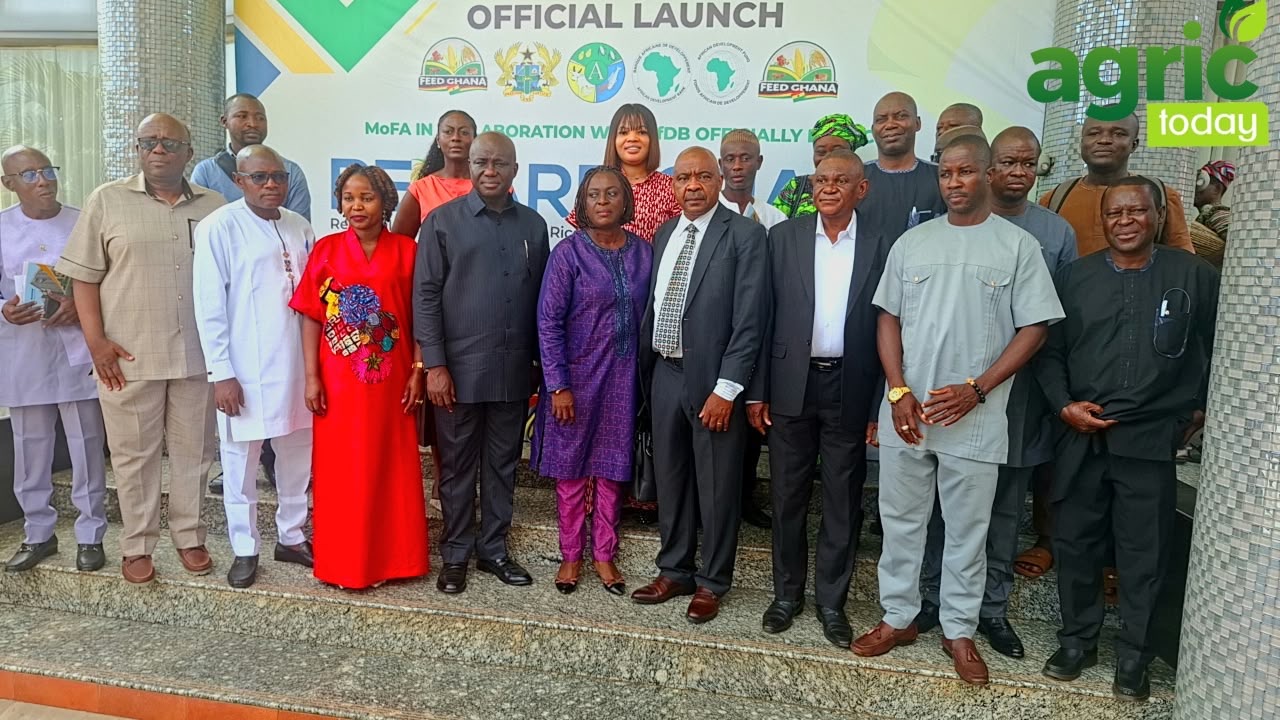
Ghana has launched a US$18.8 million agricultural project aimed at reducing the country’s dependence on imported rice and achieving self-sufficiency by 2028.
The Regional West Africa Resilient Rice Value Chains Development Project, Ghana (REWARD-GHANA), is expected to boost domestic rice production, strengthen the agricultural value chain and create employment opportunities, particularly for women and young people.
Ghana currently spends about US$500 million annually on rice imports. However, domestic milled rice production has increased from 650,000 metric tonnes in 2024, representing 38 per cent of national demand, to 960,000 metric tonnes in 2025, accounting for 56 per cent.
Despite the progress, the country still faces a 44 per cent production gap as it works towards meeting its rice consumption needs locally.
The project, which falls under the government’s Feed Ghana Programme, received a US$18.8 million grant from the African Development Bank (AfDB).
Speaking at the launch, the Minister of Food and Agriculture, Eric Opoku, commended the Bank for its financial support, describing the investment as a demonstration of confidence in Ghana’s agricultural potential and development priorities.
He noted that rice had become the second most important staple food in Ghanaian households, moving beyond an occasional meal to become a major part of the country’s daily diet. He said this presented significant opportunities for farmers, agribusinesses and the wider economy.
The project will be implemented in seven districts across Ghana’s northern belt: Tamale Metropolitan, Mion, Savelugu, Mamprugu-Moagduri, West Gonja, Wa Municipal and Nandom.
According to the Minister, the initiative will cover 3,200 hectares of farmland and directly benefit about 20,000 smallholder farmers, including women and young people. It is also expected to support increased rice production and improve the livelihoods of participating farmers.
The intervention will provide farmers with access to quality seeds, improved water management systems, modern agricultural machinery and technologies, as well as efficient processing facilities.
These measures are expected to help farmers manage the effects of climate variability, reduce post-harvest losses and improve the quality and competitiveness of locally produced rice.
Mr Opoku said the government’s ambition was to make Ghanaian rice competitive with imported brands in supermarkets, restaurants, hotels, markets and households.
He therefore urged private sector players to partner with farmers, invest in modern technologies and establish reliable purchasing arrangements to guarantee markets for locally produced rice.
He also encouraged farmers, particularly women and young people, to take advantage of the opportunities provided by the project, work closely with agricultural extension officers and adopt improved farming practices.
He assured stakeholders that the government would ensure transparency, accountability, efficiency and timely implementation of the project.
The Divisional Manager of the Agriculture and Agro-Industry Department at the African Development Bank, Dr Demain Ihedioha, said the project was intended to translate the objectives of the Feed Ghana Programme into practical interventions that would improve livelihoods.
He noted that Ghana had the land, water resources, technical expertise and hardworking farmers needed to significantly improve rice production and processing.
Dr Ihedioha, however, stressed the importance of prioritising farmers in the country’s quest for food self-sufficiency, arguing that their welfare and productivity were central to national development.
He called on the government to support the commercialisation, advertising and promotion of Ghanaian rice to encourage greater patronage of locally produced brands.
He also urged the Ministry of Information to intensify public education on the quality and benefits of locally produced rice.
According to him, sustained communication through television and radio, backed by research on the quality and characteristics of Ghanaian rice, could help change public perceptions and increase consumption.
He commended the government’s efforts to improve agricultural productivity and expressed hope that the partnership would help make the Feed Ghana agenda a reality.
Meanwhile, a representative of the Ministry of Finance, Mr Ebenezer Botchwey, praised the African Development Bank for supporting the initiative, describing it as an important step towards reducing Ghana’s rice import bill.
He reiterated that the project would create opportunities for about 20,000 smallholder farmers, with particular attention to women and young people.
Mr Botchwey also assured stakeholders that the necessary funds would be made available to support the implementation of the project.