

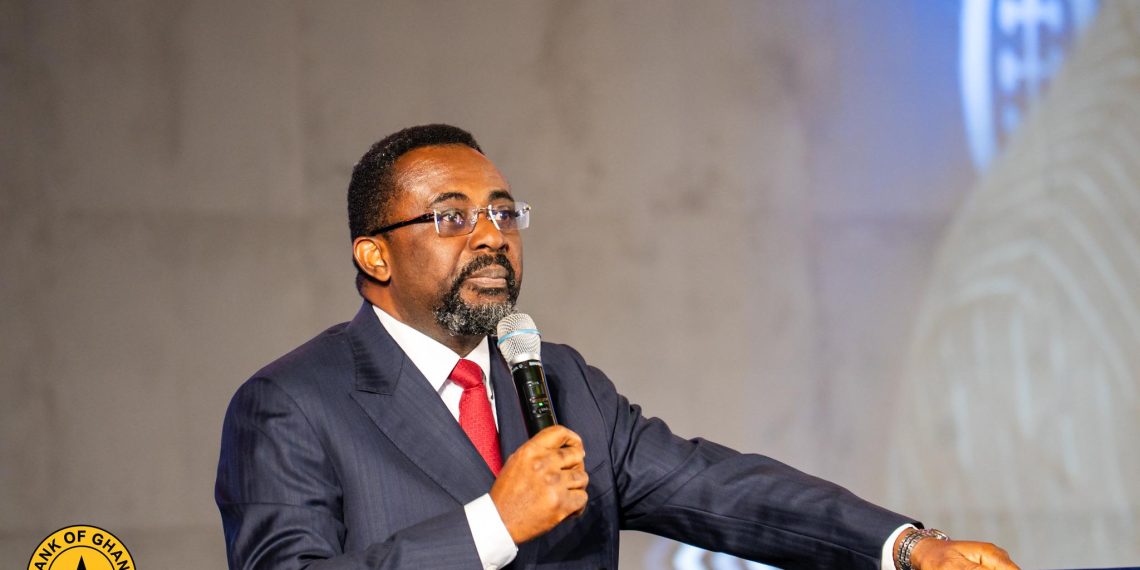
Ghana is seeking to transform billions of dollars in annual remittance inflows from simple household support into a major source of investment capital, with Governor of the Bank of Ghana, Dr Johnson Pandit Asiama, outlining plans to channel diaspora funds into productive sectors of the economy.
Speaking at the Ghana-UK Investment Summit, Dr Asiama said Ghana receives an estimated $8 billion in remittances each year, making it one of the country’s most significant sources of foreign exchange. However, he noted that much of these funds continue to support household consumption, leaving substantial untapped potential for long-term investment and economic development.
According to the Governor, Ghana must now develop the financial structures needed to convert a portion of these remittance inflows into investments that can support businesses, housing, infrastructure projects, small and medium-sized enterprises, and other productive sectors.
Dr Asiama explained that improving macroeconomic conditions and the rapid growth of Ghana’s digital financial ecosystem present a unique opportunity to rethink how diaspora funds are mobilised and invested within the economy.
He disclosed that the Bank of Ghana is working closely with financial sector stakeholders to strengthen digital payment systems, regulatory frameworks and market infrastructure to make investment channels safer, more transparent and more efficient for Ghanaians living abroad.
The Governor said payment systems are increasingly evolving beyond their traditional role as transaction platforms and are becoming a gateway to broader financial services, including savings, credit and investment opportunities.
While remittances have long supported education, healthcare, housing and family businesses, policymakers are now exploring ways to channel part of these funds into structured financial products such as diaspora bonds, investment funds, digital savings products and capital market instruments.
Dr Asiama stressed that creating trusted and accessible investment platforms will be critical to encouraging greater diaspora participation in Ghana’s economic development.
He argued that successfully converting remittance flows into productive investment could strengthen foreign exchange reserves, deepen the capital market, support private sector growth and reduce the country’s reliance on external borrowing.
However, he acknowledged that achieving this objective will require more than policy announcements. The diaspora community, he said, will demand transparency, investor protection, competitive returns and confidence that their investments are being managed responsibly.
The Governor therefore called for stronger collaboration among banks, fintech firms, fund managers, capital market operators and regulators to develop investment products that are both attractive and commercially viable.
Dr Asiama maintained that innovation must be supported by strong regulation to ensure sustainable growth, adding that the next phase of Ghana’s financial market development will be driven by digital finance, payment interoperability and enhanced regulatory oversight.
He emphasised that the country’s remittance economy must evolve beyond consumption support and become a strategic tool for financing long-term national development.
According to him, if Ghana can successfully direct part of its annual remittance inflows into productive ventures, the country could unlock new sources of capital for job creation, industrial expansion, housing development and export growth.
“The challenge now is execution,” Dr Asiama noted, stressing that building trust and delivering credible investment opportunities will be essential to turning diaspora interest into sustainable economic transformation.