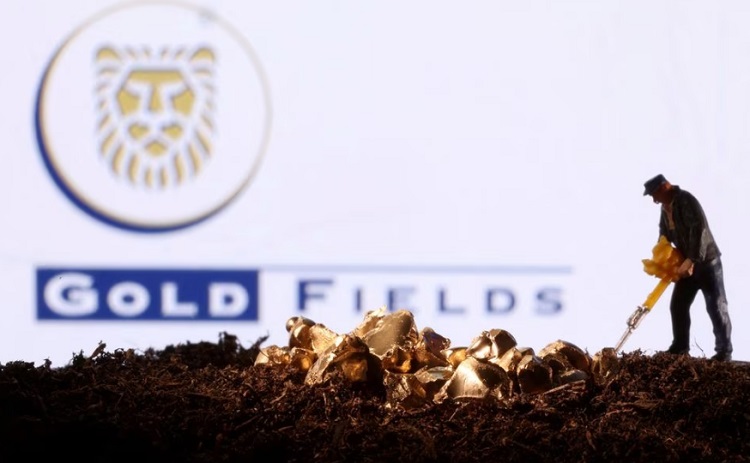
Gold Fields’ departure from the Damang mine has reignited one of the most difficult questions in Ghana’s extractive sector: after decades of gold production, billions in mineral wealth and years of fiscal concessions, what lasting value did Ghana truly gain beyond taxes, royalties and corporate social responsibility projects?
For years, the South African mining giant portrayed its operations in Ghana as a model of responsible mining and long-term investment. Through the Gold Fields Ghana Foundation, the company says it has invested more than US$109 million in education, health, water, sanitation and livelihood projects in communities around Tarkwa and Damang since 2004.
But the company’s exit from Damang is forcing a broader national conversation that goes beyond community projects and statutory tax payments.
At the centre of the debate is whether Ghana received fair and transformative value from one of its strategic mineral assets, or whether the country ultimately absorbed hidden costs through tax concessions, underinvestment, weakened local value retention and the eventual decline of a mine now requiring massive capital to revive.
The controversy intensified after Ghana rejected Gold Fields’ lease renewal application and moved to transfer the Damang mine to local ownership under Engineers & Planners (E&P). Government officials argued that the company had failed to declare verifiable reserves and insisted the country must secure greater value from its mineral resources.
What has drawn even greater attention is the estimated cost of reviving the mine. Reports indicate that bringing Damang back to full life may require between US$600 million and US$1 billion in fresh investment.
That figure alone has raised uncomfortable questions for policymakers and industry observers. If Damang had been left in a healthy and sustainable condition, why would such a huge amount now be needed to restore operations? And if those investments were necessary, should they not have been made earlier during Gold Fields’ years of control?
Gold Fields ceased active mining at Damang in 2023 and shifted to processing stockpiles under what it described as an end-of-life strategy. In 2024, the mine produced about 135,000 ounces of gold, accounting for roughly six per cent of the company’s total annual output.
The company maintained that Damang no longer had sufficient economically viable reserves to justify major reinvestment.
However, some Ghanaian officials and industry insiders disagree with that assessment. According to sources familiar with the geology of the mine, Damang may still contain substantial untapped gold deposits at deeper levels. Critics argue that the mine was not necessarily exhausted, but rather underinvested.
That distinction is critical because it shifts the debate from geology to corporate priorities. If deeper reserves existed but required higher capital expenditure, then the central issue becomes whether Gold Fields fully optimised Ghana’s resource or simply prioritised its own global investment strategy.
This is where many analysts believe Ghana must rethink how it measures mining benefits.
Taxes and royalties are often presented as proof of corporate contribution, but critics insist those payments represent only the minimum legal obligation for extracting a sovereign resource. They argue that true value should also be measured by long-term reinvestment, industrial development, worker welfare and the country’s ability to retain wealth locally.
Gold Fields benefited from major fiscal concessions under Ghana’s 2016 Development Agreement covering both Tarkwa and Damang. Public accounts of the agreement indicated that the company enjoyed a reduced corporate tax rate from 35 per cent to 32.5 per cent, alongside adjustments to royalty arrangements and other stability protections.
Such incentives are typically granted with the expectation that mining companies will deepen investment, extend mine life, create stronger local industries and secure sustainable economic benefits for the host country.
The Damang situation has raised doubts about whether that broader bargain was fully achieved.
Critics claim the company generated significant cash flows from its Ghanaian operations while directing major investment attention to projects elsewhere. They argue that Damang was gradually allowed to decline while profits continued to support shareholder returns and Gold Fields’ global portfolio.
At the same time, questions have also emerged around labour and local economic impact. Industry sources suggest that the transition toward contract mining arrangements may have significantly reduced worker compensation and benefits compared to earlier employment structures. If accurate, this would mean reduced household income and weaker economic circulation within mining communities.
Beyond jobs and taxes lies an even larger issue: whether decades of mining have translated into meaningful Ghanaian industrial growth.
Observers increasingly argue that the real measure of success should not simply be the volume of gold exported, but the extent to which mining helped build local expertise, strengthen Ghanaian firms, develop technology and create long-term economic resilience beyond extraction itself.
This is why the transfer of Damang to Engineers & Planners is being viewed as more than a routine lease decision. It signals a tougher policy direction by the Ghanaian state and a growing determination to place more strategic mineral assets under local participation.
Government officials say E&P secured the lease after demonstrating access to over US$500 million in financing and meeting key technical, operational and local-content requirements.
Still, analysts caution that local ownership alone will not guarantee better outcomes. Success will depend heavily on transparency, technical competence, environmental responsibility and strict regulatory oversight.
The Damang case may ultimately become a turning point in Ghana’s mining history.
For years, mining success has largely been measured through taxes, royalties and visible community projects such as schools, clinics and boreholes. But many now believe those indicators are too narrow for a country seeking genuine long-term transformation from its natural resources.
The emerging argument is that Ghana must begin evaluating mining companies on broader standards: how well they optimise national resources, how much value remains within the local economy, how consistently they reinvest, how workers are treated and whether mining communities are left economically resilient after extraction ends.
Measured against those standards, Gold Fields’ legacy at Damang is likely to remain under intense national scrutiny for years to come.