

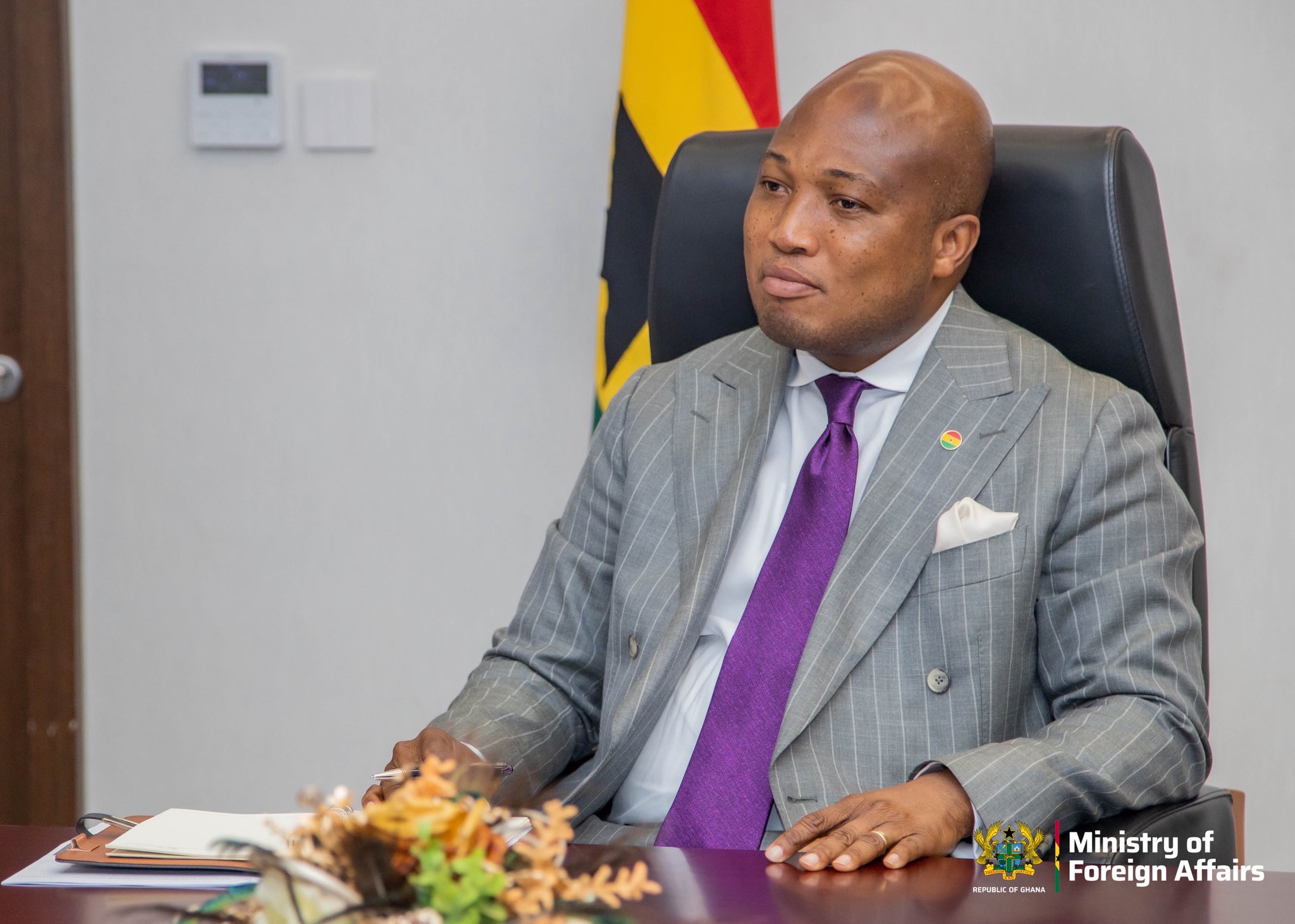
The Minority Caucus in Parliament has escalated pressure on President John Dramani Mahama to remove Foreign Minister Samuel Okudzeto Ablakwa, arguing that his leadership has placed Ghana’s diplomatic credibility and the welfare of citizens abroad at serious risk. Addressing a press conference on Tuesday, January 20, 2026, the Minority said the country could no longer afford what it described as “reckless and uncoordinated” foreign policy management.
Speaking on behalf of the caucus, Nana Asafo-Adjei Ayeh said recent diplomatic tensions, particularly involving Ghana’s relationship with the United States, reflect systemic failures within the Foreign Affairs Ministry. According to the Minority, the lack of transparency surrounding migration and visa-related engagements has created uncertainty for thousands of Ghanaians at home and in the diaspora.
The caucus demanded urgent public accountability from the ministry, calling for a detailed briefing on all engagements between Ghana and U.S. authorities over the past 18 months. This, they said, must include explanations for Ghana’s reported placement on a U.S. list of 75 countries, as well as the ministry’s plan to reverse the situation. They also called for a clear assessment of the economic consequences of any visa restrictions, particularly the potential loss of remittances that support families and the broader economy.
Beyond disclosure, the Minority criticised what it sees as a departure from established diplomatic norms. It urged the government to rebuild strained consular relations through structured engagement, including the creation of a high-level technical working group with U.S. officials to resolve outstanding migration documentation issues. The caucus further proposed the appointment of a special presidential envoy to oversee diaspora and migration affairs, stressing that such sensitive matters require focused and experienced leadership.
The Minority’s statement, however, went beyond policy prescriptions and questioned the suitability of the Foreign Minister himself. According to the caucus, Hon. Ablakwa’s style of diplomacy has prioritised public messaging over measurable outcomes. “He has chosen applause over achievement and rhetoric over results,” the statement noted, warning that such an approach undermines Ghana’s standing in complex bilateral relationships.
In a direct appeal to the President, the Minority said continued confidence in the Foreign Minister would amount to ignoring the national interest. “The welfare of millions of Ghanaians and Ghana’s reputation in the world are at stake,” the caucus argued, insisting that leadership change at the Foreign Affairs Ministry has become unavoidable.
The caucus concluded by urging civil society groups, professional associations, and diaspora organisations to lend their voices to the call for reform. Framing the issue as one of national importance rather than party politics, the Minority stressed that safeguarding Ghana’s international credibility and protecting its citizens abroad must rise above partisan considerations.