
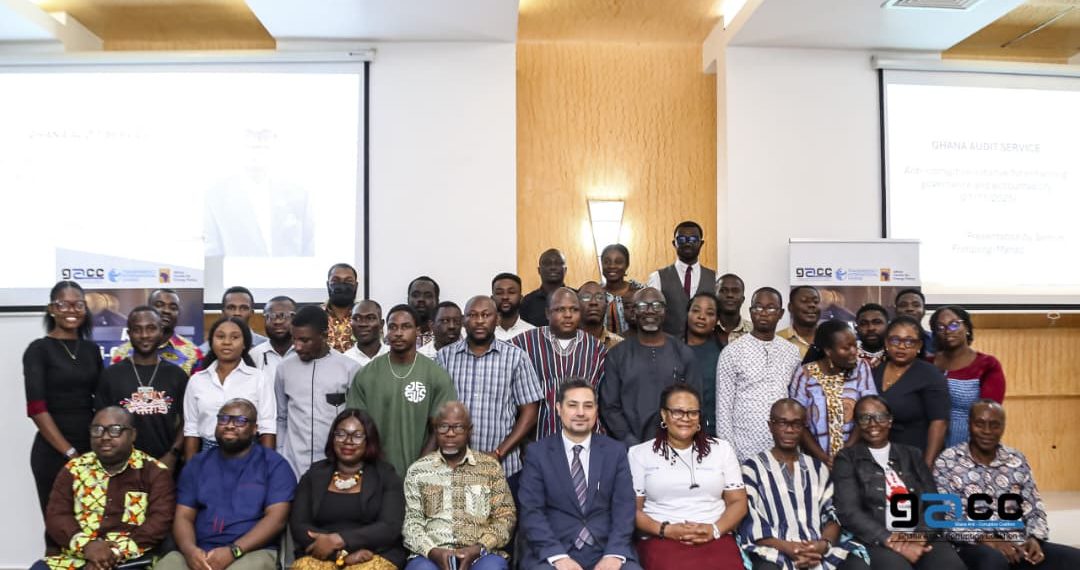
A group of journalists in Accra recently participated in an intensive workshop focused on governance and anti-corruption reforms in Ghana. The one-day training was organized by the Ghana Anti-Corruption Coalition (GACC), in collaboration with the Ghana Integrity Initiative (GII) and the Africa Centre for Energy Policy (ACEP). Its aim was to equip journalists from both public and private media with practical tools to strengthen their reporting on corruption and governance issues, while also collecting their feedback on effective strategies to tackle these challenges.
Funded by the United Kingdom’s Foreign, Commonwealth & Development Office (FCDO), the workshop is part of a broader initiative titled “An Anti-Corruption Initiative for Enhancing Governance and Accountability,” launched in 2024. The project seeks to empower the media to deliver accurate and reliable information, enabling citizens to hold public institutions accountable.
During the workshop, Madam Beauty Emefa Narteh, Executive Secretary of GACC, emphasized the importance of practical solutions to governance challenges. She highlighted the media’s role as a powerful agent for social change and development, stressing that continuous advocacy and the application of knowledge from such trainings are essential to ensure the public receives accurate updates on anti-corruption efforts.
Professor John Osae Kwapong, Lead for the Democracy Project, underscored the media’s responsibility in moderating Ghana’s increasingly polarized public discourse. He called on journalists to serve as independent fact-checkers, helping to curb misinformation. Kwapong explained that the workshop also aimed to gather insights from journalists on the most effective approaches to governance and anti-corruption reporting.
Key topics covered included the Operation Recover All Loot initiative, the role of the Office of the Special Prosecutor, the Attorney General’s Report, and findings from the Afrobarometer Survey Round 11. These resources provide journalists with essential data and context to hold government institutions accountable. In his closing remarks, Kwapong encouraged participants to conduct thorough research, engage with relevant experts, involve the public, and collaborate with institutions to maximize their impact.
Ghana’s pursuit of transparent governance relies heavily on the media’s watchdog role. By exposing corruption, scrutinizing those in power, and promoting good governance, journalists play a critical part in informing citizens and influencing policy. Despite progress in democratic governance over the past three decades, challenges persist, making the role of well-informed media professionals more important than ever.
The GACC workshop represents a significant step toward strengthening the integrity and effectiveness of journalism in Ghana, ensuring that the media continues to serve as a robust force for transparency and accountability.