

The Bank of Ghana (BoG) has called on journalists and media organisations to exercise greater responsibility when reporting on developments in the foreign exchange market, warning that poorly contextualised reports on the cedi can fuel fear, speculation and unnecessary market volatility.
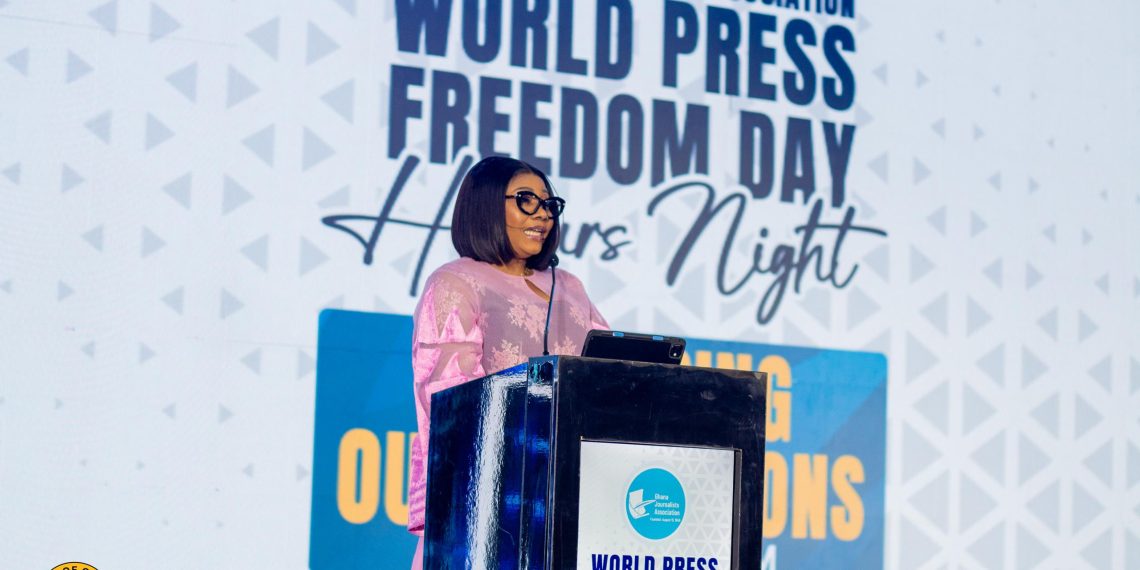
Speaking at the World Press Freedom Honours Night 2026 in Accra, Second Deputy Governor of the Bank of Ghana, Mrs. Matilda Asante-Asiedu, stressed that fluctuations in the value of the cedi are a normal feature of Ghana’s managed floating exchange rate regime and should not automatically be portrayed as signs of economic distress.
“Ghana operates a managed floating exchange rate regime. In such a system, daily movements, both appreciation and depreciation, are normal. They reflect market activity, not necessarily crisis conditions,” she explained.
According to her, reports that focus on currency movements without proper context can create panic among businesses, households and investors, encouraging speculative demand for foreign currency and increasing pressure on the market.
“When these movements are reported without proper context, they can trigger unnecessary fear, leading to speculative demand for foreign currency and heightened volatility,” she said, adding that market sentiment can sometimes influence behaviour more strongly than economic fundamentals.
Mrs. Asante-Asiedu noted that currency stability has a direct impact on the lives of Ghanaians, affecting the prices of imported goods, transportation, rent, medicines, food and household savings. She said a stable cedi allows businesses to plan effectively while helping households preserve the value of their income and savings.
She emphasised that maintaining currency stability is a shared national responsibility that extends beyond the central bank to include policymakers, businesses, households and the media.
The Deputy Governor highlighted recent improvements in Ghana’s macroeconomic performance, pointing to lower inflation, relative exchange rate stability and stronger growth prospects. She assured that the Bank of Ghana would continue to pursue prudent monetary policies aimed at sustaining stability and supporting long-term economic growth.
“Going forward, the Bank will continue to implement a prudent policy mix to sustain stability. That stability remains the foundation for sustainable growth and long-term prosperity,” she stated.
Beyond economic issues, Mrs. Asante-Asiedu underscored the critical role of the media in strengthening democracy and national development. While commending Ghana’s progress in the latest World Press Freedom Index, where the country moved from 52nd to 39th place globally, she cautioned that misinformation, disinformation and declining public trust remain major challenges facing the media industry.
She described credibility as journalism’s most valuable asset, arguing that trust influences audience loyalty, ratings and advertising revenue, particularly in a media environment dominated by private ownership.
“Credibility is the currency of journalism; once spent recklessly, it is difficult to regain,” she said.
Drawing parallels between journalism and central banking, she noted that public trust is as essential to media institutions as confidence is to the financial system. According to her, both sectors can survive temporary challenges as long as trust remains intact, but recovery becomes difficult once confidence is lost.
Mrs. Asante-Asiedu said responsible journalism plays a crucial role in supporting monetary policy because public understanding of economic decisions often shapes expectations and behaviour.
“For this reason, we rely heavily on a free and responsible press to help explain our work, anchor expectations and support national development through our mandate of price and financial stability,” she said.
She highlighted several initiatives introduced by the Bank of Ghana to strengthen engagement with journalists, including media training programmes, post-Monetary Policy Committee briefings, enhanced policy transparency, regional media engagement and dedicated communication channels for journalists.
The Bank was recognised at the event for its contribution to press freedom and public engagement. Mrs. Asante-Asiedu expressed appreciation for the recognition and reaffirmed the Bank’s commitment to working closely with the media to improve economic reporting and public understanding of policy issues.
She concluded by urging journalists to prioritise accuracy, context and public interest in their reporting.
“A responsible press informs without inflaming, questions without prejudging, and reports without distorting,” she said.