


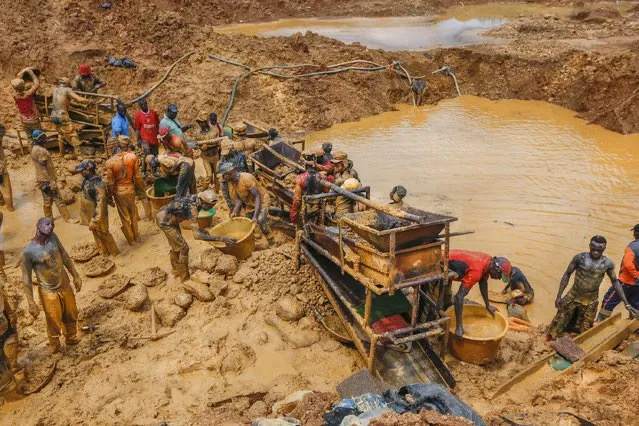
The Environmental Protection Authority (EPA) has cautioned residents in illegal mining communities against drinking water from polluted rivers and streams, warning that boiling the water does not remove dangerous chemicals left behind by galamsey activities.
David Agyekum Baidoo, an official at the EPA’s Twifo Praso office in the Central Region, said many rural communities without access to pipe-borne water continue to depend on contaminated water sources for their daily household needs.
Speaking to the Ghana News Agency on Tuesday, November 10, he explained that although boiling kills bacteria, it does not eliminate toxic heavy metals and chemicals such as mercury, cyanide and arsenic.
He described as false the belief that boiling galamsey-contaminated water makes it safe for drinking and other domestic purposes.
Baidoo warned that continued exposure to the polluted water, whether through drinking, bathing, crop irrigation or livestock farming, could lead to serious health complications, including kidney damage, neurological disorders and birth defects.
His warning comes amid growing concerns about the long-term environmental impact of illegal mining. A recent public forum in Praso heard that rivers affected by galamsey could take up to 100 years to recover their natural purity.
The scale of the contamination has also been highlighted by an EU-backed baseline study in northern Ghana, which detected cadmium in all soil samples and mercury in 94 per cent of samples collected from 30 illegal mining communities in the Savannah Region.
Baidoo urged households in affected areas to seek treated water and other safe alternative sources instead of relying on polluted rivers and streams.
He also called on residents to report illegal mining activities to security agencies to help protect water bodies that support drinking water supplies, agriculture and fisheries.
Beyond the threat to human health, he said illegal mining continues to destroy forests, farmlands and soil, putting rural livelihoods and national food security at risk.
He clarified that the EPA was not against mining but remained committed to ensuring that operators obtained the necessary environmental permits and complied with regulations for responsible and sustainable mining.