


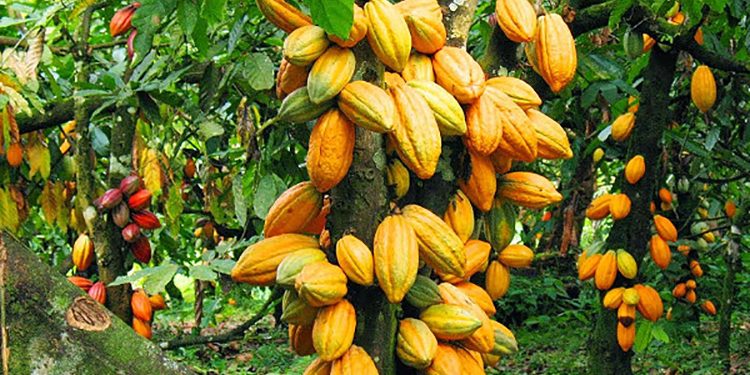
Ghana’s cocoa sector is facing mounting pressure from falling international prices, slowing growth and concerns over a possible decline in production. However, beyond these immediate challenges, attention is increasingly shifting to another important issue: the country’s limited capacity to process more of its cocoa locally.
For decades, cocoa has remained one of Ghana’s major sources of export revenue. However, recent developments have highlighted the risks of relying heavily on a raw commodity whose market prices and production levels are often affected by external factors.
International cocoa prices, which rose to about US$10,000 per metric tonne in early 2025, have since dropped significantly, trading between US$5,420 and US$5,447 as of Tuesday.
The decline in global prices is not the only concern facing the industry. Data from the Ghana Statistical Service indicate that growth in the cocoa sector slowed to 5.2% in the second quarter of 2026, compared with 14.2% during the same period a year earlier.
The sector is also facing potential weather-related challenges. The Ghana Meteorological Agency has warned that a very strong El Niño event could affect agriculture, water resources and hydroelectric power generation during the 2026/2027 period.
Adding to these concerns, the Ghana Cocoa Board (COCOBOD) is projecting at least a 16% decline in cocoa production for the 2026/2027 crop season. Unfavourable weather conditions, swollen shoot disease, ageing cocoa farms and illegal mining activities have been identified as some of the major threats to production.
With these challenges putting additional pressure on the industry, the need for Ghana to increase local cocoa processing has become more pressing.
The country has set a target of processing at least 50% of its cocoa locally, with installed grinding capacity estimated at more than 500,000 metric tonnes. Achieving this target could help Ghana retain more value from its cocoa industry while creating opportunities for investment, employment and increased export earnings.
There are already indications of the economic benefits of moving beyond raw commodity exports. Ghana’s non-traditional exports reached a record US$5 billion in 2025, with processed and semi-processed products contributing US$3.9 billion.
However, the country still faces significant challenges in developing a competitive agro-processing industry. The cashew sector, for instance, processes less than 10% of its raw produce locally, highlighting the difficulties involved in expanding domestic processing capacity.
Ultimately, Ghana’s cocoa challenge is no longer just about producing more beans. It is also about building the capacity to transform those beans into finished and semi-finished products that can compete in international markets.
As global prices fluctuate and production faces increasing uncertainty, expanding local processing could provide an opportunity for Ghana to strengthen its export earnings, create more jobs and retain a greater share of the value generated from its agricultural resources.