
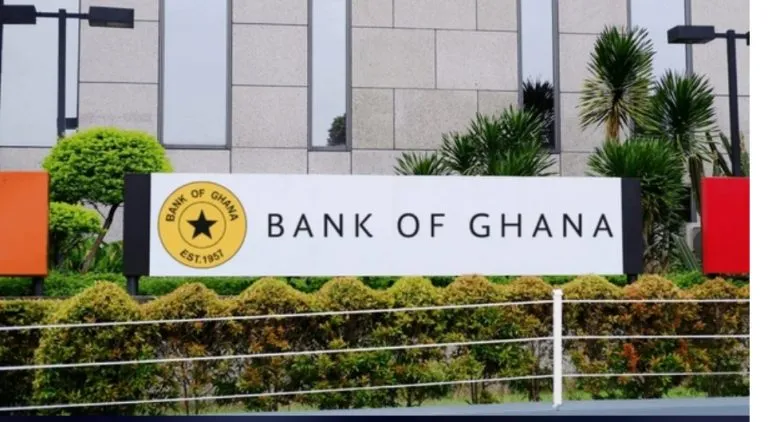
The Bank of Ghana (BoG) has absorbed GH¢9.44 billion from the financial system through a 14-day bill sale, with the amount raised falling by about 30% compared with the previous tender on October 26.
The November 2 auction, identified as Tender 886, recorded sales of GH¢9,442.86 million, down from GH¢13,504.41 million at the previous comparable auction, representing a reduction of approximately GH¢4.06 billion.
Despite the lower volume, the central bank maintained a largely unchanged interest rate, with the weighted average rate easing marginally to 10.4957% from 10.5000%.
The weighted average discount rate also edged down from 10.46% to 10.45%, indicating little change in the cost of the short-term borrowing instrument.
The 14-day bills form part of the Bank of Ghana’s monetary operations, which are aimed at managing liquidity in the financial system by temporarily absorbing excess funds held by financial institutions.
Unlike Treasury bills issued by the government to meet its financing needs, these securities are issued by the central bank to influence monetary conditions. Investors receive their principal and interest when the bills mature after 14 days.
The accepted discount rates ranged between 10.40% and 10.46%, while the corresponding interest rates were between 10.44% and 10.50%. The weighted average remained close to the upper end of the range.
However, the lower amount raised does not necessarily mean that liquidity in the financial system has tightened or that the central bank has changed its monetary policy direction.
The published auction results do not disclose the Bank’s target, the total value of bids submitted or the number of participating institutions. This makes it difficult to establish whether demand exceeded the amount the Bank intended to absorb or whether fewer funds were offered by investors.
The GH¢9.44 billion represents the amount sold and should not be interpreted as the total demand for the bills.
The reduction could reflect changes in the Bank’s liquidity management requirements, the amount offered by financial institutions or other operational considerations that were not explained in the auction notice.
The relatively stable interest rate, however, suggests that the cost of the operation remained broadly unchanged despite the reduction in the amount absorbed.
It is also important to note that the 10.50% interest rate is annualised. Investors will therefore earn interest for only the 14-day period, rather than the full annual rate.
The short maturity allows the Bank of Ghana to manage liquidity more frequently and respond to changing conditions in the money market. Once the bills mature, the principal and interest are returned to investors, potentially releasing funds back into the financial system.
Whether that liquidity returns to the market or is absorbed again will depend on the central bank’s subsequent operations and prevailing financial conditions.
For banks and other financial institutions, the bills provide a short-term investment option, although the auction results do not indicate how much each institution invested or whether participation affected funds available for lending.
For businesses and households, the immediate impact is less direct, but changes in the scale and pricing of the Bank’s liquidity operations can influence broader money-market conditions and interest-rate expectations.
Market participants will therefore be watching subsequent auctions to determine whether the decline in the November 2 sale represents a sustained reduction in liquidity absorption or a one-off adjustment.
For now, the latest results show that the Bank of Ghana absorbed GH¢9.44 billion through its 14-day bills while maintaining an average interest rate close to 10.50%, with the reasons behind the lower volume remaining unclear.