
Commercial transport operators have threatened to withdraw their vehicles from the roads nationwide over the rollout of TraffiTech-GH, insisting that authorities must first clear traders and hawkers occupying designated bus stops before enforcing traffic regulations through the digital system.
The operators argue that introducing automated traffic enforcement without addressing existing roadside obstructions would place commercial drivers at an unfair disadvantage, particularly when they struggle to access approved locations for picking up and dropping off passengers.
The warning comes as the Motor Traffic and Transport Department (MTTD) begins the rollout of digital speed enforcement on Sunday, November 1, 2026. However, it remains unclear whether the threatened nationwide withdrawal of commercial vehicles has taken effect.
National Public Relations Officer of the Concerned Drivers Association, David Agboado, said the government must address the challenges confronting drivers on the roads as part of its preparations for the new system.
He questioned whether authorities had taken steps to remove traders and hawkers who have occupied designated bus stops, arguing that the implementation of the technology must consider the realities of commercial transport operations.
“The bus stops that have been taken over by the traders, the hawkers and other things, have they dealt with that place also? Because the whole thing must be holistic, not pick and choose something,” he said.
“They are ready for November 1. We are also not ready for November 1,” he added.
According to Agboado, the association gave authorities until October 20 to address the situation, but the concerns remain unresolved.
He warned that commercial drivers would park their vehicles if the digital enforcement system became operational without the necessary interventions.
“On November 1, when TraffiTech starts its operation, and a commercial vehicle has been caught in that manner, we the commercial operators, none of us is going to move our vehicle,” he stated.
Agboado further disclosed that several transport groups had agreed to the proposed action, including the Ghana Private Road Transport Union (GPRTU), Progressive Transport Owners Association, Tiger and Cooperative.
“I am saying it because it is an agreement that we have all agreed that no vehicle should move so they do what is right,” he added.
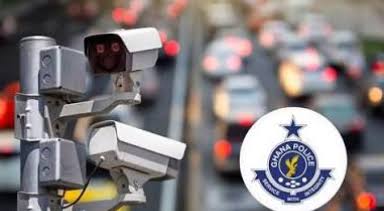
TraffiTech-GH is designed to use cameras, sensors and speed-measuring equipment to detect traffic violations and provide evidence for enforcement. The police have indicated that offences such as speeding and running red lights will be among the violations monitored by the system.
The MTTD earlier postponed the implementation date from October 1 to November 1 to allow for further public education and awareness. Under the announced arrangements, recorded violations will be reviewed before electronic notices are issued, while motorists who disagree with the allegations will have the opportunity to challenge them in court.
However, the drivers’ concerns go beyond the accuracy of the technology. They maintain that authorities must also address the conditions on the roads, particularly the occupation of spaces designated for passenger loading and unloading.
For commercial drivers, the availability of bus stops is essential to their daily operations. Where these spaces are occupied by traders and hawkers, drivers may be forced to stop at alternative locations, potentially creating congestion and exposing them to traffic violations.
Although the concerns raised by the operators deserve attention, they are separate from offences such as speeding and running red lights, which the digital system is also expected to monitor.
Addressing the situation will require collaboration between the police, metropolitan and municipal authorities, transport unions and traders. Clearing the affected bus stops would be an important first step, but consistent monitoring will be necessary to prevent the spaces from being occupied again.
The concerns of traders must also be considered, particularly regarding alternative locations and the impact of relocation on their businesses.
Meanwhile, a nationwide withdrawal of commercial vehicles could significantly disrupt daily activities, leaving workers, students, traders and other commuters struggling to find alternative means of transport.
With Monday, November 2, marking the beginning of another working week, any widespread disruption could affect business operations, school attendance and the movement of people across the country.
For now, the threatened action remains a warning, and its actual scale will depend on the participation of the various transport groups.
The police have maintained that TraffiTech-GH will complement existing traffic enforcement rather than replace conventional policing. ACP Alexander Obeng, Director of Research, Education and Training at the MTTD, has previously explained the role of the technology in strengthening road traffic monitoring.
The growing disagreement, however, highlights the need for authorities to combine technological enforcement with practical solutions to longstanding road management challenges.
Ultimately, the success of TraffiTech-GH will depend not only on detecting traffic violations but also on ensuring that roads, bus stops and other designated public spaces are properly managed and accessible to all road users.