

Ghana has recorded a sharp increase in the number of businesses over the past decade, but only 7.7% of the country’s 2.64 million establishments operate in the formal sector, raising concerns about job creation, productivity and the future of the economy.
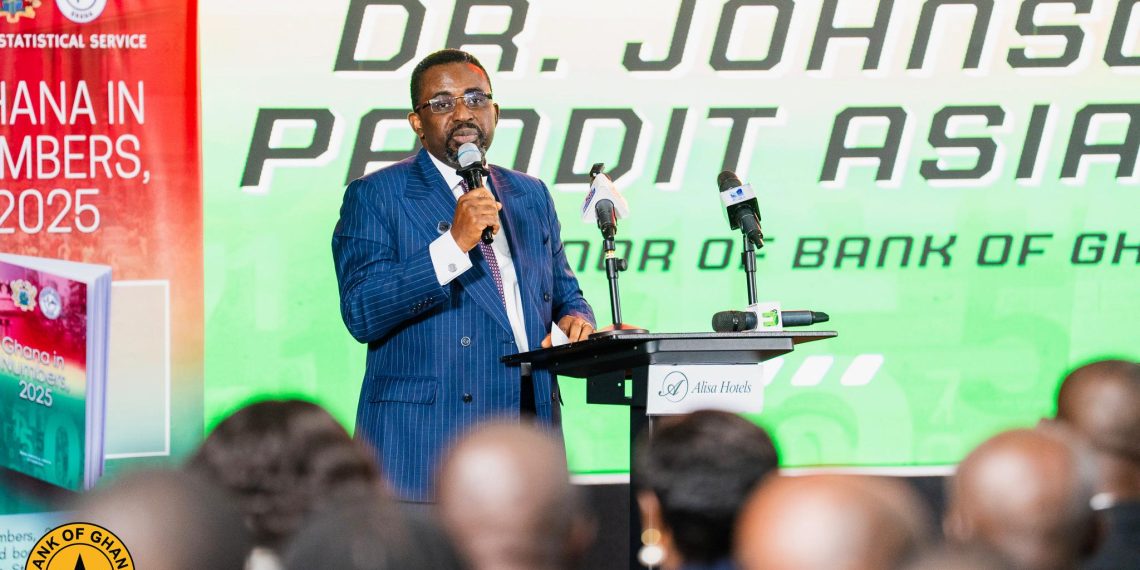
The figures were contained in the maiden edition of Ghana in Numbers 2025, launched by the Ghana Statistical Service (GSS) in Accra on Thursday, October 29, 2026.
According to the report, Ghana had 2,644,363 business establishments in 2024, with the number nearly tripling between 2014 and 2024. However, employment within these businesses only doubled over the same period.
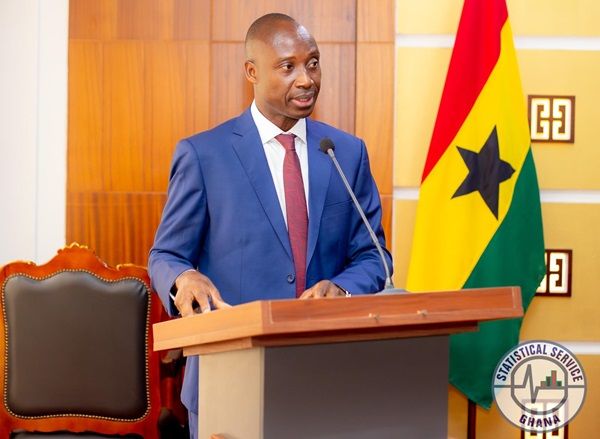
Government Statistician Dr Alhassan Iddrisu said the figures showed that businesses were increasing at a faster rate than the jobs they created.
“Businesses are multiplying faster than the jobs inside them,” he observed.
The report further revealed that nine out of every 10 establishments were micro businesses, while more than seven in every 10 jobs across the labour market remained informal.
The findings come amid growing concerns about youth unemployment, with approximately 12 million Ghanaians, representing about one-third of the population, aged between 15 and 35 in 2025.
Despite this large youth population, nearly two million young people were neither employed nor participating in education or training. Young women accounted for more than 60% of this group.
Youth unemployment averaged 32.4% among those aged 15 to 24 during the first three quarters of 2025, compared with 21.9% among people aged 15 to 35 and a national unemployment rate of 12.8%.
Dr Iddrisu warned that Ghana risked losing the economic benefits of its growing youth population if adequate investments were not made in education, skills development and employment.
“Ghana’s youth window is open, but it is closing. Our choices on schooling, skills and jobs in the next ten years will decide whether it becomes a dividend or a burden,” he said.
Beyond employment, the report highlighted improvements in some key economic indicators. Inflation, which stood at 54.1% in December 2022, declined to 5.4% in December 2025 and 5.2% at the time of the launch.
Multidimensional poverty also fell from 31.2% in 2022 to 23% across the first three quarters of 2025.
However, food insecurity remained a major concern, rising from 37.7% in 2024 to 39.8% in 2025 and affecting approximately 13 million people.
The report also pointed to a gap between agriculture’s contribution to the economy and the resources allocated to the sector. Agriculture accounted for 22.8% of Ghana’s GDP in 2025, while public expenditure on the sector represented only about 0.2% of GDP in 2024.
On trade, Ghana recorded a goods-trade surplus of GH¢148.3 billion in 2025. However, a survey of informal cross-border trade found that goods worth GH¢38.4 billion crossed the country’s land borders with Togo, Burkina Faso and Côte d’Ivoire in the year to September 2025.
The value was approximately 1.4 times the recorded formal trade with the three neighbouring countries, highlighting the scale of economic activity taking place outside conventional customs systems.
The publication also recorded improvements in health and education, with life expectancy rising to 65.1 years in 2021 from 40.3 years in 1960. Active health insurance membership increased to 66.2% in 2025, while junior high school completion rose from 77.5% to 88.4% over five years.
Speaking at the launch, Dr Iddrisu said Ghana in Numbers was developed to bring important national statistics together in one publication, making reliable information more accessible to policymakers, businesses, researchers and the general public.
He urged government institutions to use the data in planning budgets and implementing policies, while calling on businesses to pay attention to employment trends and opportunities for investment.
He also called for predictable domestic funding for the country’s statistical system, stressing that the production of reliable national data should not depend heavily on external development partners.
Dr Iddrisu further appealed to Finance Minister Dr Cassiel Ato Forson to support the proposed Statistics Bill through Cabinet to strengthen the independence and coordination of the country’s statistical system.
He maintained that the real value of the publication would depend on how effectively the figures translated into better policy decisions and improved living conditions.
“A statistic changes nothing until someone acts on it,” he said.