

President John Dramani Mahama has thrown his support behind Ethiopia’s ambition to host the 2028 Africa Cup of Nations (AFCON), following a tour of the renovated Bahir Dar International Stadium.
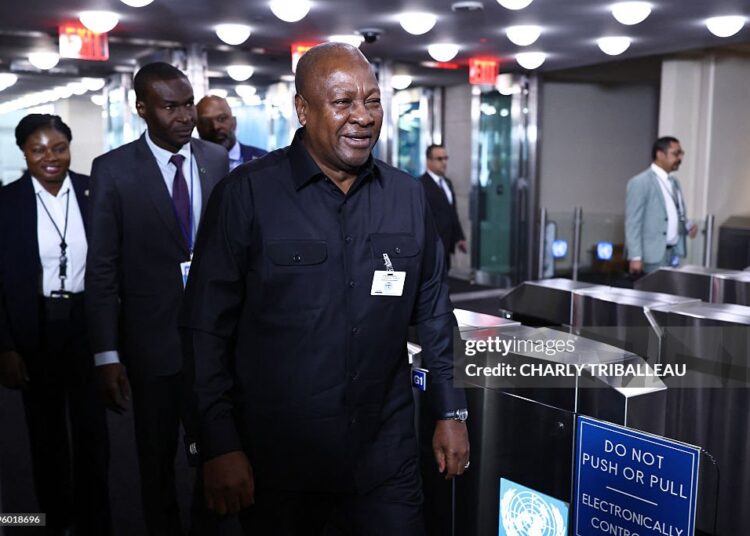
President Mahama made the remarks after inspecting the 52,000-capacity facility alongside Ethiopian Prime Minister Abiy Ahmed and other African leaders attending the 12th Tana High-Level Forum on Security in Africa.
He described the stadium as impressive and said Ethiopia deserved another opportunity to host the continent’s biggest football tournament, having last staged the competition in 1976.
“This is a very impressive stadium, a 52,000-capacity stadium, and it’s already CAF-certified,” President Mahama said.
The stadium’s approval by the Confederation of African Football (CAF) marks a significant step in Ethiopia’s efforts to secure hosting rights. The renovation has also enabled the country’s national team to resume playing international matches at home after several years of using venues abroad.
Ethiopia hosted AFCON in 1962, 1968 and 1976, winning its only continental title on home soil in 1962. Its latest bid is partly driven by its long absence from hosting the tournament and its ambition to re-establish itself as a major destination for African football.
However, Mahama’s endorsement does not guarantee Ethiopia the hosting rights, as CAF will make the final decision based on technical, financial, commercial and security requirements.
Ethiopia submitted its final bid in August 2026 and faces competition from other interested countries and proposed hosting arrangements, including Morocco and countries in southern Africa.
CAF opened the bidding process for the 2028, 2032 and 2036 editions in July, with support from PwC and independent technical, financial and legal advisers. The process is intended to ensure that the selected hosts meet the requirements for organising the competition.
Although the renovated Bahir Dar Stadium strengthens Ethiopia’s case, the country must demonstrate that it has enough approved venues and the supporting infrastructure needed to host a 24-team tournament.
A technical delegation reportedly inspected six proposed stadiums and the planned tournament headquarters in October. The proposed venues are located in Addis Ababa, Bahir Dar, Dire Dawa, Hawassa and Jimma.
The inspection was aimed at assessing the facilities against the requirements outlined in Ethiopia’s bid. It does not, however, mean the country has met every condition for hosting the competition.
Ethiopia has previously faced difficulties securing CAF-approved venues, forcing its national team to play some designated home matches in countries such as Morocco and Tanzania.
Beyond stadiums, the country will need to demonstrate that its transport systems, hotels, training facilities, medical services, communications networks and security arrangements can support teams, officials, supporters and broadcasters throughout the tournament.
Security is also expected to be an important consideration, given the conflicts and instability experienced in parts of Ethiopia, including the Amhara and Oromia regions. With Bahir Dar located in Amhara, CAF will need assurances that teams and supporters can travel and attend matches safely.
For Ethiopia, hosting AFCON would provide an opportunity to boost tourism, attract investment and showcase the country internationally. Addis Ababa is also home to the African Union headquarters, adding to Ethiopia’s significance in continental affairs.
The bid has further revived discussions about the distribution of major sporting events across Africa. While countries with established infrastructure and recent hosting experience may present fewer logistical challenges, awarding tournaments to new hosts can create opportunities for infrastructure development and wider participation in African football.
Nevertheless, Ethiopia’s historical contribution to the competition will have to be matched by evidence of its ability to deliver the tournament on schedule and in line with CAF’s requirements.
The 2028 edition will also mark a change in AFCON’s scheduling, as CAF moves the competition to a four-year cycle after the 2027 tournament, which Kenya, Tanzania and Uganda are scheduled to co-host from June 19 to July 17.
Mahama’s backing provides diplomatic support for Ethiopia’s ambition, but the country must still convince CAF that its preparations extend beyond one renovated stadium.
The final decision will depend on whether Ethiopia can demonstrate readiness across all the facilities and services required to host Africa’s premier football tournament.