


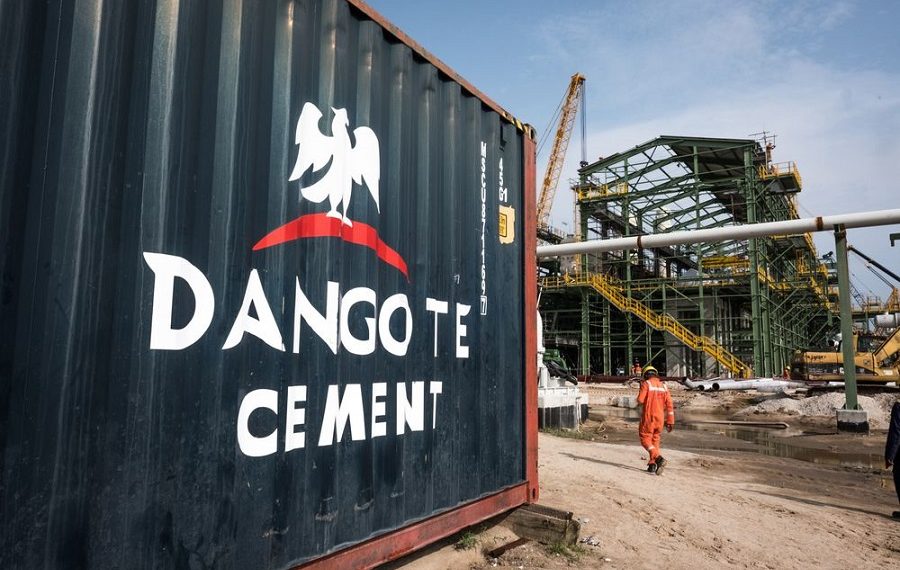
Dangote Group is turning to China for new vessels as it prepares for a sharp increase in cargo movements, a move that highlights the high cost and limited capacity of moving goods between major West African markets such as Nigeria and Ghana.
The conglomerate expects annual vessel movements linked to its operations to rise from about 300 to as many as 1,800 as its businesses in refining, cement, fertiliser, sugar, flour and petrochemicals expand.
According to Dangote Group Vice-President for Oil and Gas, Devakumar Edwin, the expected growth in cargo volumes is creating a need for greater control over shipping capacity.
The challenge, however, goes beyond Dangote’s expanding operations. The company has previously struggled to secure shipping capacity for relatively small shipments between Nigeria and Ghana.
Dangote Industries, for instance, faced difficulties finding a vessel to transport about 1,000 metric tonnes of cement from Nigeria to Ghana. Road transport has also presented challenges, with taxes and other costs along transit routes through countries such as Benin and Togo adding to the price of Nigerian goods.
Dangote Group President Aliko Dangote has previously described the situation by saying that shipping goods from Lagos to Accra can cost more than transporting them from Spain to Lagos.
The comparison underscores a wider problem facing regional trade. While the African Continental Free Trade Area is designed to make it easier for African businesses to trade across borders, high transport and logistics costs can still make goods produced within Africa less competitive.
For Ghana, the problem is particularly important because Nigeria remains one of the country’s major regional trading partners. Yet moving goods between Lagos and Accra can involve expensive road transportation, limited coastal shipping options and other logistical bottlenecks.
Dangote is now exploring the acquisition of additional vessels, including ships that could be built in China. Owning more of its shipping capacity would give the group greater control over cargo availability, delivery schedules and distribution costs as production increases.
China’s dominance of the global shipbuilding industry makes it a natural destination for such procurement. UNCTAD data cited by Business Insider Africa show that Chinese shipyards accounted for 54.6% of global shipbuilding output in 2024, while China controlled nearly two-thirds of the global shipbuilding orderbook at the start of 2025.
Dangote’s shipping needs are expected to grow further as the group’s Lagos refinery expands. The company plans to increase refining capacity from about 700,000 barrels per day to 1.4 million barrels per day by 2029 under a US$14.3 billion expansion programme.
The expansion is expected to increase the movement of crude oil, refined petroleum products and petrochemicals, adding to the shipping requirements of Dangote’s cement, fertiliser and other businesses.
For the group, owning vessels could reduce its dependence on third-party operators and make it easier to move products directly to markets across West and Central Africa.
But the situation also exposes the weakness of Africa’s own maritime industry.
Edwin has argued that many Nigerian shipowners lack the vessels and financing needed to take advantage of the growing cargo volumes being generated by the country’s industrial sector. He also noted that financing a ship alone does not guarantee a successful shipping business.
Operators still need assured cargo, port infrastructure, insurance, regulatory support, vessel-management expertise and long-term charter arrangements.
The issue raises a broader concern for West Africa. If industrial production grows faster than the region’s ports, shipping networks, roads and logistics systems, businesses may continue to lose a significant share of their competitiveness to transportation costs.
Dangote has previously noted that many vessels operating around Africa are foreign-owned, leaving African companies dependent on international operators even when goods are being traded between neighbouring countries.
For the AfCFTA to deliver its full promise, lowering tariffs will therefore not be enough. African manufacturers must also be able to move their products across borders quickly, reliably and at competitive prices.
Dangote’s decision to explore ship ownership is consequently about more than securing vessels for a growing business. It is a sign that logistics has become a major constraint on Africa’s industrial ambitions.
If a company of Dangote’s scale finds it difficult and expensive to move goods between Lagos and Accra, the challenge facing smaller businesses seeking to trade across West Africa is likely to be even greater.