
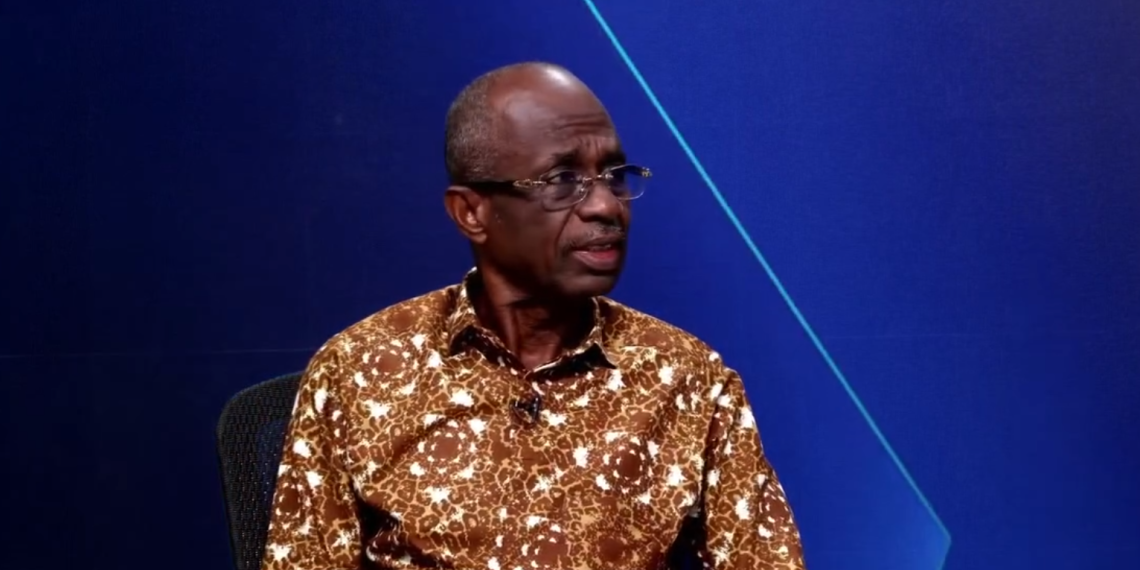
National Chairman of the National Democratic Congress (NDC), Johnson Asiedu Nketiah, has cautioned that abolishing the party’s delegate system in favour of allowing all members to vote in internal elections could significantly increase the cost of organising such elections.
Speaking in an interview with JoyNews on Tuesday, August 4, Asiedu Nketiah reflected on the NDC’s experience in 2014, when the party opened its internal elections to a broader membership.
He acknowledged that the system promoted greater participation and strengthened internal democracy, but said it also placed a substantial financial burden on the party.
According to him, the expanded electoral process required the creation of thousands of polling stations across the country to ensure that party members, particularly those in remote communities, did not have to travel long distances to vote.
He said the NDC eventually established more than 8,000 polling stations for the exercise.
“There are certain electoral areas that are made up of clusters of villages, and in that case you will have more polling stations in the villages so that you don’t ask people to travel,” he explained.
Asiedu Nketiah said the Electoral Commission (EC) treated the exercise as a private election and therefore required the NDC to bear the full cost.
He noted that the EC recruited about four polling officials for each polling station, with the party responsible for their payment as well as the cost of electoral materials and other logistics.
According to him, the NDC spent nearly GH¢14 million on the 2014 exercise.
While Asiedu Nketiah acknowledged the benefits of allowing the wider membership to participate in candidate selection, he argued that the financial burden should not fall entirely on political parties if the process is ultimately intended to strengthen democratic participation.
He suggested that the state should consider funding such exercises, allowing the Electoral Commission to organise them without charging political parties.
“So my expectation is that even though the system is good, since we are being compelled to help citizens exercise their civic and democratic rights, it sits very well if you ask the state to budget for this exercise so that the Electoral Commission can conduct it free of charge.”