

Ghana’s economy has made significant progress in restoring stability, but the country is yet to translate that recovery into broad-based economic transformation, according to PwC.
In its assessment of the 2026 Mid-Year Budget Review, the accounting and advisory firm said the government had made a convincing case that Ghana had moved beyond the most severe phase of its recent economic crisis.
However, PwC cautioned that improvements in fiscal balances, debt indicators and foreign-exchange reserves should not be mistaken for a fundamental transformation of the country’s economic structure.
“The government’s narrative is more persuasive on stabilisation than on transformation,” PwC said.
The firm said Ghana had made notable progress in reducing fiscal pressures, improving debt dynamics and rebuilding external buffers. However, persistent challenges in electricity supply, infrastructure, agriculture, manufacturing and the banking sector continue to weigh on productivity and private-sector growth.
According to PwC, addressing these challenges will require reforms that are sustained over several years and carried forward by successive governments.
PwC described the government’s fiscal consolidation programme as credible and measurable.
During the first half of 2026, Ghana recorded a commitment-basis primary surplus of 0.90% of GDP, while the cash primary surplus stood at 0.60% of GDP.
Both figures were above budget expectations, suggesting that revenue mobilisation and expenditure management were performing better than initially projected.
A primary surplus occurs when government revenue exceeds expenditure before interest payments. It is an important indicator of whether a country can improve its debt position without relying heavily on additional borrowing.
Government also recorded significant savings on interest payments, which came in GH¢6.90 billion below budget. Domestic interest payments alone were GH¢4.20 billion lower than projected.
PwC said the savings helped ease pressure on public finances and reduced the government’s financing needs.
The firm also noted a significant improvement in Ghana’s debt trajectory.
Debt restructuring, movements in the exchange rate and nominal GDP growth have all contributed to lower debt ratios, helping move the country away from the unsustainable path seen in recent years.
PwC further highlighted progress in external debt restructuring, including the completion of the Saderea Notes exchange and agreements reached with bilateral and commercial creditors.
These developments, it said, have reduced Ghana’s immediate sovereign financing risks and strengthened investor confidence.
The country’s external position has also improved, with international reserves reaching the equivalent of five months of import cover in June 2026.
That is comfortably above the conventional three-month benchmark and gives Ghana greater protection against external shocks such as commodity-price volatility, capital outflows and pressure on the cedi.
Stronger reserves also provide the Bank of Ghana with greater room to respond to disruptions in the foreign-exchange market.
Despite the progress, PwC stressed that economic stability should be viewed as a foundation for deeper reforms rather than the end goal.
The power sector remains a major challenge, with unreliable or expensive electricity increasing production costs and affecting the competitiveness of businesses.
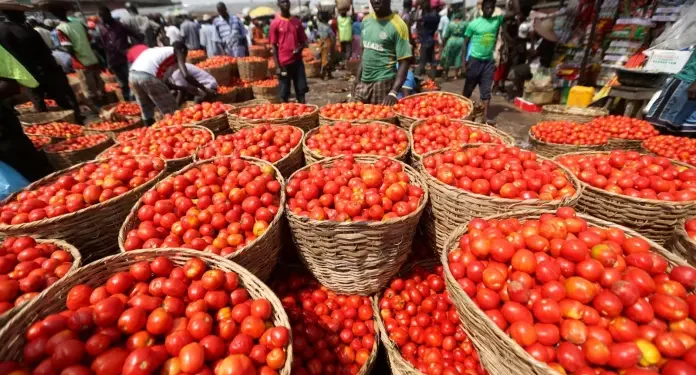
Infrastructure gaps also continue to constrain logistics, trade and industrial development, while agriculture remains vulnerable to weather conditions, inadequate irrigation and limited processing capacity.
PwC said Ghana’s manufacturing sector would need increased investment, improved technology and access to affordable financing if the country is to reduce import dependence and create more productive jobs.
The banking sector also requires continued attention. Although financial stability has improved, high lending costs, concerns over asset quality and limited access to credit continue to constrain private-sector expansion.
PwC’s assessment suggests that the government’s next major task is to turn the fiscal space created by the recovery into investments and reforms that can raise productivity.
This, the firm said, will require disciplined allocation of public resources, stronger institutions and policies capable of attracting private investment into key sectors such as energy, agriculture, infrastructure and manufacturing.
Overall, PwC’s assessment is positive but measured.
Ghana has made meaningful progress in stabilising its economy, improving fiscal credibility and reducing immediate sovereign financing risks.
But the firm cautioned that favourable economic indicators alone do not amount to transformation.
For the recovery to become sustainable, Ghana will need to combine fiscal discipline with structural reforms that improve productivity, strengthen competitiveness and expand the economy’s long-term growth potential.