


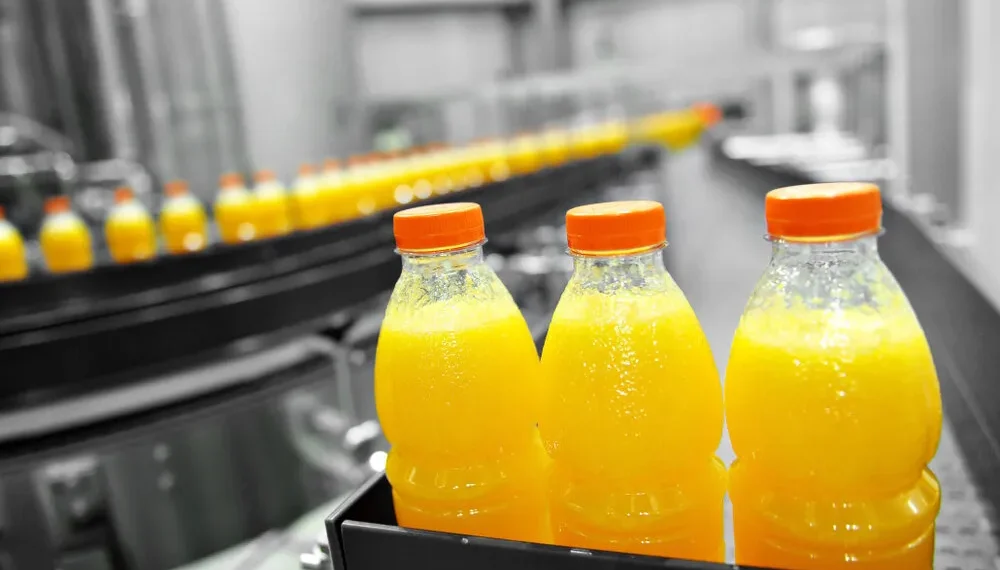
The government has announced plans to remove the 20% excise duty imposed on locally manufactured fruit juices, a move aimed at reducing pressure on domestic producers, promoting agro-processing and supporting job creation.
Finance Minister Dr Cassiel Ato Forson made the announcement during the presentation of the 2026 Mid-Year Budget Review in Parliament, explaining that the decision forms part of proposed reforms under the new Excise Duty Bill.
According to the Minister, the government will “abolish the payment of 20.00% excise duty on locally manufactured fruit juices introduced in 2023” as part of efforts to support local industries and create more employment opportunities.
The decision is expected to provide relief to local beverage manufacturers and fruit processors who have argued that the tax made Ghanaian-produced juices less competitive and increased the cost of production.
Industry players have consistently maintained that while government seeks to promote value addition and reduce dependence on imported goods, placing additional taxes on local processors makes it difficult for businesses to expand and create more jobs.
The Association of Ghana Industries (AGI) had earlier called for the removal of the tax on locally produced sweetened beverages and fruit juices, arguing that the policy affected production capacity and undermined efforts to strengthen Ghana’s manufacturing sector.
The Chamber of Agribusiness Ghana also raised concerns that the levy could discourage investment, reduce demand for locally grown fruits and affect the country’s potential to develop a strong agro-processing industry.
Dr Forson said the removal of the fruit juice duty is part of a broader review of Ghana’s excise tax system, with government shifting its focus towards improving compliance and recovering lost revenue in other areas.
He revealed that between 2023 and 2025, wines and spirits worth more than GH¢5 billion in taxable value entered the country, but about 78% of that value passed through customs arrangements such as warehousing, transit, temporary admission and free zones without attracting excise duty.
“In other words, almost four out of every five cedis of the potential excise tax base on wine and spirits escaped the tax net,” Dr Forson said.
To address this, the proposed Excise Duty Bill will introduce a hybrid tax system that combines value-based and quantity-based taxation for wines and spirits to reduce undervaluation, misclassification and revenue losses.
The government believes the new approach will allow it to support local manufacturers while improving revenue collection from areas where significant gaps exist.
For the fruit juice industry, the policy change could help reduce production costs in a sector facing challenges such as expensive raw materials, high utility costs, imported packaging expenses and limited access to affordable financing.
The move could also strengthen links between farmers and processors by increasing demand for locally produced fruits such as mangoes, pineapples, citrus and coconuts.
However, industry experts say removing the tax alone will not solve all the challenges facing Ghana’s agro-processing sector. Businesses will still require reliable raw material supply, improved storage facilities, access to finance, quality certification, stable power supply and stronger export support.
The government’s Feed the Industry programme has highlighted the need to address shortages of raw materials, which have forced some factories to operate below capacity.
For consumers, the removal of the duty could eventually contribute to more competitive prices for locally produced fruit juices, although the impact will depend on production costs and market competition.
The policy also represents a shift in government’s approach to taxation — reducing what local producers consider a burden on domestic manufacturing while strengthening enforcement in sectors where revenue losses are believed to be high.
The success of the measure will depend on how effectively the Excise Duty Bill is implemented and whether manufacturers translate the tax relief into increased production, job creation and stronger support for local farmers.
While the removal of the 20% duty alone may not transform Ghana’s agro-processing industry, it removes a major obstacle that producers say has limited growth.
For factories, farmers and workers within the beverage value chain, the policy change represents a significant step towards building a more competitive local manufacturing sector.