
The Bank of Ghana (BoG) has issued a strong warning to traders, transport operators, businesses and the general public, stressing that refusing to accept Ghana cedi coins is against the law and could result in criminal prosecution.
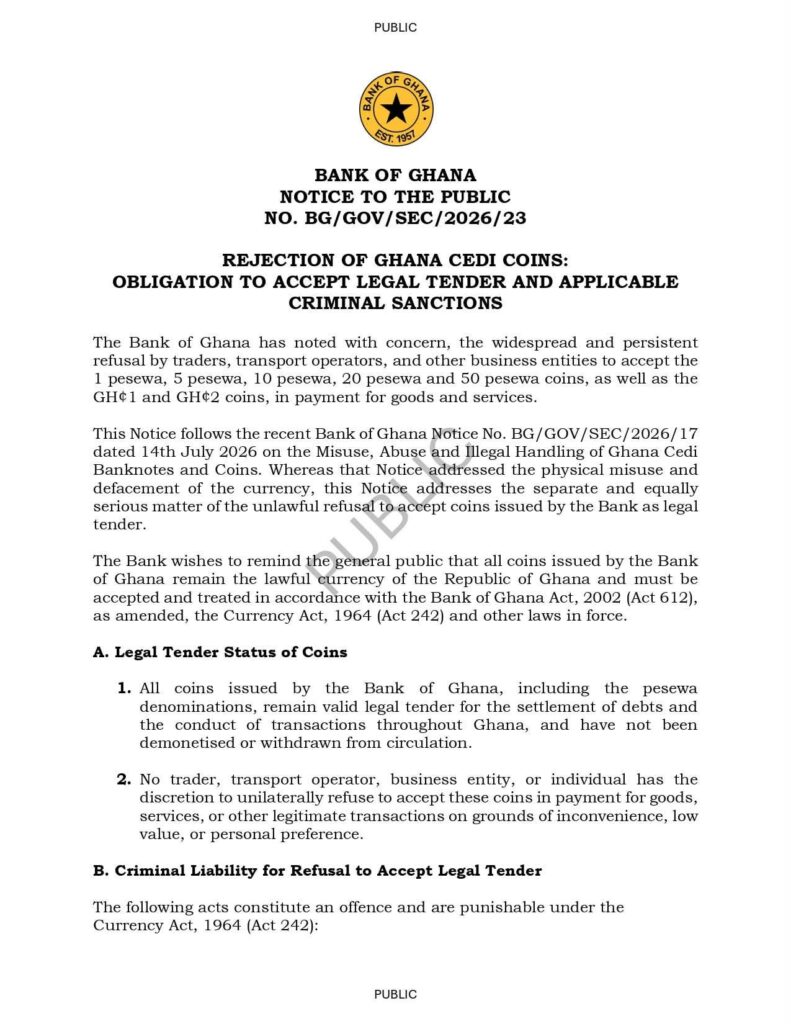
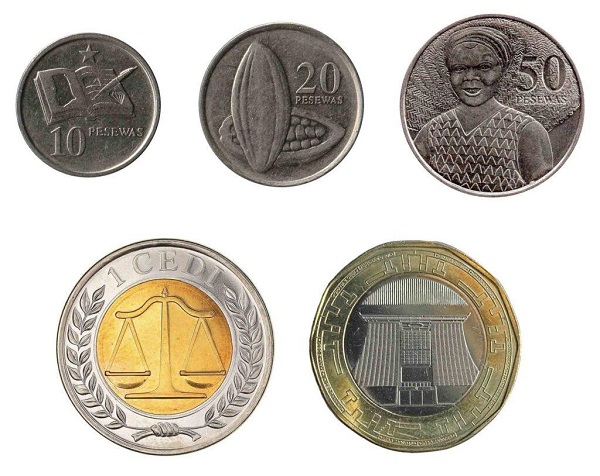
In a public notice issued on Tuesday, July 22, 2026, the central bank expressed concern over the increasing refusal of people to accept 1, 5, 10, 20 and 50 pesewa coins, as well as the GH¢1 and GH¢2 coins, during everyday transactions.
According to the BoG, all coins currently in circulation remain legal tender and have not been withdrawn or demonetised. It emphasised that no individual or business has the legal right to reject valid coins because they are considered inconvenient, of low value or impractical to use.
“All coins issued by the Bank of Ghana, including the pesewa denominations, remain valid legal tender for the settlement of debts and the conduct of transactions throughout Ghana, and have not been demonetised or withdrawn from circulation,” the Bank stated.
The central bank further stressed that personal preference is not a valid reason for refusing legal tender.
“No trader, transport operator, business entity, or individual has the discretion to unilaterally refuse to accept these coins in payment for goods, services, or other legitimate transactions on grounds of inconvenience, low value, or personal preference,” the notice added.
The BoG reminded the public that under Ghana’s Currency Act, refusing to sell goods or provide services solely because a customer is paying with valid coins or banknotes constitutes an offence. Offenders may face a fine, imprisonment of up to three years, or both upon conviction.
It also cautioned that anyone who encourages or instructs others to reject valid legal tender could be held criminally liable. The Bank disclosed that offenders may be arrested without a warrant and indicated it will collaborate with the Ghana Police Service and other law enforcement agencies to ensure compliance.
Beyond the legal consequences, the BoG said the continued rejection of lower-denomination coins poses a threat to the efficiency of Ghana’s payment system. It noted that such practices can disrupt cash transactions, particularly in the informal sector where small-value payments are common, while encouraging price rounding and reducing the practical use of smaller denominations.
The central bank warned that these practices could disproportionately affect low-income consumers and small businesses that rely heavily on cash, while undermining public confidence in the country’s currency.
To address the issue, the Bank urged members of the public to report any instance where valid Ghana cedi coins are refused through its offices, official communication channels or the Ghana Police Service.