

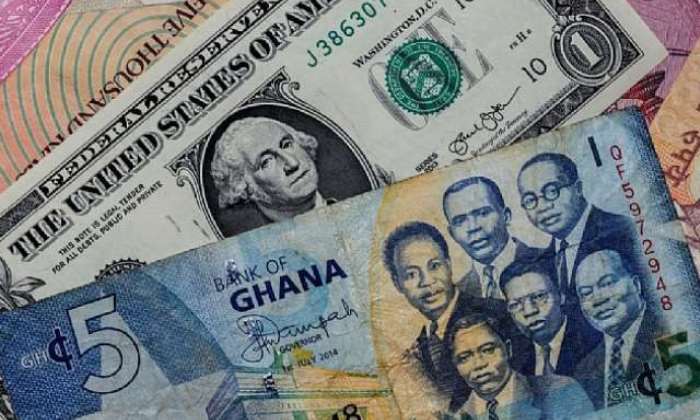
Ghana’s cedi came under renewed pressure in July, slipping to GH¢11.55 against the US dollar despite the country’s strong trade performance and healthy foreign exchange reserves, according to the latest Summary of Economic and Financial Data released by the Bank of Ghana (BoG).
The report, published on July 21, 2026, shows that the local currency had depreciated by 9.5% against the US dollar on a year-to-date basis as of July 17, compared with a 7.9% decline recorded in June. The exchange rates, based on BoG’s mid-rates, also indicate that the cedi weakened by 9.5% against the British pound and 7.1% against the euro.
The British pound traded at GH¢15.53, while the euro stood at GH¢13.21 during the period.
The latest figures mark a reversal from the cedi’s strong performance in 2025, when it ended the year with a reported 40.7% appreciation against the US dollar. Since then, the exchange rate has moved from GH¢10.45 in December 2025 to GH¢11.55 in July 2026.
Despite the depreciation, Ghana’s external sector remains relatively strong. By June 2026, total exports had reached US$18.29 billion, compared to imports of US$9.48 billion, resulting in a trade surplus of US$8.81 billion, equivalent to 6.6% of GDP.
The country also recorded a current account surplus of US$5.10 billion, representing 3.8% of GDP, while gross international reserves stood at US$12.94 billion—enough to cover five months of imports.
Gold remained Ghana’s largest export earner, generating US$12.50 billion in export receipts. Cocoa exports brought in US$2.29 billion, while oil exports contributed US$1.71 billion.
Although these indicators would normally support the local currency, the BoG report suggests that exchange rate movements are influenced by more than external balances alone. Demand for foreign exchange from importers, debt servicing obligations, corporate transactions, investor sentiment and seasonal market pressures continue to affect the cedi’s performance.
Global commodity prices have also played a role. Brent crude oil prices averaged US$84.10 per barrel in June, reflecting a 36.5% increase year-to-date, while realised Brent prices averaged US$87.20 per barrel, up 45.2%. Higher oil prices increase Ghana’s import bill and foreign exchange demand.
Meanwhile, international gold prices remained elevated but eased slightly by 1.8% year-to-date to an average of US$4,239.90 per fine ounce. Cocoa prices continued to decline, falling 27.6% year-to-date to US$4,271.90 per tonne, reducing earnings from one of Ghana’s traditional export commodities.
The cedi has experienced fluctuations throughout 2026. It traded at GH¢10.95 to the dollar in January, strengthened to GH¢10.69 in February, before weakening to GH¢11.00 in March, GH¢11.19 in April and GH¢11.73 in May. It recovered slightly to GH¢11.35 in June before slipping again to GH¢11.55 in July.
The report also noted that Ghana’s Real Effective Exchange Rate index declined from 96.2 in May to 92.9 in June, indicating some improvement in the cedi’s competitiveness after adjusting for inflation, even though the currency weakened in nominal terms during July.
The latest depreciation is expected to have implications for businesses and consumers alike. Importers and manufacturers relying on imported raw materials could face higher operating costs, while rising exchange rate pressures may eventually feed into higher prices for fuel, medicines, transport services and other imported goods.
Inflation has already begun edging higher, rising to 5.3% in June from 3.7% in May, with non-food inflation increasing to 6.3%.
The Bank of Ghana’s Monetary Policy Committee is therefore expected to closely monitor exchange rate developments as it balances inflation control with efforts to maintain currency stability.
While Ghana’s external accounts remain stronger than during previous periods of currency instability, the latest figures suggest that sustaining confidence in the cedi will depend on continued fiscal discipline, prudent liquidity management, stable export earnings and effective foreign exchange market operations.