
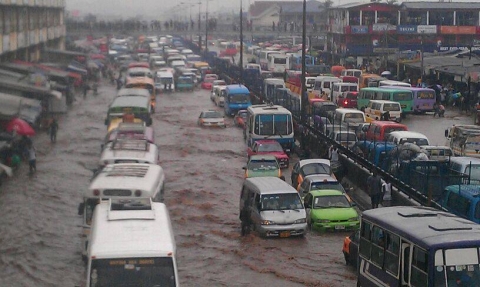
Climate change, rapid urban expansion and weak urban infrastructure are increasing the risk of severe flooding along the Gulf of Guinea coast, putting major cities including Accra, Lagos, Abidjan and Lomé under growing pressure.
A new scientific assessment by World Weather Attribution (WWA) has warned that extreme rainfall events affecting coastal West Africa are becoming more dangerous as rising temperatures combine with poor drainage systems, expanding settlements and inadequate flood management.
The study, published on July 16, 2026, examined the heavy rains and flooding recorded between June 20 and June 22 across Côte d’Ivoire, Ghana, Togo and Nigeria. It found that such extreme three-day rainfall events are no longer unusual in the region and could now occur once every two to four years.
The findings come after devastating floods hit several parts of Ghana, including Accra, where heavy rains caused widespread flooding, displacement and damage to homes, roads and businesses.
According to the report, Ghana recorded one of its highest June daily rainfall totals since 1995, with more than 140 millimetres of rain recorded in Accra on June 29. Côte d’Ivoire also experienced intense rainfall, with Abidjan recording 172 millimetres on the same day. Authorities in Côte d’Ivoire reported 59 deaths since the beginning of the rainy season.
Across Côte d’Ivoire, Ghana, Benin, Togo and Nigeria, more than 70 people were reported dead, while thousands of residents faced disruptions caused by flooding, damaged infrastructure and displacement.
The WWA assessment said the impact of the floods was worsened by factors such as blocked drainage channels, poor waste management and increased construction in vulnerable areas. These conditions reduced the ability of cities to absorb heavy rainfall, causing water to quickly accumulate and flood communities.
The report stressed that flooding in the Gulf of Guinea is no longer just a seasonal emergency issue. It has become a wider challenge involving climate change, urban planning, sanitation, infrastructure development and governance.
Researchers explained that rapid population growth and the expansion of settlements into flood-prone areas have increased exposure to flooding. The conversion of natural vegetation into urban and agricultural land has also reduced the environment’s ability to manage excess water.
The consequences of flooding go beyond immediate damage. The report warned that destruction of farms, roads and businesses can worsen food insecurity, while contaminated water and damaged sanitation systems increase the risk of diseases such as cholera and other water-borne infections.
The study found that three-day rainfall intensity across the region has increased by about 23 per cent since records began. Scientists estimated that rainfall events of this nature are now around five times more likely compared with a climate that was 1.4°C cooler.
However, researchers cautioned that there is still uncertainty around some estimates because of limited historical rainfall records, natural climate variations and differences between datasets.
Climate models showed a smaller increase in extreme rainfall compared with observed data, but scientists said most models still indicate a future with more intense rainfall as global temperatures continue to rise.
The researchers emphasised that climate change alone is not responsible for the destruction caused by floods. Instead, rising temperatures are increasing the likelihood of heavier rainfall, while poor planning and weak infrastructure determine how severe the damage becomes.
The report also highlighted the growing threat of sea level rise along the Gulf of Guinea coast, where rising ocean levels are increasing risks for coastal cities and critical infrastructure.
For Ghana, the findings underline the need for a stronger approach to flood management. Experts say solutions must go beyond emergency responses and periodic drainage exercises to include better urban planning, improved sanitation, protection of waterways, climate-resilient infrastructure and stronger early warning systems.
The WWA recommended investment in safer housing, improved drainage networks, stricter enforcement of construction regulations and greater involvement of vulnerable communities in climate adaptation planning.
The warning is particularly important for Accra, where rapid urban growth, poor waste disposal, blocked drains and construction on flood-prone lands continue to turn heavy rainfall into repeated disasters.
The report also highlights the importance of making climate resilience a priority in Ghana’s development plans. Investments in drainage, sanitation, housing and flood prevention should be viewed as essential economic infrastructure rather than only environmental measures.
Flooding continues to create major costs for governments and communities by destroying homes, damaging roads, disrupting businesses, threatening livelihoods and increasing public spending on emergency response and recovery.
The message from the study is clear: the Gulf of Guinea is facing a more challenging flood future. While climate change is increasing rainfall risks, the level of damage will depend largely on how effectively countries improve planning, infrastructure and preparedness.
For Ghana and its neighbours, the question is no longer whether floods will happen again, but whether action will be taken quickly enough to reduce the impact of increasingly extreme weather events.