

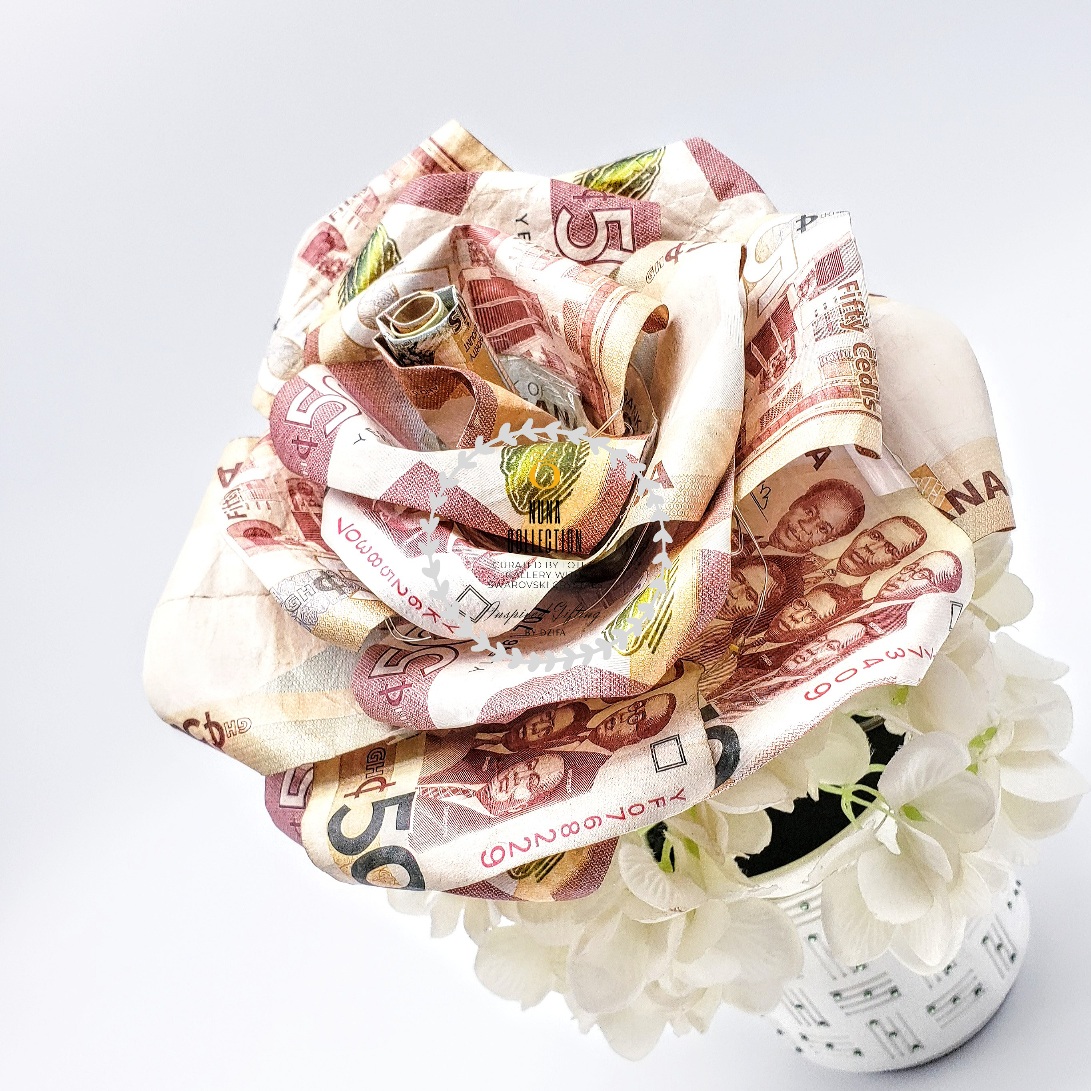
The Bank of Ghana (BoG) has issued a stern warning to the public over the misuse of the Ghana cedi, cautioning that practices such as spraying money at events, creating money bouquets and using banknotes as decorative items violate the country’s currency laws and could result in arrest, prosecution, fines or imprisonment.
In a public notice dated July 14, the central bank expressed concern over the growing trend of treating the cedi as a ceremonial or decorative item during weddings, birthdays, graduations, funerals and other social gatherings.
According to the BoG, the cedi—both banknotes and coins—is the only legal tender in Ghana and must be handled with care and respect. It stressed that several common practices that physically damage or alter currency are prohibited under the Currency Act, 1964 (Act 242), and the Bank of Ghana Act, 2002 (Act 612), as amended.
Among the practices identified as illegal are spraying or throwing money during celebrations, popularly known as “showering,” making money bouquets, using banknotes for decorations, jewellery, fingernail designs or artistic creations, as well as scattering notes on the ground or stepping on them while dancing.
The central bank also warned against writing on banknotes, tearing, folding excessively, crumpling, staining, cutting, engraving or otherwise defacing notes and coins. It added that using images of Ghana’s currency without the Bank’s approval and buying or selling coins above their face value are also prohibited.
According to the BoG, these actions compromise the quality, integrity and functionality of the cedi, making the currency less durable and more expensive to replace.
The Bank explained that it spends substantial resources printing and minting new currency, and every damaged note withdrawn from circulation increases the cost of currency management.
It further noted that worn-out and defaced banknotes create practical challenges for businesses, banks and cash-handling systems, as they are more difficult to count, authenticate and process. Such notes are also more likely to be rejected during everyday transactions.
The BoG said the warning goes beyond protecting the appearance of the cedi, describing the national currency as a symbol of state authority, public trust and economic stability.
The central bank also highlighted offences involving coins, including colouring, filing, cutting, defacing or altering their appearance, weight or value, as well as possessing pieces or scrapings obtained through tampering.
BoG indicated that enforcement of the law will be strengthened in collaboration with state security agencies.
It said law enforcement officers will monitor the misuse of currency and take appropriate action against offenders, including arrest and prosecution.
While presenting cash as a gift remains lawful, the Bank clarified that transforming banknotes into decorative items such as bouquets or using them in ways that damage or deface them is illegal.
The BoG has therefore urged individuals, businesses, event organisers and decorators to handle the cedi responsibly and help preserve its integrity by avoiding practices that violate Ghana’s currency laws.
The central bank also encouraged the public to report cases of currency abuse to the appropriate authorities, saying protecting the cedi is a shared national responsibility.