

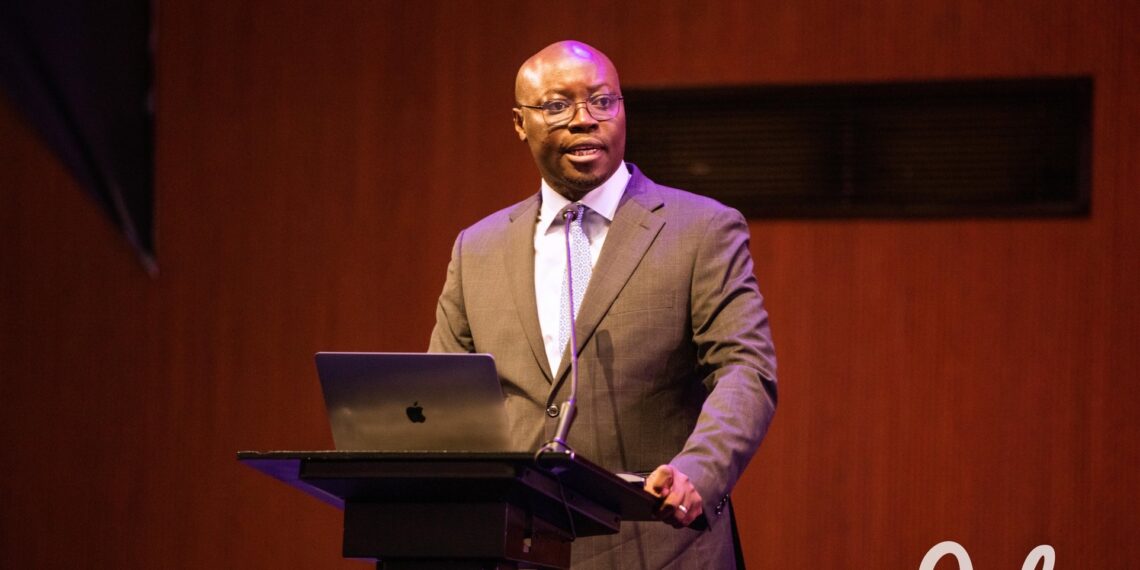
Ghana’s Finance Minister, Dr Cassiel Ato Forson, has expressed confidence that inflation will remain below 5 percent by the end of 2026, despite growing concerns over the economic impact of escalating tensions in the Middle East.
Speaking in an interview with Bloomberg, Dr Forson acknowledged that the conflict poses risks to import-dependent countries like Ghana, particularly through rising fuel prices, higher fertiliser costs, and disruptions to global supply chains.
“The challenge has to do with price increases,” he said, explaining that petroleum products and agricultural inputs are the main channels through which external shocks could affect domestic inflation.
His remarks come after Ghana’s inflation rate edged up slightly to 3.4 percent in April from 3.2 percent in March, bringing an end to 15 consecutive months of declining inflation. Despite the increase, inflation remains well below the Bank of Ghana’s medium-term target range of 6 to 10 percent.
According to the Ministry of Finance, inflation fell sharply from 23.8 percent in December 2024 to 3.2 percent in March 2026, marking its lowest level since the country’s inflation data was rebased in 2021.
Dr Forson believes Ghana is now better positioned to withstand external shocks because of stronger foreign exchange reserves and favourable commodity prices.
“The good news is that in Ghana, we do not have subsidies on petroleum products. But the good news is that we have built some significant reserves,” he stated.
He also highlighted the positive impact of rising gold production and strong global gold prices, which are helping to strengthen Ghana’s external reserves and support foreign exchange liquidity.
“Our gold production is also going up and gold prices are also very high. And so Ghana is in a comfortable position to be able to withstand those shocks,” he added.
While acknowledging that inflationary pressures could increase modestly if energy and transport costs continue to rise, the Finance Minister maintained that the overall outlook remains positive.
“Where I think we may see a bit of pressure will be on the back of inflation,” he noted, adding that he does not expect inflation to exceed 5 percent by year-end.
Dr Forson further pointed to strong earnings from Ghana’s key exports including gold, cocoa and crude oil as important factors supporting the cedi and helping to keep domestic prices stable.
The Bank of Ghana has also warned about risks stemming from the Middle East conflict. In its March 2026 Monetary Policy Report, the central bank cautioned that prolonged geopolitical tensions could push up global oil prices and slow the decline in inflation worldwide.
Those concerns influenced the central bank’s recent decision to keep its policy rate unchanged at 14 percent after earlier rate cuts, citing uncertainty surrounding crude oil prices and global supply chains.
For now, government officials believe Ghana’s stronger reserves, improved export performance and the absence of petroleum subsidies will help cushion the economy from external shocks.
However, economists note that a prolonged rise in global oil prices could still affect transport fares, food prices, fertiliser costs and business operating expenses.
Despite these risks, the government remains optimistic that the country’s recent macroeconomic gains will be sufficient to prevent a return to the double-digit inflation levels that fuelled Ghana’s cost-of-living crisis in recent years.