

Ghana says it plans to finance the proposed US$4 billion Accra–Kumasi Expressway without taking on new debt, in what could become one of the country’s boldest attempts to use oil and mineral revenues to fund major infrastructure development.
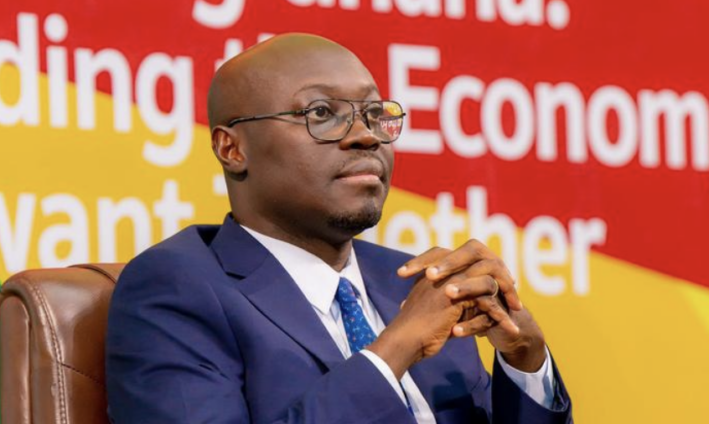
Finance Minister Dr Cassiel Ato Forson announced at the Ishmael Yamson & Associates Business Roundtable on Thursday that the government intends to rely on accumulated petroleum revenues and mineral royalties between 2025 and 2027 to finance the flagship road project.
“Granted, the Accra–Kumasi Expressway is going to cost us US$4 billion. We’ll fund it without borrowing,” Dr Forson stated.
The announcement comes as Ghana continues to operate under strict fiscal discipline following its debt restructuring programme and ongoing IMF-supported recovery efforts, which have significantly limited the government’s ability to borrow for large-scale projects.
According to Dr Forson, Ghana generated approximately US$500 million in petroleum revenue in 2025 and another US$500 million from mineral royalties, boosted largely by high global gold prices. He said the combined US$1 billion would be directed toward the expressway project.
Government projections also suggest that petroleum and mineral revenues could increase to about US$2.5 billion by the end of 2026, potentially strengthening the country’s ability to sustain financing for the project without external loans.
The Finance Minister further revealed that mineral royalties previously invested in treasury bills through the Minerals Income Investment Fund are now being redirected toward infrastructure financing.
The move forms part of a broader government strategy to channel extractive sector revenues into a few high-impact national projects rather than spreading the funds across multiple recurrent expenditure lines.
Government has already amended the Petroleum Revenue Management Act to allow the Annual Budget Funding Amount to be used for infrastructure development under the “Big Push” initiative.
“We’ve said that use Ghana’s oil revenue only for infrastructure use,” Dr Forson said, criticising the previous use of petroleum revenues on recurrent expenses such as travel and conferences.
The proposed Accra–Kumasi Expressway is expected to improve transportation between Ghana’s political capital, Accra, and Kumasi, the commercial hub of the middle belt. The project is also expected to reduce travel time, lower logistics costs and support trade and business activities along one of the country’s busiest economic corridors.
Despite the optimism surrounding the project, questions remain over the sustainability and transparency of the funding model.
Analysts say government will need to prove that projected petroleum revenues and mineral royalties are realistic, properly ring-fenced and protected from political spending pressures.
The Public Interest and Accountability Committee (PIAC) has already called for greater transparency in the management of petroleum revenues earmarked for the expressway, stressing that any special account created for the project must comply fully with existing laws.
Observers also warn that the project carries significant execution risks, especially given its scale. A US$4 billion infrastructure project funded largely from annual resource revenues will require disciplined procurement systems, careful project sequencing and strong financial oversight.
Any decline in oil revenues, fall in gold prices or delays in royalty inflows could affect implementation timelines.
Still, the government appears determined to reposition Ghana’s oil and mineral wealth as a direct source of visible national development after years of criticism that extractive revenues have not translated into transformational infrastructure.
“After 2027, we’ll target another project. And gradually, we’ll build the country going into the future,” Dr Forson added.
Whether the financing model succeeds may ultimately depend on the government’s ability to avoid familiar challenges such as procurement opacity, political interference, cost overruns and weak public accountability.