

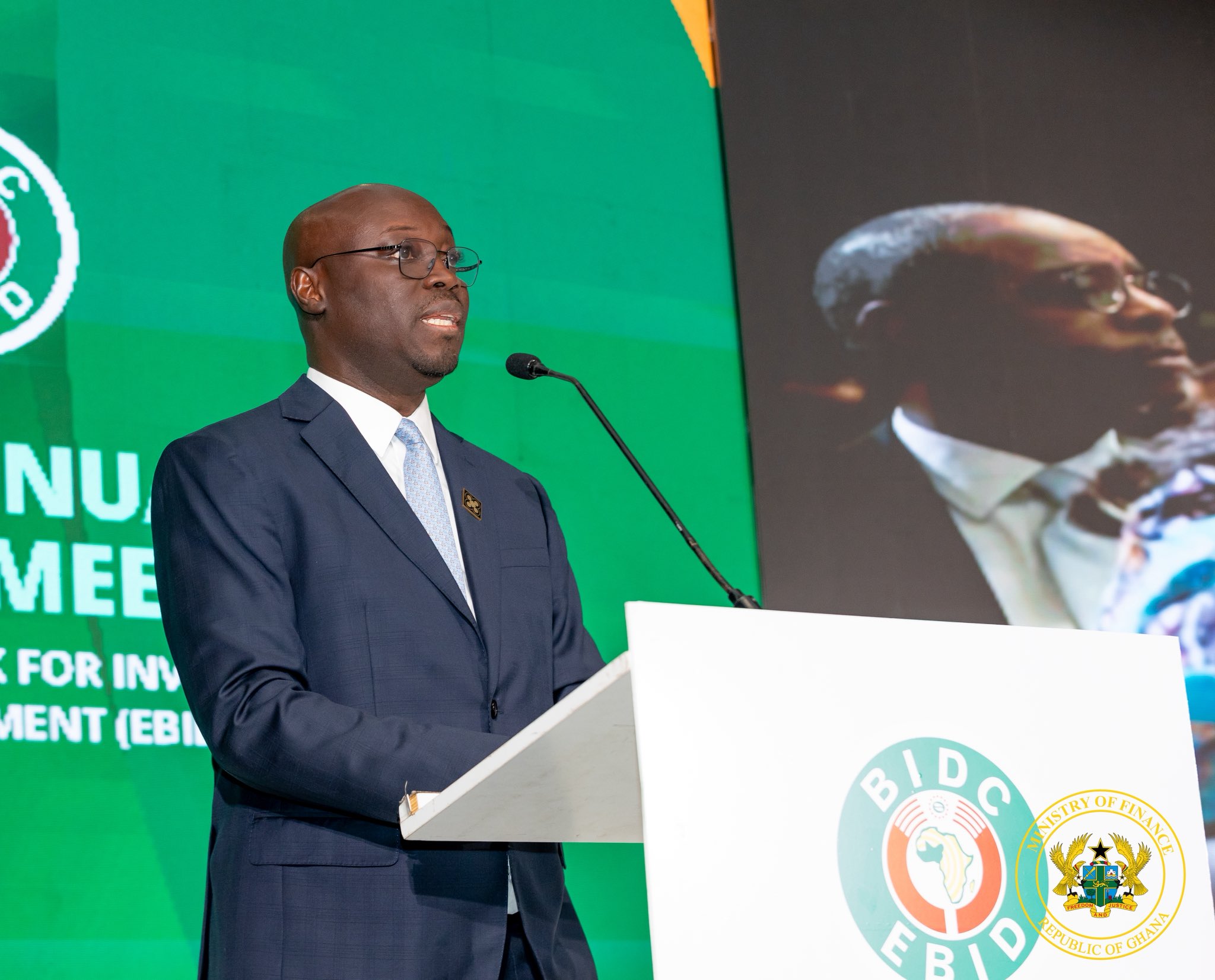
Finance Minister Dr Cassiel Ato Forson has underscored the importance of financial health as a central driver of Ghana’s economic transformation, following a high-level engagement with Queen Máxima of the Netherlands.
Describing the meeting as a privilege, Dr Forson said their discussions went beyond traditional financial metrics to focus on how financial systems can meaningfully improve people’s lives.
According to him, while financial inclusion remains important, the broader goal is to ensure that citizens are not just part of the financial system, but are genuinely empowered by it.
“Our conversation moved beyond finance in its narrow definition. It focused on financial health — making sure people can live with stability, confidence and dignity,” he noted.
Dr Forson explained that Ghana’s economic direction is gradually shifting toward prioritising the everyday experiences of citizens, rather than concentrating solely on macroeconomic indicators.
“At its core, an economy is not just about numbers. It reflects human potential — whether people can withstand shocks, take advantage of opportunities, and plan their futures with confidence,” he said.
He emphasised that the government’s reset agenda is designed to ensure that economic stability translates into tangible benefits for households.
“Stability must bring security to households. Growth must create real opportunities. And access must preserve dignity,” he stressed.
The Finance Minister further indicated that efforts are underway to reshape Ghana’s financial systems to make them more inclusive, accessible and responsive to the needs of the population.
He noted that financial systems should not feel distant or overly complex, but instead function as practical tools that help people live with certainty and purpose.
Dr Forson reaffirmed government’s long-term vision of building an economy where inclusion is not just a concept but a lived reality, with widespread participation and equal access to opportunity.
“The true measure of progress is not only in strong economic indicators, but in the resilience and well-being of our people,” he concluded.