

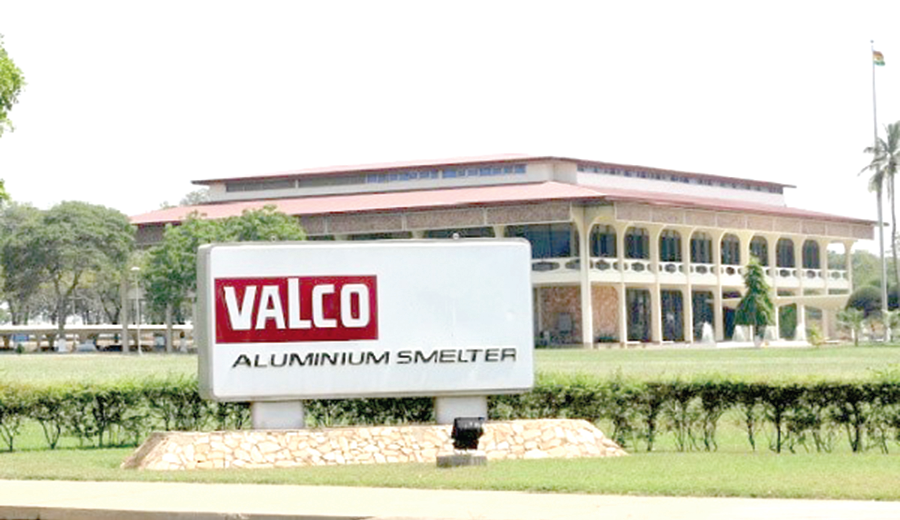
The Volta Aluminium Company (VALCO), once a flagship of Ghana’s industrial ambition, is facing an uncertain future, with the risk of a complete shutdown looming unless private capital is brought in urgently.
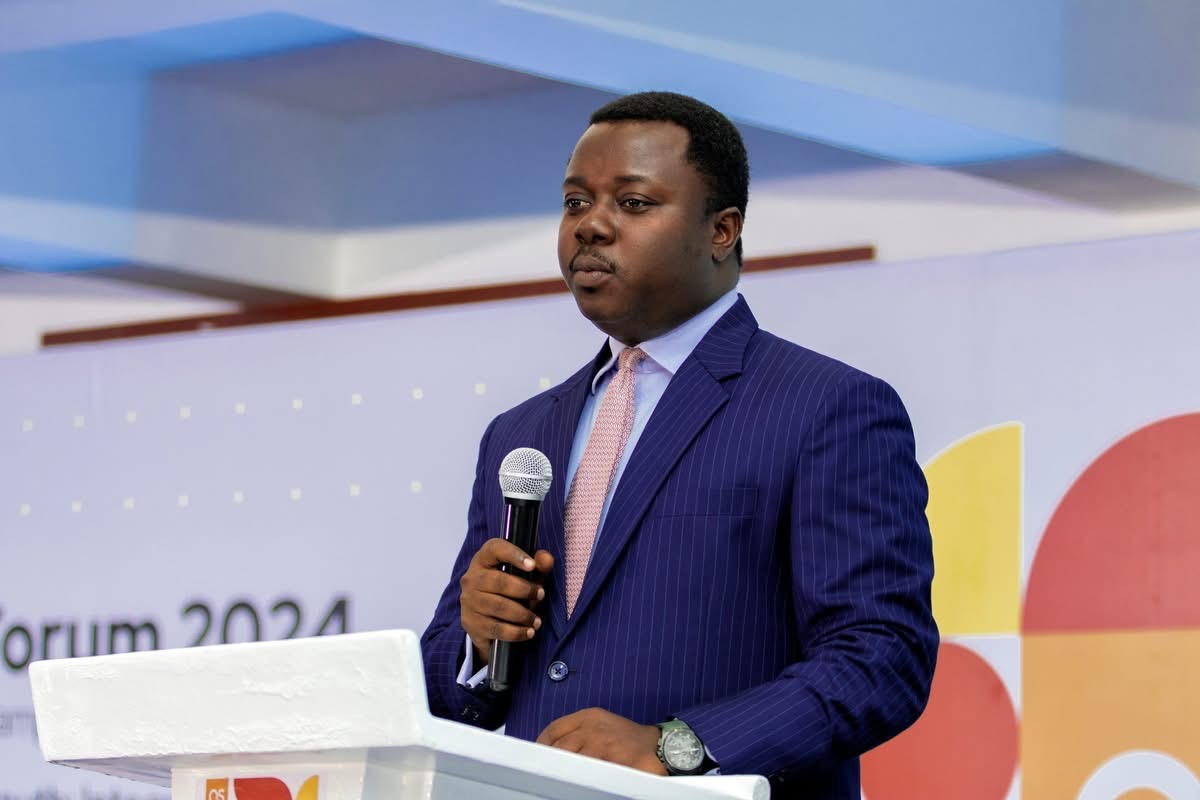
This warning was sounded by the Chief Executive Officer of the Ghana Integrated Aluminium Development Corporation (GIADEC), Reindorf Twumasi Ankrah, who says the state no longer has the financial capacity to rescue the struggling aluminium smelter on its own.
Speaking to the media, Mr Twumasi Ankrah stressed that the government’s move to seek a strategic private partner is not a sell-off, as has been suggested in some quarters, but a rescue mission aimed at saving jobs and preventing the collapse of a key national asset. He urged the public to set aside political interpretations and focus on the economic realities confronting the company.
He explained that although VALCO appears imposing from the outside, its operational performance tells a different story. Built to produce 200,000 metric tonnes of aluminium annually, the smelter currently turns out only about 35,000 metric tonnes, while still consuming roughly 90 megawatts of power. This imbalance, he noted, makes the business financially unsustainable.
Mr Twumasi Ankrah revealed that a review of documents he inherited after assuming office in March 2024 shows that efforts to revive VALCO have been ongoing since at least 2019. As part of those efforts, global consulting firm KPMG was engaged to audit the company and recommend options for restoring its viability.
According to him, the audit traced VALCO’s sharp decline to changes in its ownership and management structure. Established in the 1960s and commissioned in 1967, VALCO initially operated as a privately owned smelter under Kaiser and Reynolds, with power supplied from the Akosombo Dam. Government involvement began in 2004, when Kaiser sold its majority shares after declaring bankruptcy in the United States. Reynolds later exited, leaving VALCO fully state-owned by 2008.
“From the period the government took over full ownership and management, the performance trajectory declined sharply,” he said, referencing the findings of the KPMG report.
By 2022, operations at the smelter had ground to a halt, with workers sent home. Mr Twumasi Ankrah noted that repeated shutdowns have only worsened VALCO’s prospects, as restarting production requires substantial capital while operational efficiency continues to deteriorate.
The situation became even more dire by January 2025, when VALCO’s total liabilities rose to about US$450 million. These debts are owed to several institutions, including GRIDCo, the Ghana Revenue Authority and the Tema Development Corporation. With creditors applying pressure and the state unable to inject fresh funds, authorities decided to keep the plant closed to avoid accumulating further losses.
Against this backdrop, Mr Twumasi Ankrah dismissed claims that VALCO is being sold, describing them as misleading. He said the government is instead pursuing a strategic partnership model recommended by KPMG and endorsed by successive administrations, with approvals to search for an equity investor dating back to May 2022.
Earlier attempts to attract investors failed largely due to unresolved power supply issues and disagreements over the management of existing aluminium stock. Learning from those setbacks, the current process has been restarted under tighter conditions, requiring potential partners to present clear plans for power generation and stock retention.
A 12-member inter-ministerial committee, made up of representatives from key ministries as well as GIADEC and VALCO, has reviewed the proposals submitted so far. Its recommendations have been approved by the GIADEC board and forwarded to the sector minister, with Cabinet consideration now awaited.
Mr Twumasi Ankrah said the proposed partnership is not only about restarting production but expanding capacity to at least 300,000 metric tonnes within 36 months. Achieving this would require extensive retrofitting of all six production lines, many of which are more than 60 years old and highly inefficient.
The estimated cost of this overhaul is about US$600 million, an amount he said the government cannot afford. While some investors have argued that building a new smelter elsewhere would be cheaper, a consortium has expressed interest in partnering with the state, citing local content requirements and the strategic importance of co-ownership. Some shortlisted investors, he added, are also willing to pay the government for the equity stake they acquire, in addition to financing the modernisation of the plant.
He warned that further delays could have serious consequences for workers. VALCO’s workforce has shrunk from about 1,800 employees in the 1990s to roughly 650 today, with more job losses likely if the turnaround plan stalls.
Mr Twumasi Ankrah disclosed that President John Dramani Mahama has been clear that the state lacks the financial capacity to revive VALCO on its own, making private sector participation unavoidable.
“If nothing is done immediately, VALCO will have to shut down completely, and everyone will go home,” he warned.
He reiterated that the strategic partnership approach represents policy continuity rather than a shift, describing it as the only realistic path to safeguarding jobs, preserving a strategic industrial asset and restoring VALCO’s role in Ghana’s industrial development.