

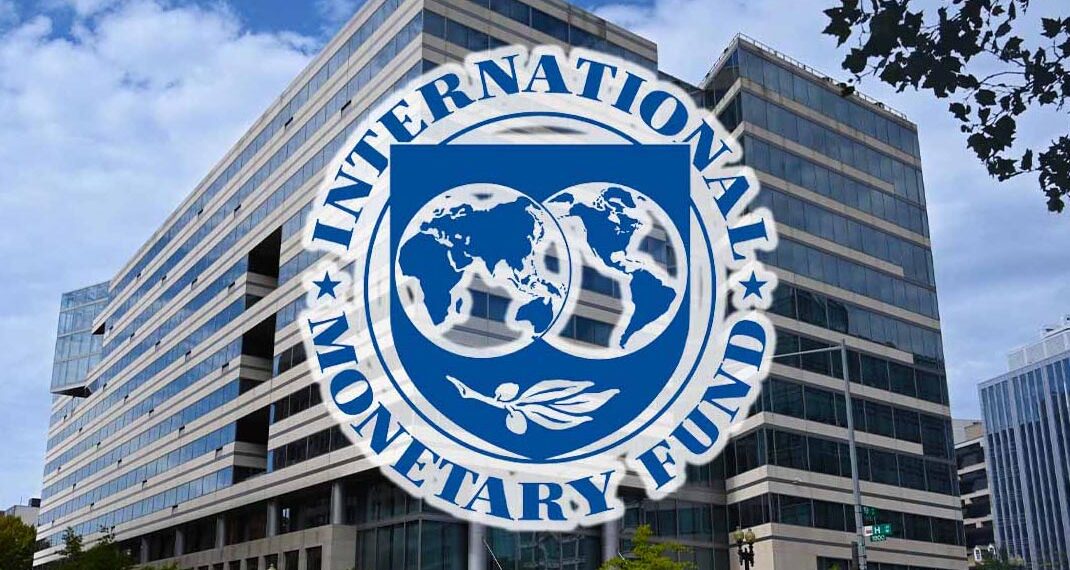
The International Monetary Fund (IMF) has approved a fresh disbursement of about $4.9 million to the Union of the Comoros following the successful completion of the fifth review of the country’s Extended Credit Facility (ECF) programme.
The decision, taken by the IMF Executive Board, also marked the conclusion of the 2025 Article IV consultation with the island nation. The latest tranche amounts to SDR 3.56 million (approximately $4.87 million), bringing total disbursements under the four-year arrangement to about $28.62 million. The ECF programme, approved in June 2023, provides overall financing of SDR 32.04 million — roughly $43 million — to support Comoros’ economic reforms through 2027.
Although the IMF described overall programme performance as broadly satisfactory, it granted waivers for missing two key quantitative performance criteria. These related to the domestic primary balance at end-June 2025 and the continuous target on avoiding the accumulation of external arrears. Of the five quantitative performance criteria assessed at end-June 2025, three were met, while 13 out of 15 structural reform benchmarks due between June and December 2025 were achieved.
The ECF-supported programme is aimed at reducing economic fragility and strengthening resilience. Key focus areas include building fiscal buffers, reducing debt vulnerabilities, improving governance, and reinforcing the financial sector. Particular attention is being given to domestic revenue mobilisation through tax and customs reforms, restructuring the state-owned postal bank, and enhancing public financial management and anti-corruption frameworks.
Macroeconomic indicators suggest that Comoros’ economy remains on a stable path. Growth is estimated at 3.8 percent in 2025 and is projected to rise to 4.1 percent in 2026, supported by increased public investment and a gradual recovery in domestic credit. Inflation has declined sharply, easing to 1.9 percent year-on-year in October 2025 from a peak of 7.3 percent in March. As a result, average inflation for the year has been revised downward to 3.5 percent.
However, fiscal consolidation efforts were weaker than anticipated in the first half of 2025, largely due to unplanned transfer spending. The authorities have since programmed stronger fiscal adjustments in the final quarter of the year and into 2026, backed by corrective tax policy measures.
Externally, the country’s position remains stable. The current account deficit is estimated at around 3 percent of GDP, while international reserves are projected to cover more than eight months of imports in 2025 — a relatively comfortable buffer.
IMF Deputy Managing Director and Acting Chair Nigel Clarke noted that while economic recovery has gained traction amid easing inflation and stable external buffers, risks remain elevated due to structural fragility and global uncertainty. He emphasised the need for revenue-led fiscal consolidation to reduce debt vulnerabilities while safeguarding priority spending.
Executive Directors also encouraged the authorities to maintain prudent macroeconomic policies, accelerate structural reforms, strengthen social protection systems, and improve statistical capacity to enhance programme monitoring and policy implementation.
With the programme set to run through 2027, sustained reform implementation will be critical to maintaining momentum and securing long-term economic stability for Comoros.