


The government has tightened customs controls and placed restrictions on the land transit of some key food commodities following a suspected transit fraud scheme involving 18 articulated trucks.
The new directive affects the transit movement of products such as rice, canned tomato paste, mackerel and vegetable cooking oil through Ghana’s land borders. Authorities say the move is aimed at preventing the diversion of goods meant for other countries into the Ghanaian market without proper customs clearance.
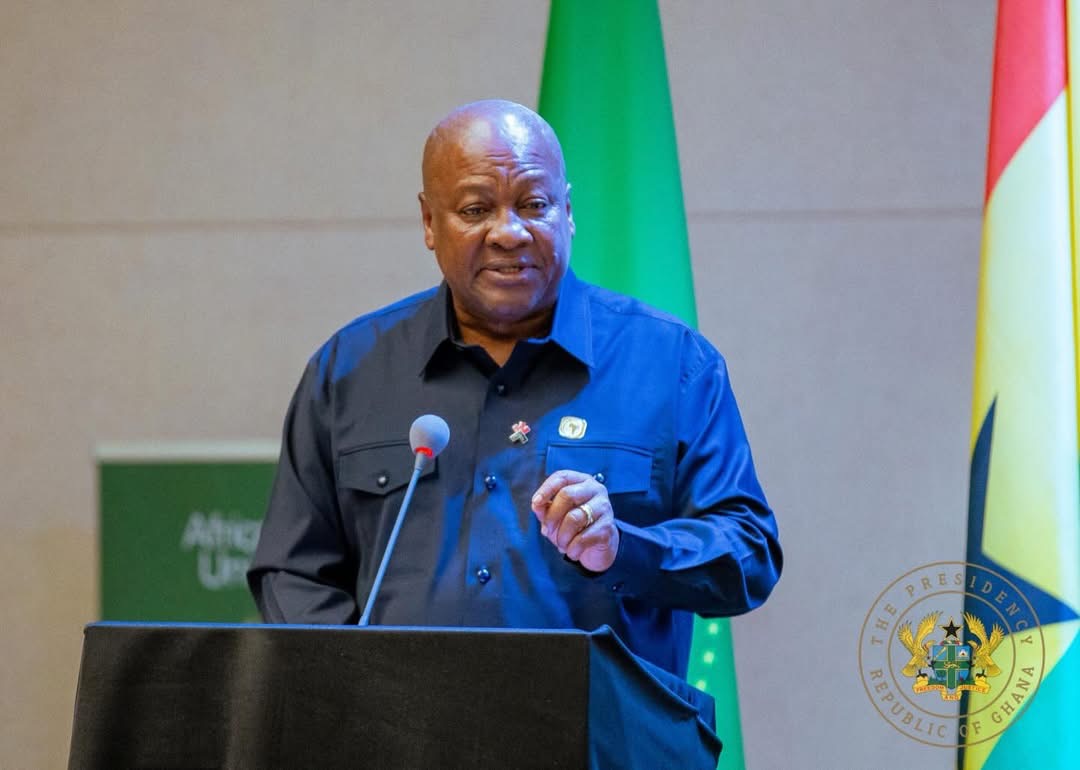
President John Dramani Mahama announced the measure while commissioning the new Olam Agri pasta manufacturing facility in Ghana. According to him, the decision forms part of broader efforts to strengthen customs enforcement and protect local industries.
“The government has recently restricted imports of certain commodities following enforcement actions involving illegal shipments including vegetable cooking oil, rice, tomato paste, mackerel and related products,” the President stated.
The action follows growing concerns within government that some goods declared as transit cargo are being secretly diverted into the local market, depriving the state of customs revenue and creating unfair competition for local manufacturers.
The issue came into the spotlight in February 2026 when Finance Minister Dr. Cassiel Ato Forson ordered a full investigation into a suspected diversion scheme involving 18 trucks intercepted at the Akanu and Aflao border posts.
Officials said the trucks had been declared as goods in transit destined for Niger. However, the vehicles were reportedly moving without the mandatory customs escort required under Ghana’s transit trade regulations, raising suspicion that the cargo could have been diverted into the local market.
Authorities warn that such practices can result in significant revenue losses for the state while undermining domestic businesses that compete with the smuggled goods.
Government officials say the latest restrictions are intended to close loopholes within the transit monitoring system and prevent similar abuses in the future.
President Mahama also linked the decision to the country’s wider industrialisation agenda, stressing the need to reduce Ghana’s dependence on imported processed foods.
According to him, strengthening local manufacturing will help stabilise the economy, reduce pressure on foreign exchange reserves and create employment.
“Facilities like this represent a deliberate shift from reliance to production and from lost opportunities to targeted industrial growth,” he said.
The newly commissioned Olam Agri pasta manufacturing plant is expected to operate on a shift-based system, making it eligible to participate in the government’s 24-hour economy programme.
Parliament has already passed the 24-Hour Economy Authority Bill, which will allow companies operating round-the-clock production to benefit from incentives such as duty-free importation of equipment for expansion.
President Mahama encouraged Olam Agri to take advantage of the programme to scale up production.
The government is also exploring ways to produce raw materials locally for the food manufacturing sector.
The President revealed that scientists at the Crops Research Institute of the Council for Scientific and Industrial Research have developed a wheat variety that can be cultivated in Ghana, with trial yields of between five and six tonnes per hectare.
He urged collaboration between the research institute and Olam Agri to integrate locally grown wheat into the company’s pasta production chain.
According to figures shared during the commissioning ceremony, Olam Agri currently employs more than 4,500 Ghanaians directly and indirectly.
The company has operated in Ghana for more than 30 years and has expanded from commodity trading into agro-processing, including wheat milling, biscuit production, cocoa processing and tomato manufacturing.
Officials say stronger border enforcement and the expansion of local manufacturing are part of government’s broader strategy to protect domestic investment while maintaining integrity in Ghana’s trade and customs system.
Authorities have warned that monitoring at border posts will be intensified, with stricter verification procedures for transit cargo and mandatory escort arrangements to ensure goods declared for transit leave the country.
Government also indicated that additional commodities could face tighter restrictions if diversion schemes persist.