

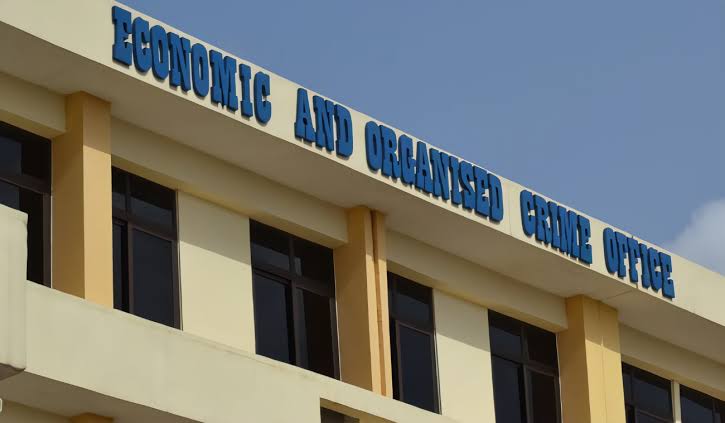
President John Dramani Mahama has announced that the Economic and Organized Crime office (EOCO) recovered more than GHS 600 million by the end of December 2025, underscoring what he described as renewed momentum in the fight against corruption.
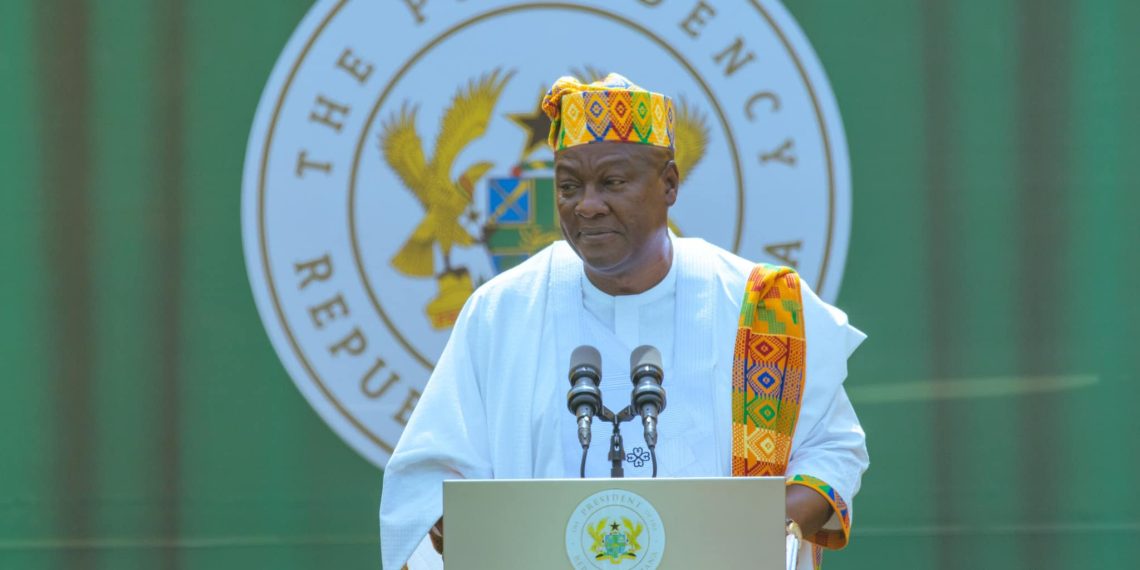
Addressing Parliament during his State of the Nation Address on Friday, February 27, 2026, the President detailed the progress made by the anti-graft body over the past year.
“As of December 2025, EOCO had recovered more than GHS 600 million,” he told lawmakers.
Beyond the financial recoveries, EOCO investigated 462 cases, with 15 currently before the courts. The Office also dismantled transnational car-jacking syndicates and retrieved 29 luxury vehicles believed to be linked to criminal networks.
President Mahama reiterated his administration’s zero-tolerance stance on corruption, insisting that accountability will not be selective.
“The Government remains resolute that corruption will not be tolerated, regardless of status or political affiliation,” he stressed.
He explained that the Attorney General’s Office will continue to pursue both criminal prosecutions and non-conviction-based asset recovery processes to ensure looted state resources are returned to support national development.
While acknowledging public frustration over delays in prosecuting corruption-related cases, the President urged patience and respect for due process.
“I may be as impatient as everyone else to see justice done, but painstaking investigations must be conducted,” he said, adding that suspects must be given their “day in court, including appealing even the smallest points of law to higher courts.”
Reflecting on Ghana’s political history, President Mahama cautioned against any temptation to bypass constitutional procedures in the name of swift justice. He noted that although past regimes sometimes used extrajudicial measures, such approaches resulted in “many regrettable excesses.”
He reaffirmed his commitment to the 1992 Constitution, pledging to uphold the rule of law and ensure that justice is pursued fairly and transparently.
“This process is necessary to protect us all against abuse or ill-treatment of citizens and to ensure that only those guilty of offences against the state are punished,” the President concluded.