

Ghana’s digital payments industry is recording significant growth, with transactions processed through the platforms of Ghana Interbank Payment and Settlement Systems Limited (GhIPSS) reaching approximately 530 million in 2025, valued at more than GH¢1.73 trillion.
However, Bank of Ghana (BoG) Governor Dr Johnson Pandit Asiama says the next stage of the country’s digital payments development must focus on improving connectivity, security and accessibility across payment platforms.
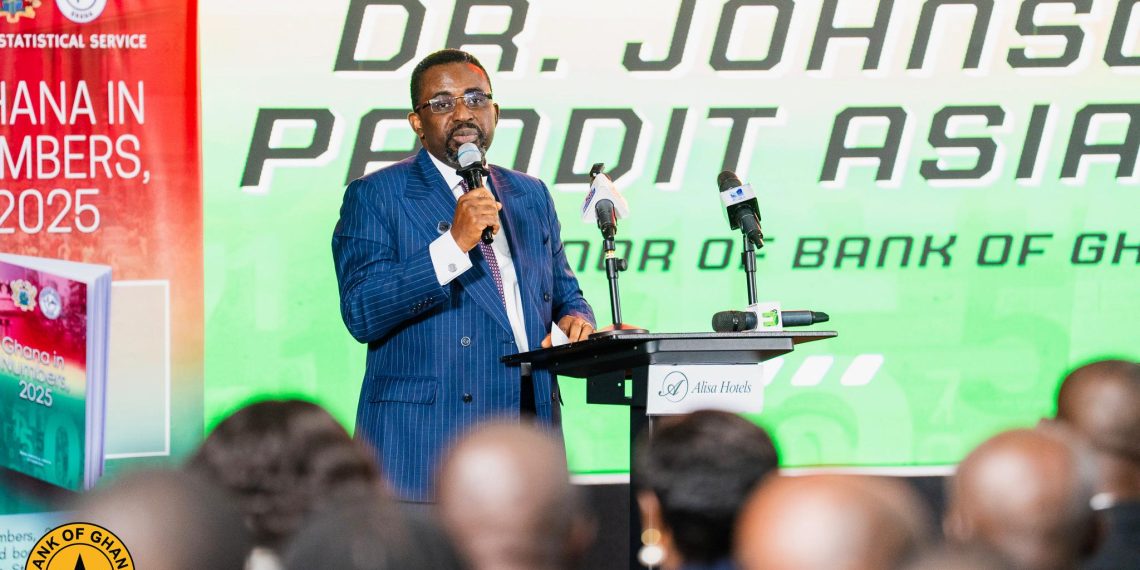
Speaking on November 2 at the inauguration of the reconstituted Payment Systems Advisory Committee (PSAC), Dr Asiama said Ghana had made considerable progress in expanding access to financial services, with recent global surveys indicating that about 81 per cent of adults in the country own a financial account.
He, however, cautioned that the growth in digital transactions must be supported by stronger systems that allow users to transact seamlessly across different service providers.
Among the challenges he identified were the low adoption of GhQR, limited interoperability among mobile money agents, liquidity difficulties, cybersecurity threats and increasing cases of payment fraud.
The Governor expressed concern about the fragmentation of Ghana’s payment ecosystem, particularly the growing reliance on bilateral arrangements between service providers instead of broader industry collaboration.
He warned that “persistent and growing bilateral engagements, rather than multilateral collaboration,” were undermining efforts to achieve a more integrated payment system.
The concern is that despite the growing number of digital transactions, customers and businesses still encounter difficulties when moving money across different platforms and networks.
Limited interoperability can create additional costs, delays and inconvenience for users, while making it difficult for businesses to operate efficiently across multiple payment channels.
Dr Asiama said addressing these gaps would require closer cooperation among regulators, banks, mobile money operators and other payment service providers.
The reconstituted PSAC, established under the Payment Systems and Services Act, 2019 (Act 987), is expected to provide recommendations on payment regulation, industry standards, competition, security, innovation and market development.
Its work will support the Bank of Ghana’s National Payment Systems Strategy for 2025–2029, which is built around four key priorities: an agile regulatory framework, trusted payment systems, stronger financial inclusion and robust payment infrastructure.
Another major concern is the liquidity challenges affecting mobile money agents. Although more Ghanaians have access to digital financial services, customers can still struggle to withdraw cash or complete transactions when agents lack sufficient funds.
Dr Asiama’s position highlights the need to look beyond account ownership when measuring financial inclusion. The ability of customers to use their accounts conveniently and reliably remains equally important.
Cybersecurity and fraud are also becoming increasingly important as more financial transactions move online. The Governor stressed that protecting consumers and maintaining public confidence must remain central to the development of the sector.
He noted that trust in digital payments depends on the reliability of services, the protection of customers’ funds and personal information, and the ability of institutions to respond effectively to complaints and fraudulent activities.
Meanwhile, emerging technologies such as open finance, digital identity, stablecoin-powered remittances, instant payments and cross-border interoperability are expected to shape the future of Ghana’s financial services industry.
While these developments present opportunities to improve transaction speed and expand access, they also come with risks that require effective regulation and industry cooperation.
Dr Asiama said the Bank’s strategy was designed to “support innovation while safeguarding stability” and expand financial access while protecting consumers.
He challenged members of the reconstituted committee to focus on practical solutions rather than the number of meetings held or reports produced.
According to him, the committee would be assessed by the quality of its deliberations and the impact of its recommendations on the country’s payment systems.
He also urged members to identify emerging challenges early and ensure that technical working groups provide timely and actionable advice.
With GhIPSS platforms processing more than GH¢1.73 trillion in transactions in 2025, Ghana’s digital payments industry has reached a point where reliability, security and seamless connectivity are essential to sustaining public confidence.
The immediate task is to address the gaps in interoperability, improve agent liquidity, strengthen protection against fraud and make digital payment services more accessible across the country.
For the Bank of Ghana, the success of the next phase will depend on whether the country’s growing digital payments market can become safer, more connected and more dependable for everyday users and businesses.