


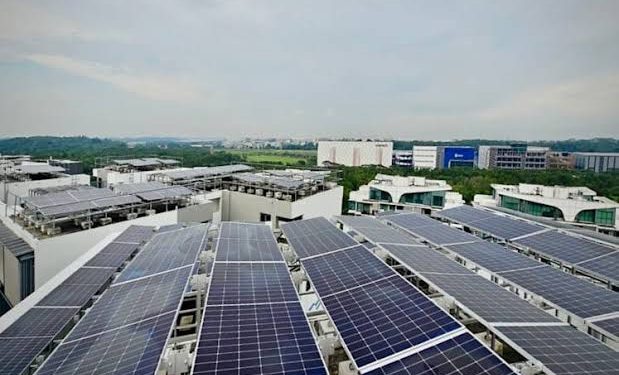
The Association of Ghana Industries (AGI) is urging businesses to increase their adoption of solar energy as rising energy costs continue to put pressure on their operations and competitiveness.
According to the AGI, reducing energy costs is critical for businesses seeking to improve productivity, lower operating expenses and remain competitive.
Speaking to the media on the sidelines of the launch of the BisaConnect Platform in Accra, AGI Chief Executive Officer Seth Twum-Akwaboah said energy costs consistently rank among the major concerns raised by businesses through the Association’s Business Barometer.
“One of the key elements in cost is energy, and the energy bit is so critical because if you’re able to reduce cost of energy, you can become more competitive.”
Mr Twum-Akwaboah said although many businesses are interested in investing in solar, technical uncertainties and limited access to financing continue to prevent some projects from getting off the ground.
He explained that the BisaConnect Platform, developed through the AGI Energy Service Centre, is designed to connect businesses with credible solar service providers and financial institutions, helping them navigate the technical and financial requirements of renewable energy investments.
A major focus of the platform is helping businesses determine whether proposed solar projects are technically sound and financially viable before committing significant resources.
Mr Twum-Akwaboah cautioned that the solar market has attracted several service providers, making it important for businesses to work with qualified and reliable professionals.
He said the platform will connect businesses to certified service providers and financiers offering renewable energy financing products.
The initiative also provides support for feasibility studies, with Swisscontact subsidising more than half of the cost. Mr Twum-Akwaboah described the support as a major opportunity for businesses that want to assess the commercial viability of solar projects without bearing the full upfront cost.
Once a feasibility study confirms that a project is viable, businesses can use the technical and financial information generated to approach financial institutions for funding.
Mr Twum-Akwaboah said some businesses could potentially secure financing for the entire solar project and repay the cost gradually from their normal cash flows.
For Swisscontact Ghana, the challenge is not simply a lack of funding.
Kofi Amin Kofi Anim Ayeko, Manager for Renewable Energy at Swisscontact Ghana, said businesses also face information gaps, difficulties in identifying credible service providers and limited confidence in technical assessments.
“These barriers create a gap between demand, technical expertise, and capital,” he said.
He explained that BisaConnect seeks to close this gap by bringing businesses, renewable energy experts and financial institutions onto a single platform.
Mr Ayeko described the initiative as Ghana’s first inclusive solar e-marketplace and renewable energy investment-readiness platform, aimed at helping businesses move from an interest in solar energy to informed investment decisions.
The initiative forms part of Swisscontact’s efforts to support Ghana’s green economy and strengthen the renewable energy market.
For the AGI, accelerating the adoption of solar energy is increasingly important as businesses look for practical ways to manage energy costs.
Mr Twum-Akwaboah acknowledged that solar uptake remains below Ghana’s renewable energy ambitions but expressed optimism that better financing options and easier access to credible technical expertise could accelerate adoption.
“We are talking sustainability, we are talking about the future. It’s actually a way to go. And therefore, we are concerned that it’s too low,” he said.