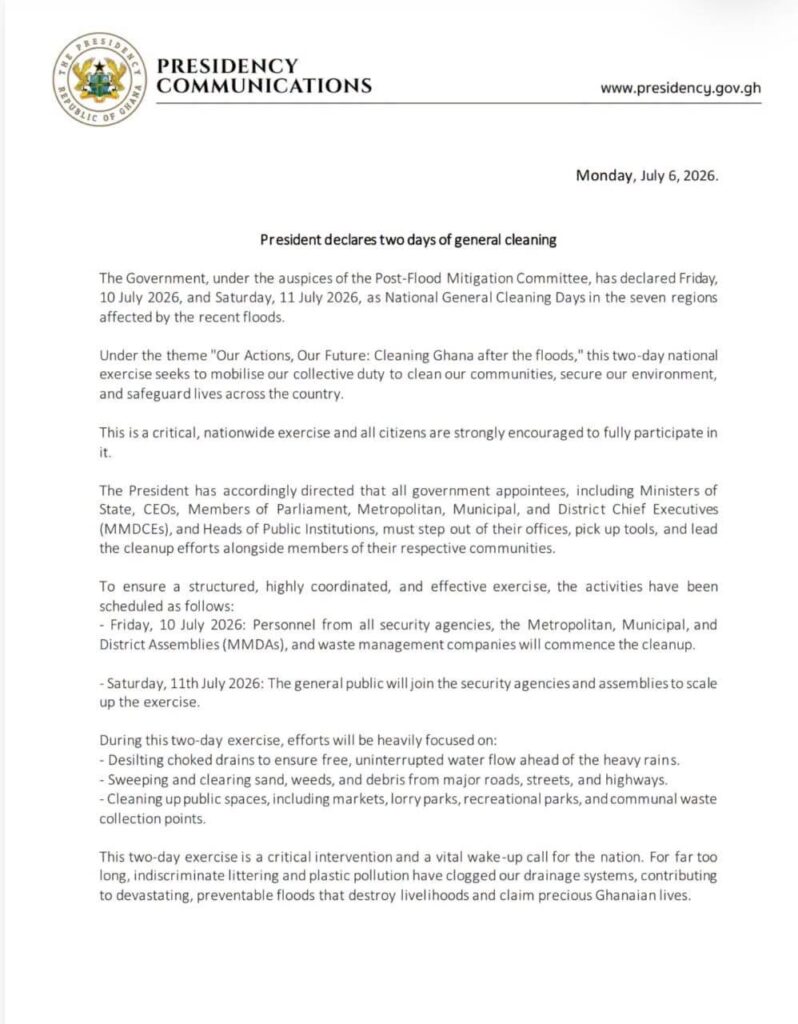


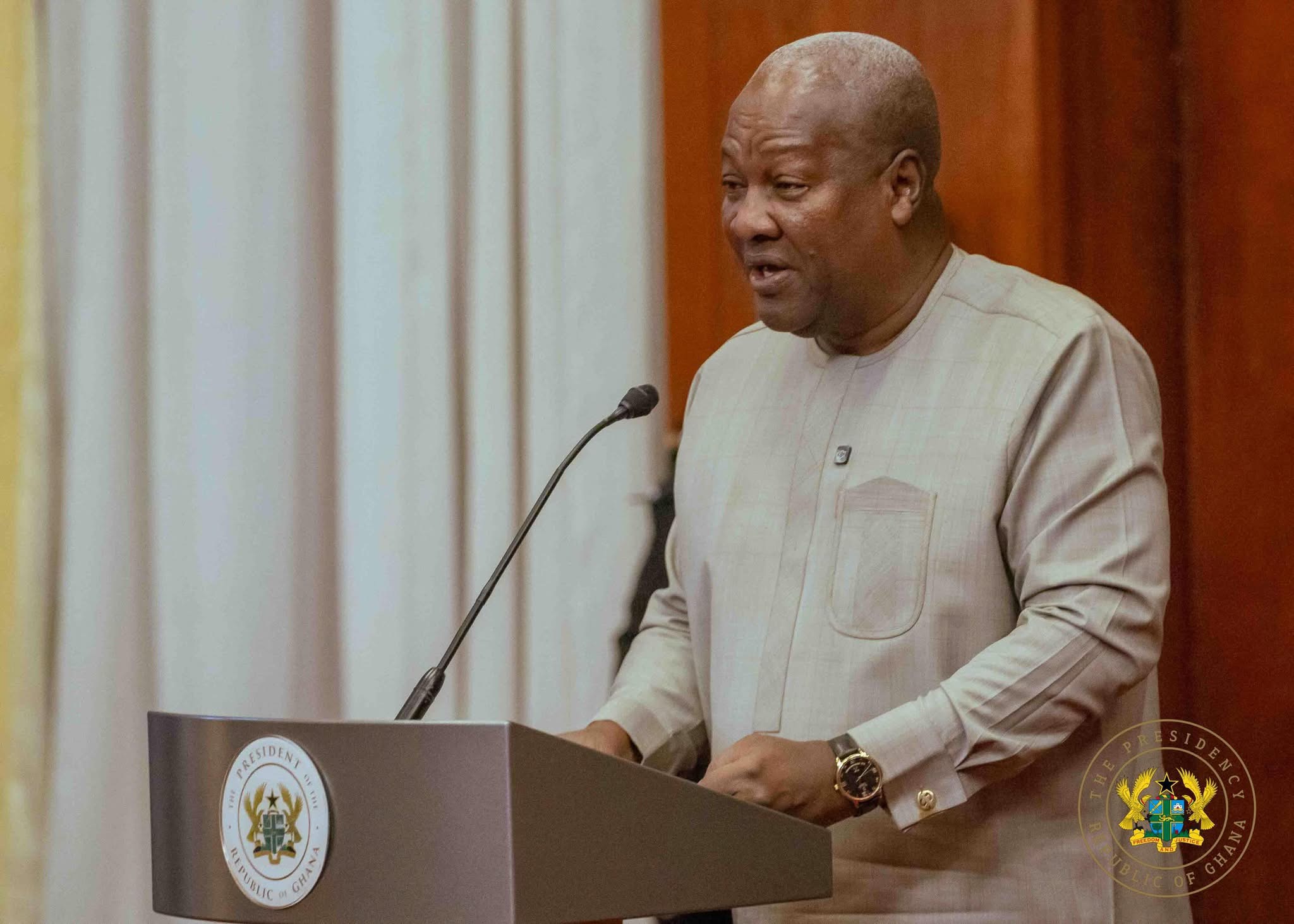
The government has announced a two-day national cleanup exercise in response to the recent floods, with President John Dramani Mahama calling on Ghanaians to work together to restore affected communities and prevent future disasters.
The exercise, organised through the Post-Flood Mitigation Committee, will take place on Friday, July 10, and Saturday, July 11, 2026, across the seven regions impacted by the floods.
Carrying the theme “Our Actions, Our Future: Cleaning Ghana after the floods,” the initiative is aimed at clearing flood-prone areas, improving sanitation, and reducing the risk of further flooding as the rainy season continues.
In a directive issued by the President, all government appointees have been instructed to actively participate in the cleanup instead of supervising from their offices. Ministers, Members of Parliament, Chief Executive Officers, Metropolitan, Municipal and District Chief Executives (MMDCEs), and heads of public institutions have all been asked to lead the exercise in their respective communities.
“All government appointees… must step out of their offices, pick up tools, and lead the cleanup efforts alongside members of their respective communities.”
The cleanup has been scheduled in two phases. On Friday, security agencies, Metropolitan, Municipal and District Assemblies (MMDAs), and waste management companies will begin the operation. On Saturday, residents will join the exercise to expand the cleanup across the affected areas.
Participants will focus on desilting blocked drains, removing weeds, sand and debris from roads, and cleaning markets, lorry parks, recreational parks, and other public spaces to improve sanitation and ensure drains are free-flowing before the next heavy rains.
The government described the exercise as more than a routine sanitation campaign, saying it is an urgent intervention to protect lives and property.
“This is a critical, nationwide exercise and all citizens are strongly encouraged to fully participate in it.”
It also noted that years of poor waste disposal and plastic pollution have contributed significantly to blocked drainage systems, making floods more destructive.
Authorities are urging citizens to turn out in large numbers and play their part in keeping communities clean, stressing that preventing future floods requires a collective national effort.