

Ghana’s plastic manufacturing industry has appealed to President John Dramani Mahama to postpone the planned nationwide ban on Styrofoam products from January 2027 to 2030, warning that the current timeline could have severe consequences for businesses, workers and the financial sector.
The Ghana Plastic Manufacturers’ Association (GPMA) says companies in the sector have collectively invested about GHS 1.49 billion in Styrofoam production facilities, with a significant portion of the investment financed through bank loans and long-term capital commitments.
Representing more than 171 factories across the country, the association argues that the proposed seven-month transition period is insufficient for manufacturers to recover their investments, restructure operations or shift to alternative packaging production.
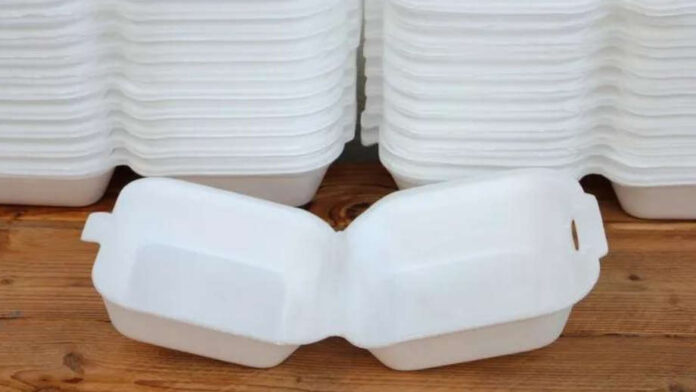
The government’s planned policy, part of a broader environmental protection agenda, seeks to prohibit the production, importation, sale and use of expanded polystyrene products, commonly known as Styrofoam. The ban would affect food containers, disposable cups and plates, foam mattresses, insulation materials and other related products.
While the GPMA acknowledges the need to address plastic pollution, it argues that the country should avoid introducing measures that could create significant economic and industrial challenges.
According to the association, Styrofoam production equipment is highly specialised and cannot be easily converted to manufacture biodegradable packaging products. As a result, manufacturers reject suggestions that affected factories can simply retool their operations and continue production using alternative materials.
The association says many companies are still recovering the cost of major investments, with some firms having only recently commissioned new production facilities. An abrupt regulatory change, it argues, could leave businesses with stranded assets and limited opportunities to recoup their investments.
The GPMA estimates that the plastic manufacturing sector directly employs more than 41,000 workers and supports thousands of others through related industries, including recycling, logistics, retail, food packaging and beverage production.
Industry leaders warn that a sudden halt to Styrofoam production could have wider economic effects, impacting suppliers, transport operators, retailers, food vendors and other small businesses that rely on affordable packaging products.
The association has also raised concerns about the possibility of increased imports if local production capacity is removed before affordable alternatives become widely available. It argues that such a development could undermine efforts to promote local manufacturing, industrialisation and import substitution.
Beyond manufacturing, the GPMA says the proposed ban could create risks for the banking sector. Many businesses have outstanding loans tied to Styrofoam production equipment, and manufacturers fear that rendering these assets obsolete could make it difficult for some firms to meet their repayment obligations.
According to the association, the issue extends beyond environmental policy and has implications for employment, industrial investment, financial stability and Ghana’s competitiveness in the packaging industry.
The GPMA maintains that Ghana’s primary challenge is ineffective waste management rather than Styrofoam production itself. It points to countries such as Germany, South Korea and the Netherlands, where organised recycling systems, waste collection networks and extended producer responsibility programmes have helped reduce pollution without relying solely on outright bans.
The association believes Ghana should focus on strengthening waste management infrastructure and encouraging responsible disposal practices while gradually transitioning towards more sustainable packaging solutions.
Environmental advocates, however, argue that Styrofoam remains a major contributor to pollution, blocked drains and flooding, making decisive action necessary to address long-term environmental and public health concerns.
As debate over the policy continues, the Mahama administration faces the challenge of balancing environmental protection with economic stability. While there is broad agreement on the need to tackle plastic pollution, stakeholders remain divided on whether a rapid ban or a phased transition would provide the most sustainable path forward.
The government is yet to indicate whether it will reconsider the implementation timeline following the concerns raised by industry players.