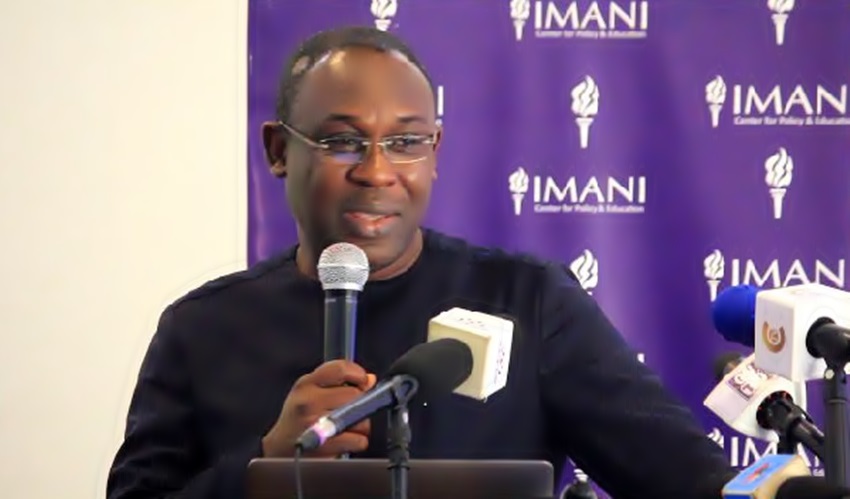
Vice-President of IMANI Africa, Kofi Bentil, is calling on South African companies operating in Ghana and across the continent to contribute to the cost of evacuating Ghanaians affected by recent xenophobic violence in South Africa.
Speaking on The KeyPoints on May 30, Mr Bentil argued that multinational companies benefiting from African markets have a responsibility that goes beyond business profits, especially during crises involving African citizens.
He said these companies should not remain silent when Africans are attacked elsewhere on the continent, insisting that they must also support efforts to protect and assist victims.
“Companies that make billions across Africa cannot remain silent when Africans are attacked in their home country. What the government is doing comes at a cost. They must bear part of the cost,” he said.
His comments come as the Ghanaian government continues evacuation efforts to bring home citizens caught up in the recent attacks on foreign nationals in South Africa.
Mr Bentil stressed that the issue should not be reduced to immigration status, but rather seen as a human rights concern, arguing that anyone within a country’s borders deserves protection.
“If anybody enters your territory, you have a responsibility to protect that person,” he noted.
He further described the recurring nature of attacks on foreign nationals in South Africa as a sign of deeper governance and accountability challenges.
“When something happens once, it may be accidental. Twice may be coincidence. By the third time, it becomes a pattern that demands accountability,” he said.
According to him, Ghana must treat the safety of its citizens abroad as a serious national priority, beyond political considerations.
“When citizens of a country are under attack, the country itself is under attack,” he added.
Mr Bentil commended government’s evacuation response and recalled that he had previously suggested emergency evacuation arrangements in situations where citizens’ safety cannot be guaranteed.
“There are times when a nation must assert itself, and one of those times is when its citizens are under attack,” he said.
He also criticised the African Union and other regional bodies, saying they have not done enough to address repeated attacks on Africans within the continent.
He argued that stronger accountability mechanisms are needed to protect citizens and ensure member states take responsibility for recurring violence.
Mr Bentil further suggested that Ghana may need to reassess parts of its economic and diplomatic relations with South African firms if concrete steps are not taken to address the issue.
While clarifying that he was not advocating hostility toward South African businesses or citizens, he said governments have legitimate tools—diplomatic, legal, and economic—to defend national interests.
“We must ensure that our citizens are respected wherever they are. There has to be accountability and there has to be consequences,” he stated.
South African companies maintain a strong presence in Ghana’s telecoms, banking, insurance, retail, hospitality, logistics, and media sectors. Mr Bentil’s position is that such firms, which benefit from cross-border African markets, should also show responsibility when Africans face harm.