

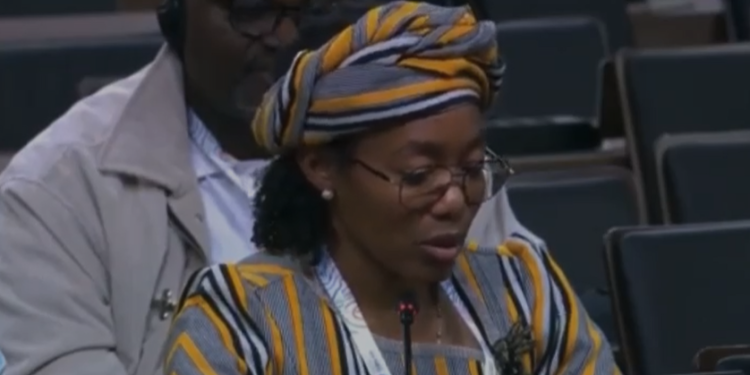
Ghana’s Minister for Environment, Science and Technology, Dr Zanetor Agyeman-Rawlings, has expressed disappointment with the outcome of the 31st United Nations Climate Change Conference (COP31), saying African countries have been left without meaningful progress on key climate priorities, particularly adaptation financing.
Speaking at the closing plenary in Antalya, Türkiye, on behalf of the African Group of Negotiators (AGN), she said Africa had entered the negotiations expecting stronger commitments to address the continent’s climate challenges, but the final outcome fell short of expectations.
Dr Agyeman-Rawlings said the failure to make progress on adaptation finance was particularly concerning, noting that vulnerable African countries continue to face growing climate risks that require adequate and predictable financial support.
She criticised the lack of progress on the commitment to triple adaptation finance by 2035, describing it as a setback compared to the progress made at the previous climate conference in Belém, Brazil.
“We were disappointed that we didn’t get a meaningful outcome on the means of implementation, particularly the tripling of adaptation finance. We see this as a regression from the progress made in Belém,” she said.
She also expressed concern about the limited attention given to National Adaptation Plans during the negotiations, calling for reliable funding and a permanent place for the issue on the agenda of the UNFCCC subsidiary bodies.
On mitigation, the Minister said the outcome was equally disappointing, as further discussions had been deferred under Rule 16. She urged countries to ensure that the mitigation work programme remained supportive and cooperative rather than becoming prescriptive or punitive.
Touching on the just transition agenda, Dr Agyeman-Rawlings said African countries had accepted the consensus in the spirit of compromise but regretted the further postponement of a proposed just transition mechanism.
She, however, welcomed the continuation of the work programme for another three years and the phased process leading to COP32, which is scheduled to take place in Addis Ababa, Ethiopia, in 2027.
In an appeal to world leaders, she warned that failure to take meaningful action on climate change would leave future generations to bear the consequences, particularly communities already struggling with droughts, flooding and rising sea levels.
“When leaders refuse to pay for the climate today, they’re simply borrowing a much bigger debt from our children,” she cautioned.
Dr Agyeman-Rawlings maintained that Africa had demonstrated its commitment to climate action but stressed that the continent could not sustain its efforts on promises alone.
She concluded by commending the COP31 Presidencies, the Government and people of Türkiye, the UNFCCC Secretariat and participating countries for their contributions to the two-week conference.