


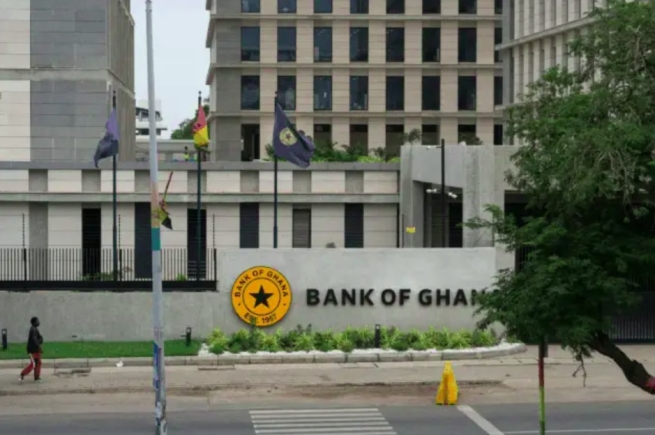
The Bank of Ghana (BoG) has sold GH¢8.74 billion in 14-day bills at a weighted average interest rate of 10.50%, offering an early indication of short-term market conditions following its decision to reduce the Monetary Policy Rate (MPR) from 14% to 11%.
The sale, conducted on November 18 under Tender 888, came on the same day the central bank announced a 300-basis-point reduction in its policy rate, marking a significant shift in its monetary policy direction.
The bills attracted a weighted average discount rate of 10.4578%, with allotted bid rates ranging between 10.4577% and 10.4578%.
The auction notice, however, did not disclose the total value of bids received or the amount initially offered, making it difficult to determine the level of investor demand.
The 10.50% interest rate is 0.50 percentage points below the new policy rate of 11%, providing an early reference point for short-term market pricing following the rate adjustment.
However, the difference does not necessarily mean borrowing costs for businesses and households will fall by the same margin, as lending rates are influenced by several factors beyond the central bank’s policy rate.
The latest auction also comes amid changes to the Bank’s monetary operations. Alongside the rate cut, the Monetary Policy Committee (MPC) announced a reduction in the policy corridor from 400 basis points on either side of the policy rate to 100 basis points.
It also indicated that the existing 14-day open-market operations instrument would be replaced with a seven-day instrument to improve liquidity management and strengthen the transmission of monetary policy decisions to market rates.
The continued use of the 14-day bill in the November 18 auction reflects the instrument used for that particular tender, although the Bank has not specified when the transition to the seven-day instrument will take effect.
The GH¢8.74 billion sale further highlights the central bank’s continued efforts to manage liquidity in the financial system despite the reduction in its policy rate.
Through the sale of short-term bills, the Bank absorbs funds from investors for the duration of the instrument, helping to manage excess liquidity and keep short-term interest rates aligned with its monetary policy objectives.
Recent monetary indicators suggest that liquidity and credit conditions have been expanding. According to the November MPC statement, broad money grew by 20.5% year-on-year in October, while reserve money increased by 22.6%.
Private-sector credit also expanded by 37.2%, equivalent to 30% in real terms.
Meanwhile, the 91-day Treasury bill rate declined to 4.6% in October from 10.6% a year earlier, while the average bank lending rate eased to 15.8% from 22.2% over the same period.
These developments point to improving financing conditions, although the central bank must ensure that increased liquidity and credit growth translate into productive economic activity without putting pressure on prices.
Inflation, for instance, increased slightly to 5.5% in October from 5.2% in September, although it remained below the lower boundary of the medium-term target band.
For investors, the latest auction provides an early indication of short-term returns following the policy adjustment. For businesses and households, however, the more important question is whether the reduction in the policy rate will eventually translate into cheaper loans and improved access to credit.
The November 18 auction does not, on its own, establish how much the rate cut has affected market borrowing costs. Subsequent Treasury bill auctions, money-market rates and movements in bank lending rates will provide a clearer picture.
As the Bank moves into a lower-rate environment, its challenge will be to support private-sector growth while maintaining control over liquidity and inflation.
The GH¢8.74 billion bill sale is therefore an early indication of how the central bank is managing that transition, with the real test being whether lower policy rates can deliver cheaper financing and stronger investment without undermining price stability.