

Ukraine’s reconstruction and recovery bill has surged to nearly $588 billion over the next decade, highlighting the immense scale of destruction caused by Russia’s ongoing invasion.
The figure comes from the fifth Rapid Damage and Needs Assessment (RDNA5), jointly released by the Government of Ukraine, the World Bank Group, the European Commission and the United Nations.
Covering the period from February 2022 to December 31, 2025, the assessment estimates that rebuilding costs are now almost three times Ukraine’s projected nominal GDP for 2025. It paints a stark picture of widespread economic and infrastructure devastation across the country.
Despite the rising costs, Ukrainian authorities with backing from international development partners have outlined recovery and reconstruction priorities worth more than $15 billion for 2026. Planned interventions include public investment projects, housing reconstruction, demining operations and broad-based economic support programmes.
Since the full-scale invasion began in February 2022, at least $20 billion in recovery needs have already been addressed through emergency repairs and early recovery efforts in critical sectors such as housing, energy, transport and education.
Prime Minister Yulia Svyrydenko said Ukraine continues to demonstrate resilience despite sustained attacks on key infrastructure, particularly energy facilities and housing during the winter months. She credited international partners for playing a vital role in restoring essential services and sustaining recovery momentum.
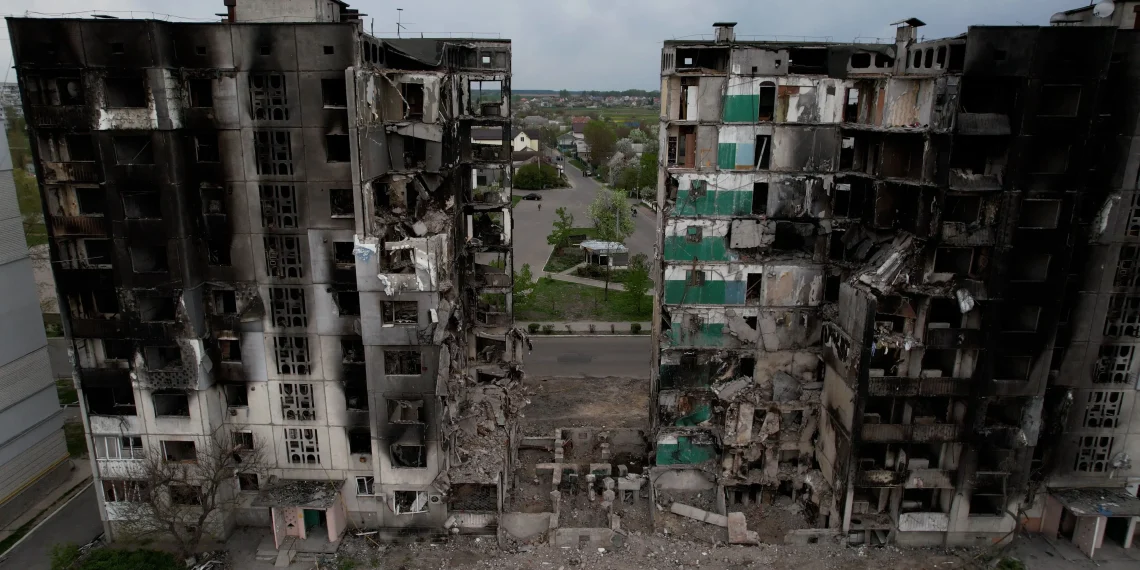
According to the report, direct damage has now exceeded $195 billion up from $176 billion recorded in the previous assessment released in February 2025. The housing, transport and energy sectors remain the hardest hit, with destruction concentrated in frontline regions and major urban centres.
Damage in the energy sector alone has increased by about 21 percent since the last assessment, reflecting intensified strikes on power generation, transmission networks and district heating systems. Transport sector needs rose by roughly 24 percent, largely due to repeated attacks on railways and port infrastructure throughout 2025.
By the end of 2025, approximately 14 percent of Ukraine’s housing stock had been damaged or destroyed, affecting more than three million households.
Anna Bjerde, Managing Director of Operations at the World Bank Group, described Ukraine’s ability to maintain economic activity and institutional stability as remarkable under prolonged disruption. She reaffirmed the institution’s commitment to supporting the country’s recovery.
The assessment also underscores the importance of private sector participation in Ukraine’s long-term rebuilding efforts. Attracting private investment, it notes, will depend on sustained reforms to improve the business climate, expand access to finance, strengthen competition, tackle labour shortages and align production standards with European Union green and digital frameworks.
In terms of sectoral needs, transport accounts for the largest share at over $96 billion. Energy follows at nearly $91 billion, while housing requires close to $90 billion. Commerce and industry are estimated at more than $63 billion, and agriculture at over $55 billion. Explosive hazard management and debris clearance alone are projected to cost nearly $28 billion, despite ongoing demining progress.
Marta Kos, the EU Commissioner for Enlargement, said the European Union remains firmly committed to supporting Ukraine’s reconstruction. She pointed to efforts to mobilise private capital through the Ukraine Investment Framework and to advance reforms linked to EU accession.
From a social standpoint, the United Nations emphasised that rebuilding human capital will be just as critical as restoring infrastructure. Matthias Schmale, the UN Resident and Humanitarian Coordinator in Ukraine, highlighted the importance of refugee returns, reintegration of veterans and greater participation of women in the labour force.
The report concludes that Ukraine’s emerging postwar economic strategy known as the Ukraine Economy of the Future will be central to restoring investor confidence. Anchored on macroeconomic stability, governance reforms, private sector growth and human capital investment, the strategy aims to accelerate the country’s long-term convergence with the European Union.