

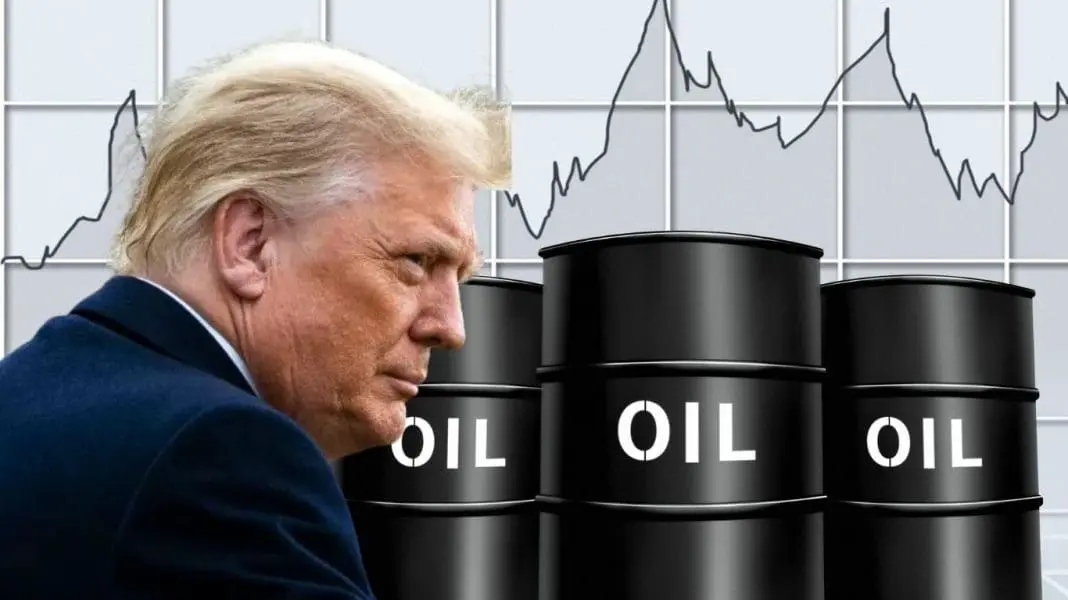
President Donald Trump’s announcement on Truth Social about renewed inflows of Venezuelan crude oil has sparked discussion far beyond Washington and Caracas.
On the surface, the statement suggests a recalibration of U.S. sanctions policy and hints at Venezuela’s possible re-entry into global energy markets. Beneath the headline, however, lies a more sobering reality: Venezuela’s oil sector is in no position to deliver market-shifting supply anytime soon.
Trump’s declaration, notably short on technical or operational detail, appeared to cast Venezuela as a potential swing supplier and gestured toward a post-Maduro reintegration of its oil industry into U.S. energy flows. Yet oil markets were unmoved. Prices barely budged, analysts responded cautiously, and traders treated the news more as a geopolitical signal than a genuine supply event.
That muted reaction reflects a basic truth the market understands well: political permission does not repair decades of institutional decay.
Headlines suggesting 30 to 50 million barrels of Venezuelan crude sound significant at first glance. In reality, they are not.
Global oil consumption exceeds 100 million barrels per day. Even at the high end, such volumes represent less than half a day of global demand. Delivered as one-off shipments, they cannot materially influence prices, balances, or refinery behavior.
More importantly, oil markets price reliability, not announcements. Traders and refiners care about whether barrels can be delivered consistently, at scale, and under stable contractual and legal conditions. On those measures, Venezuela remains a high-risk supplier.
Venezuela holds the world’s largest proven oil reserves roughly 300 billion barrels mostly concentrated in the Orinoco Oil Belt. Yet production has collapsed dramatically, from around 3.4 million barrels per day in the late 1990s to well below one million barrels per day in recent years.
This decline is not due to geology. It is the result of institutional failure.
Years of expropriation, chronic underinvestment, mismanagement at state oil company PDVSA, and international sanctions have hollowed out the sector. Venezuela’s crude is predominantly extra-heavy and sour, requiring diluents, upgrading facilities, and specialized refining capacity. Much of the infrastructure that supports this process has deteriorated or become non-functional.
Electricity shortages, skilled labor flight, corrosion of pipelines, and unreliable logistics further constrain output. Even when oil is produced, getting it to market consistently remains
U.S. Gulf Coast refineries are among the few in the world equipped to process Venezuelan heavy crude efficiently. But even they cannot absorb large or sustained volumes without dependable upstream production, blending capacity, and shipping logistics.
Those conditions do not currently exist in Venezuela.
Rebuilding them would require significant foreign capital, technical expertise, regulatory stability, and years not months of sustained investment. None of that can be conjured by political announcements alone.
Trump’s statement should therefore be understood less as an imminent oil market development and more as a geopolitical signal one that raises questions about future U.S. policy, leverage in the Western Hemisphere, and the long-term fate of Venezuela’s energy sector.
For now, however, Venezuela’s vast reserves remain largely stranded. Until credibility, capacity, and capital are restored, Venezuelan oil will continue to matter more in political rhetoric than in global supply balances