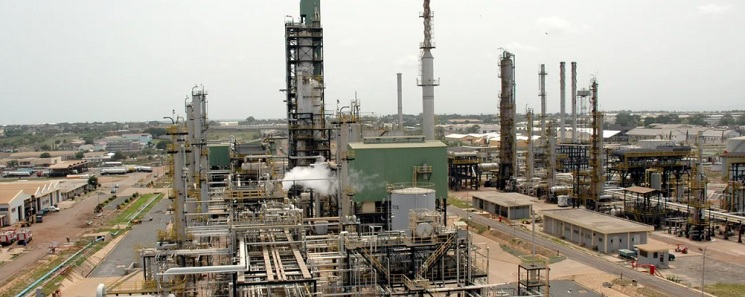
Ghana’s main oil refinery, the Tema Oil Refinery (TOR), is currently unable to process crude oil produced from the country’s offshore oilfields due to technical limitations, the Ministry of Energy and Green Transition has revealed.
According to the ministry, TOR lacks critical processing units needed to refine Ghana’s crude into fuel products that meet local quality standards.
Technical Adviser at the ministry, Yussif Sulemana, explained in an interview on Citi FM on Monday, March 9, 2026, that the refinery requires additional equipment to properly process crude oil from Ghana’s major offshore fields, including Jubilee, TEN and Sankofa.
He said two key units are missing from TOR’s current system: a diesel hydro-treating unit and an isomerisation or reformer unit.
These units are essential for improving fuel quality. The diesel hydro-treating unit helps reduce sulphur levels in fuel, while the isomerisation unit increases the octane rating of petrol.
“At the moment, TOR cannot produce petrol that meets Ghana’s required 91 Research Octane Number (RON),” Dr Sulemana said.
He explained that without these upgrades, fuel produced from Ghana’s crude oil would fail to meet domestic fuel standards and cannot legally be sold on the local market.
This technical constraint, he noted, is one of the reasons Ghana exports its crude oil while the refinery processes imported crude varieties that are more compatible with its existing configuration.
Dr Sulemana also pointed out that Ghana’s crude oil is considered premium quality on the international market, making it economically beneficial to export it.
“If exporting the crude brings in higher revenue and we can import a cheaper crude that TOR can refine efficiently, it makes economic sense,” he said.
The Energy Ministry, however, says efforts are underway to upgrade TOR so it can eventually refine Ghana’s own crude oil.
Dr Sulemana disclosed that plans are being considered to expand the refinery’s capacity and establish an additional processing facility within the TOR enclave.
“A new refinery within TOR is on the horizon,” he said.
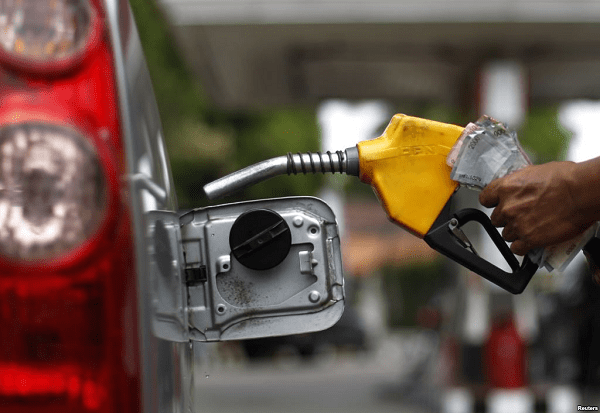
Meanwhile, the ministry has assured the public that Ghana is not facing an immediate fuel shortage despite rising tensions in the Middle East.
Dr Sulemana said the country currently has between five and six weeks’ worth of petroleum product stocks, with additional vessels already docked at the harbour waiting to discharge.
If those vessels complete discharge, he noted, the country’s fuel reserves could extend to about 10 weeks.
However, he warned that the bigger concern for Ghana is not supply shortages but potential increases in fuel prices due to global market volatility.
“What we are immediately threatened with is the price. The question is whether we can maintain stable prices,” he said.
He added that Ghana is also exploring the possibility of sourcing petroleum products from the Dangote Refinery in Nigeria, although any purchases would still be based on international market prices.
“Dangote will not subsidise fuel simply because they are in Africa or within our sub-region. They will also price their products based on the global market,” he explained.
On how government intends to manage possible price hikes, Dr Sulemana said several policy options are being considered. These include allowing market forces to determine prices, introducing subsidies to cushion consumers, or using revenue from Ghana’s crude oil exports to offset rising fuel costs.
“We are working on a strategy that will allow some of the gains from crude exports to support the downstream sector,” he added.
Authorities are continuing to monitor developments in global oil markets and will adjust policies depending on how the situation evolves.