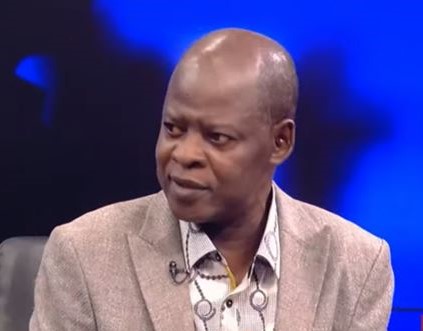
Small-scale mining firms account for more than half of Ghana’s gold production yet contribute barely one percent of total mining sector revenue to the state, highlighting deep fiscal leakages within the industry, mineral resource governance expert Dr Steve Manteaw has disclosed.
Speaking at a Strategic Policy Session on De-risking Ghana’s Gold Trade, organised by the Economic Governance Platform (EGP) and the World Bank, Dr Manteaw said the dominance of small-scale miners in gold production contrasts sharply with their weak contribution to public revenue.
According to him, many operators in the small-scale mining sector remain outside the formal fiscal system, failing to meet basic obligations such as the payment of royalties, corporate income tax and annual ground rent.
“Studies we’ve conducted show that although small-scale mining now contributes about 52 percent of national gold production, the sector contributes less than one percent to total mining revenue,” Dr Manteaw said. “They don’t pay royalties, they don’t pay corporate income tax, and even ground rent, which is meant to be paid annually, is often paid just once.”
Data from the Publish What You Pay Report 2024 show that the government generated about GH¢17.7 billion from large-scale mining companies in 2024 through taxes, royalties and dividends. Comparable figures for 2025 are yet to be released.
Dr Manteaw also addressed concerns about reported losses by the Ghana Gold Board (GoldBod), arguing that these figures should be understood as the cost of dismantling long-standing illegal market structures rather than evidence of operational failure.
He explained that for years, foreign traders particularly from parts of Asia and West Africa had embedded themselves in Ghana’s gold trade by financing local miners. These financiers often provided excavators, equipment and working capital in exchange for guaranteed gold supplies sold at discounted prices.
“In many cases, an Indian, Chinese or Malian trader buys equipment for a Ghanaian miner and finances operations with the understanding that the gold will be sold to them at a discount to recover their investment,” he noted.
According to Dr Manteaw, GoldBod entered this entrenched market without initially offering similar support services but still attempted to buy gold directly from miners. To compete, the state buyer purchased gold at close to international market prices, absorbing operational costs such as logistics, staffing and administration.
“If you buy at the same price you sell, you will naturally incur costs, which accountants may describe as losses,” he said. “But in real terms, this is the cost of breaking illegal networks, building trust with miners and reclaiming control of the gold trade.”
He revealed that GoldBod has since created a dedicated directorate to provide mine support services, including financing and equipment, replicating the incentives previously offered by foreign intermediaries.
“The same tools foreigners used to dominate our gold market are now being used by the state to push them out,” Dr Manteaw said.
He added that GoldBod has also established a special task force to enforce mining and gold trading laws, stressing that foreigners are prohibited from trading or exporting gold without the appropriate licences. A specialised tribunal has been set up to fast-track prosecutions of offenders.
Dr Manteaw said the current approach combines strict enforcement with incentives to formalise the small-scale mining sector, expressing confidence that the reforms will yield long-term benefits.
“There is enforcement, and there is also the carrot in the form of support for miners,” he said. “Looking ahead, the future can only be bright as we work to address the persistent illegalities in the small-scale mining sector.”