

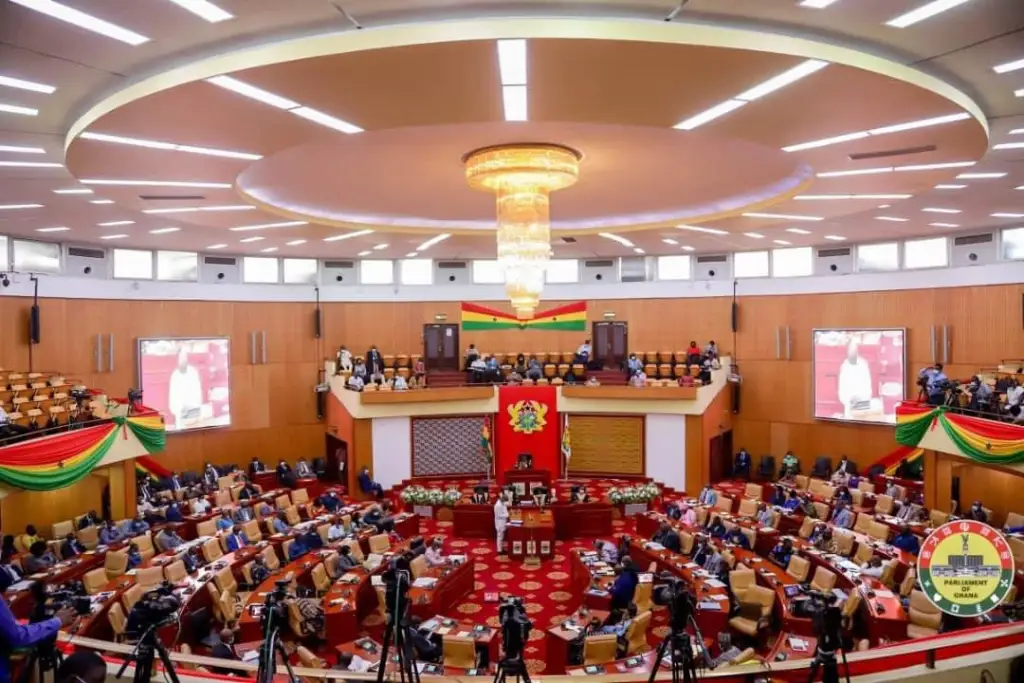
Parliament has rejected a motion by the Minority seeking to launch a full-scale investigation into Ghana’s Gold-for-Reserves programme, following a heated debate on the floor of the House.
The proposal, led by Minority Leader Alexander Afenyo-Markin, aimed to establish an ad hoc committee to examine the programme’s operations, including its financial performance, governance structure, and environmental impact. According to the Minority, growing concerns about transparency and reports of possible financial losses made such a probe necessary.
Presenting the motion, Afenyo-Markin argued that Ghanaians deserve clarity on how the programme is being managed. He questioned the logic behind reports of losses, insisting that the sale of gold should not result in financial setbacks.
“No document, no testimony should be left untouched you cannot sell gold and make losses,” he told Parliament, stressing that the proposed committee would have the authority to summon witnesses, request documents, and hold public hearings.
The Minority’s proposal outlined a broad scope of inquiry, covering the legal and regulatory framework guiding the programme, its financial and risk management systems, transparency measures, and potential environmental and public health implications. It also called for the involvement of independent experts, including forensic accountants and environmental scientists, as well as appearances from key stakeholders such as officials from the Bank of Ghana.
However, the Majority opposed the motion, ultimately leading to its rejection. Although they did not fully detail their position during the debate, their numbers were enough to block the formation of the investigative committee.
Despite the setback, the Minority maintains that its concerns remain valid and are in the national interest. They argue that recent changes to aspects of the programme, including reports of reduced charges, support their calls for closer scrutiny.
Afenyo-Markin reiterated that the push for accountability is far from over. “The era of secrecy is over,” he said, adding that the Minority will continue to demand transparency.
The Gold-for-Reserves programme remains a central government policy aimed at boosting Ghana’s foreign reserves and stabilising the economy, but the debate surrounding its management is clearly far from settled.