
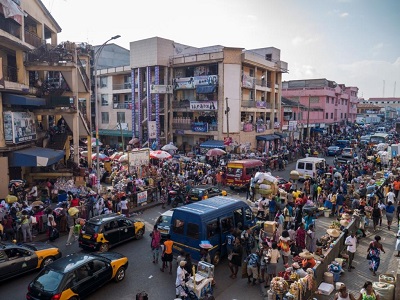
A new survey has revealed the tough reality facing thousands of street and mobile traders across Ghana: most are working long hours yet earning very little in return. According to data from the Ghana Statistical Service (GSS), about 57.1% of mobile business operators make less than GH₵100 a day, highlighting deep income struggles within this fast-growing but vulnerable sector.
The findings come from the Integrated Business Establishment Survey (IBES), which estimates that there are roughly 82,920 mobile operators nationwide. Despite their visibility in markets, traffic intersections, and neighborhoods, many of these businesses operate at survival level rather than generating sustainable profits.
Young people form the backbone of this sector. Nearly 60% of mobile traders are between the ages of 15 and 34, making it one of the largest sources of livelihood for youth, especially in cities where formal job opportunities are scarce. For many, selling on the move is not a choice but a necessity. 🚶♂️
The survey also shows that mobile trading is heavily centered on retail. About 85.2% of operators sell goods from food and water to clothing and household items. While demand for these products is constant, competition is intense and profit margins are often razor-thin, making it difficult for traders to grow beyond day-to-day survival.
Women dominate the sector, accounting for an overwhelming 77.5% of operators. This means the financial pressures within mobile trading disproportionately affect women, many of whom use these businesses to support families, pay school fees, and cover daily expenses.
Despite the challenges, mobile enterprises remain essential to Ghana’s economy. They provide convenient last-mile services, bring goods closer to consumers, and create jobs where few alternatives exist particularly in urban hubs like Accra and Kumasi.
However, the survey points to long-standing structural barriers holding these entrepreneurs back. Limited access to credit, poor infrastructure, and weak connections to formal markets make it difficult for traders to expand, formalize, or increase their earnings.
Experts say targeted interventions could transform the sector. Expanding microfinance opportunities, promoting digital payment systems, and offering practical business training could help mobile traders move from subsistence operations to stable, growth-oriented enterprises.
Until such changes take hold, millions of Ghanaians will continue to depend on small, mobile businesses that keep the economy moving even as their owners struggle to make ends meet.