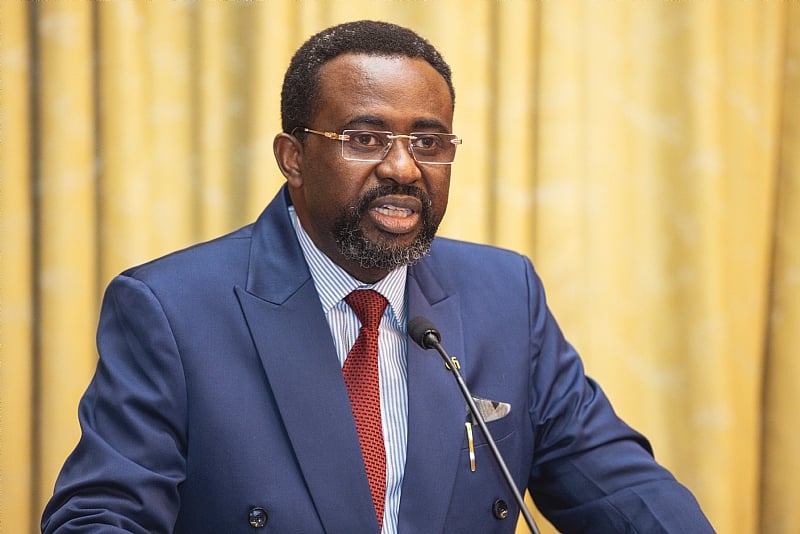



The Chief Executive Officer of the Ghana Chamber of Mines, Ken Ashigbey, has warned that soaring global gold prices have not yet translated into accelerated investment decisions within Ghana’s mining sector, as investors remain cautious amid ongoing policy and regulatory reviews.
Speaking on PM Expression Business Edition on January 29, 2026, during a discussion on “Rising Gold Prices and the Impact on Ghana’s Economy”, Mr Ashigbey explained that although gold production is on the rise, both local and foreign investors are taking a measured “wait-and-see” approach.
“In as much as production is going up, investor decisions are still cautious,” he said, attributing the hesitation to the ongoing review of Ghana’s mining policy and the Mining Act, sector-wide audits, and discussions around the introduction of a revised sliding royalty regime.
According to him, while the current gold price rally presents significant opportunities, uncertainty surrounding policy direction is influencing the timing of new investments and expansion plans. “Gold prices are good, but the question is: where are we going? That uncertainty is driving the wait-and-see attitude we are observing,” he noted.
Mr Ashigbey, however, expressed optimism that continued engagement between government authorities and industry stakeholders is gradually addressing investor concerns. He said these discussions are key to restoring confidence and ensuring greater policy certainty within the sector.
He also clarified that the cautious posture is not limited to foreign investors, stressing that several Ghanaian-owned and Ghana-focused mining companies are similarly reassessing their investment strategies. Firms such as Adamus Resources, Azumah Resources and Asante Gold Corporation, he noted, are among those with strong Ghanaian ownership currently considering further investments.
Mr Ashigbey emphasized the importance of Ghana capitalising on the historic gold price rally by increasing production, arguing that higher output would generate significant benefits for the state, investors and workers through enhanced revenues and job creation.
He pointed out that even without adjustments to royalty rates, the government is already earning more from the sector due to higher prices. “If government earned about one billion dollars in royalties when gold was trading at $2,500 per ounce, with prices now above $5,000 per ounce, the quantum of revenue has effectively doubled,” he said.
Meanwhile, he observed that large-scale gold production in Ghana has remained relatively stable at around six million ounces annually, with small-scale mining contributing approximately 3.1 million ounces. He added that rising gold prices are improving profit margins and making previously uneconomic low-grade deposits commercially viable.
Gold prices earlier this week crossed the $5,000 per ounce threshold for the first time in history and have since extended the rally, currently hovering around $5,200 per ounce. The surge has reinforced expectations of stronger revenue inflows for major gold-producing countries, including Ghana.