


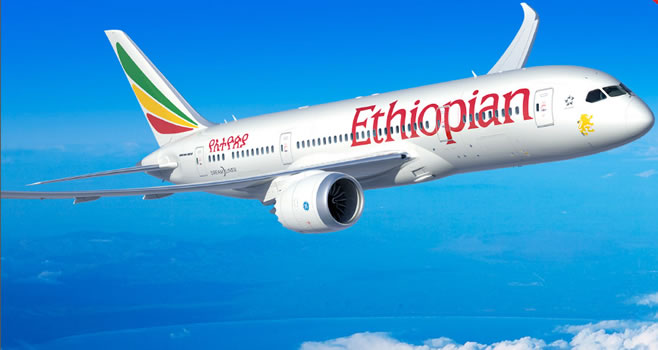
Africa’s largest and most valuable airline, Ethiopian Airlines, says it has lost about $137 million in just one week as the escalating conflict involving the United States, Israel, and Iran continues to disrupt air travel across the Middle East.
The war, which entered its eighth day on Saturday, has forced the airline to suspend flights to 10 destinations across the Gulf and the wider Middle East, significantly affecting operations at its main hub in Addis Ababa.
According to the airline’s business manager, Lemma Yadhecha, the crisis has led to the cancellation of about 15 passenger flights daily. In total, more than 100 flights each week have been halted as security concerns continue to rise across regional airspace.
“The airline has cancelled more than 100 flights a week, with some destinations previously operating up to three flights daily, and we have lost about $137 million in a week,” Yadhecha told local media.
The disruption has affected both passenger travel and cargo operations. Cargo services are a major source of revenue for the airline and serve as an important logistics link between Africa and the Middle East.
Overall, more than 160 passenger and cargo flights are now being cancelled every week. Before the conflict intensified, Ethiopian Airlines transported between 40,000 and 50,000 passengers weekly between Africa and destinations across the affected region.
To limit the financial impact, the airline has begun redeploying aircraft that previously served Middle Eastern destinations to other international routes. The move is aimed at maintaining aircraft utilisation and reducing losses while the security situation remains uncertain.
Aviation analysts warn that if the conflict continues, airlines around the world could face additional pressure, particularly from rising fuel costs. Oil prices typically increase during geopolitical tensions in the Gulf, which could significantly raise operating expenses for airlines globally.
The latest escalation began when the United States and Israel launched air strikes on Iran last weekend. Iran has since responded with missile and drone attacks across the Gulf, raising fears of a wider regional conflict.
According to estimates from the Center for Strategic and International Studies, the first 100 hours of the military campaign, known as Operation Epic Fury, cost approximately $3.7 billion, or about $891 million per day.
Beyond the economic impact, the humanitarian toll is also rising. Reports indicate that more than 1,300 civilians have been killed in Iran, including over 165 children, while military casualties have been reported among forces from the United States and Israel. Casualties have also been reported in the United Arab Emirates.
For Ethiopian Airlines, widely regarded as Africa’s aviation powerhouse and a key connector between continents, the conflict highlights how quickly geopolitical crises can disrupt global travel, trade, and aviation networks.