

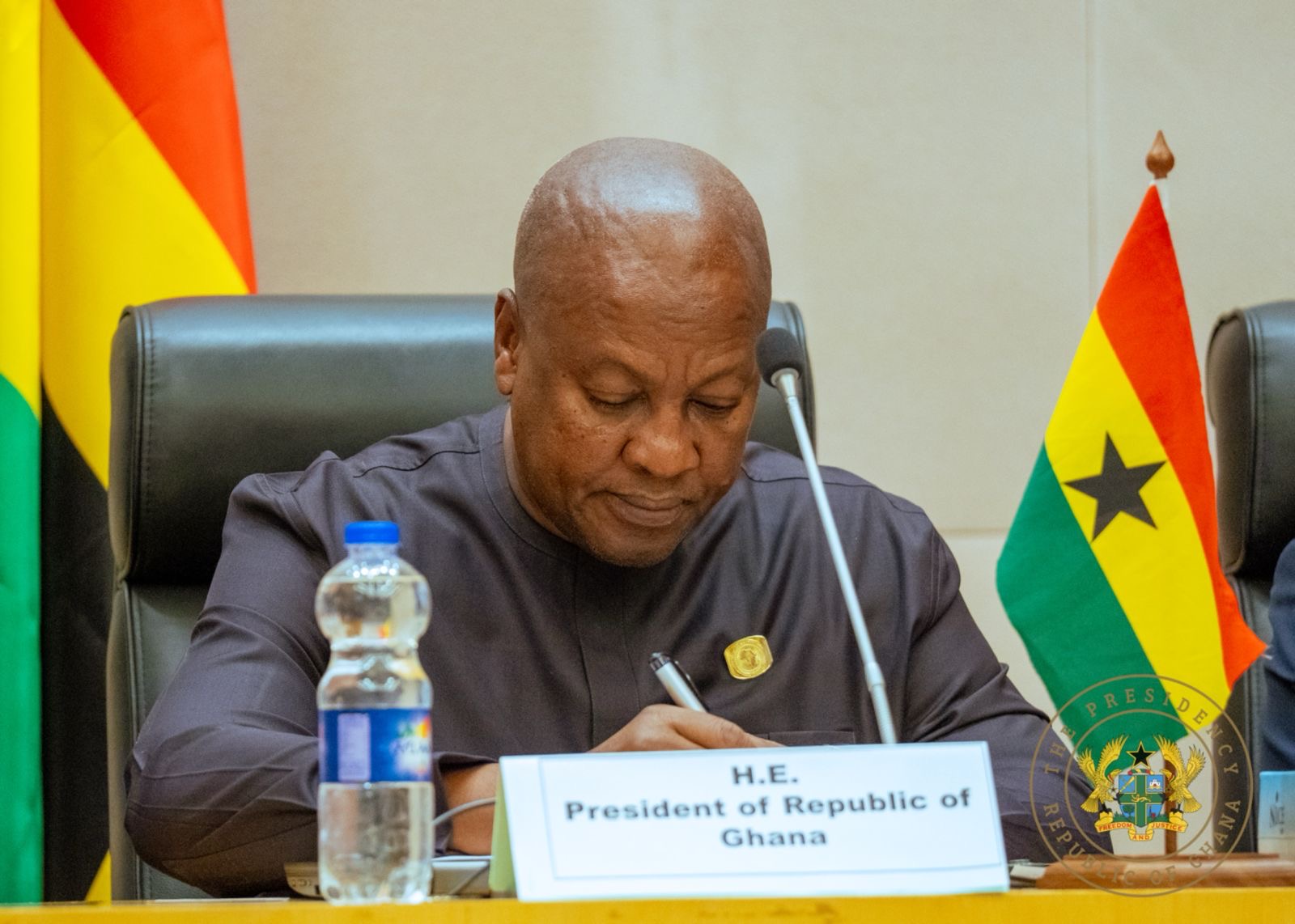
President John Dramani Mahama is set to present a landmark resolution before the United Nations General Assembly in March, seeking formal global recognition of the Transatlantic Slave Trade as the gravest crime against humanity.
The President made the announcement on Sunday while delivering his report to the 39th Assembly of Heads of State and Government, in his role as the African Union Champion for Advancing the Cause of Justice and the Payment of Reparations. His draft resolution has since been adopted by the Assembly of the African Union.
Describing the moment as long overdue, President Mahama said people of African descent across the world had been waiting for decisive global acknowledgment of the historical injustice. He stressed that the moral and legal case for recognition and reparatory justice is firmly established.
The resolution was first announced during the 80th Session of the UN General Assembly in September 2025 and represents the culmination of sustained diplomatic efforts to elevate Africa’s reparatory justice agenda on the international stage.
In his address, President Mahama highlighted progress made in setting up continental structures to pursue reparations for the enduring legacies of transatlantic enslavement, colonialism and apartheid. These include the AU Coordination Team on Reparations, the AU Committee of Experts on Reparations, and a Reference Group of Legal Experts.
He described the AU’s designation of 2025 as the Year of Justice for Africans through Reparations as a historic turning point — not merely symbolic, but a strategic commitment to securing justice and restitution.
The President further urged member states to establish national reparations commissions, formally engage with historical perpetrator states, and support the proposed Decade of Reparations to sustain momentum beyond the commemorative year.
He emphasized that reparatory justice would require unity, resolve and sustained advocacy, noting that it must be actively pursued just as political independence was.
Throughout 2025, the AU has engaged with UNESCO and the UN Permanent Forum on People of African Descent to ensure Africa’s reparations agenda remains central to global discussions on cultural restitution, historical truth-telling and emerging issues such as artificial intelligence.
A series of high-level engagements from Accra to Madrid culminating in the 9th Pan-African Congress in Lomé, have helped reshape global discourse, framing reparations not as backward-looking claims but as forward-looking instruments for justice, dignity and development.
The March presentation to the UN General Assembly is expected to mark a pivotal moment in Africa’s campaign for global recognition and redress of historical injustices against African peoples.