

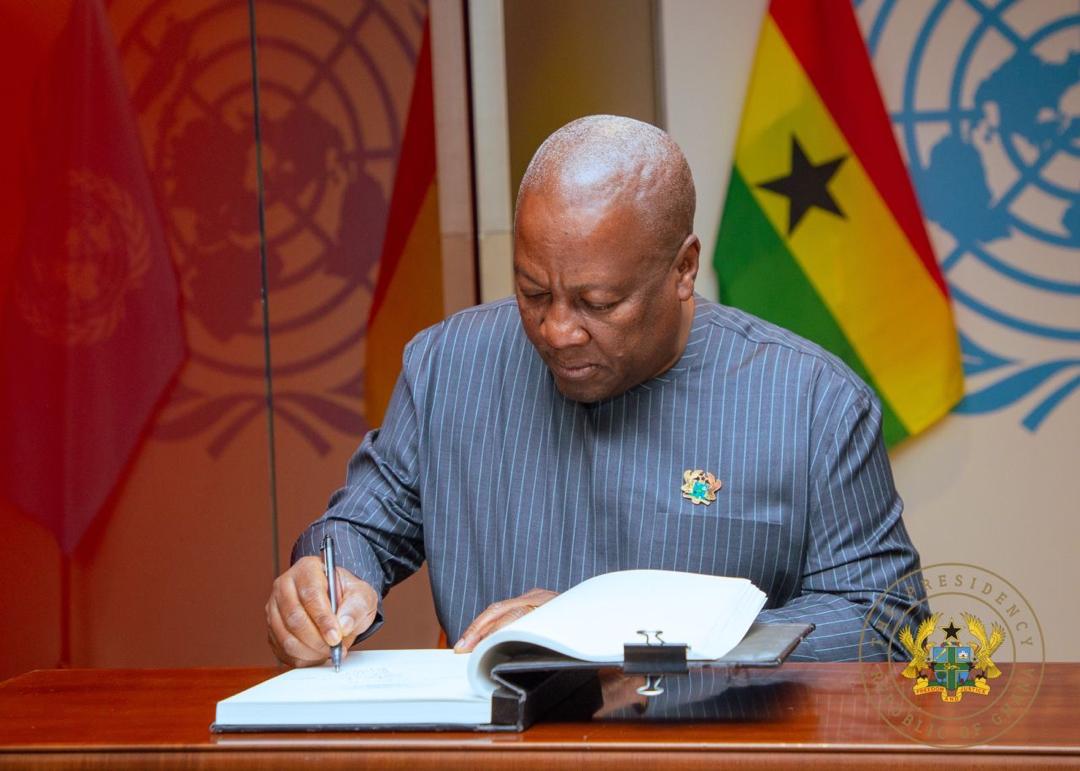
President John Dramani Mahama has urged world leaders to rise above politics and stand on the side of justice as the international community considers a landmark resolution to declare the transatlantic slave trade the gravest crime against humanity.
Speaking before the United Nations General Assembly on Wednesday, March 25, during the International Day of Remembrance of the Victims of Slavery and the Transatlantic Slave Trade, Mahama described the proposed resolution as a long-overdue acknowledgement of one of history’s darkest chapters.
He said the initiative is not about reopening old wounds but about confronting truth with honesty and laying the foundation for genuine healing and reparatory justice.
In a solemn address that resonated across the chamber, Mahama reminded delegates that the legacy of slavery still shapes global inequalities and racial discrimination today. For him, the decision before the Assembly was not just diplomatic — it was deeply moral.
“We are called to stand on the right side of history,” he said, appealing to nations to act with conscience rather than convenience.
Mahama emphasized that recognizing the transatlantic slave trade as the gravest crime against humanity would honour the memory of millions who were uprooted, brutalized, and stripped of their humanity, while also affirming the dignity of their descendants.
“Let it be recorded that when history beckoned, we did what was right,” he declared, urging delegates to ensure their vote reflects compassion and justice.
He further noted that the resolution represents a collective promise to future generations — a commitment to building a world where such atrocities can never happen again.
“For the memory of the millions who suffered the indignity of the slave trade, and those who continue to suffer racial discrimination, let our vote restore their dignity and humanity,” he added.
Mahama concluded by stressing that the choice facing the international community transcends borders and political interests. It is, he said, a defining test of humanity’s willingness to confront its past and shape a more just future.
If adopted, the resolution could strengthen global conversations on reparations, historical accountability, and racial justice, reinforcing calls from Africa and the diaspora for meaningful action rather than symbolic remembrance.