
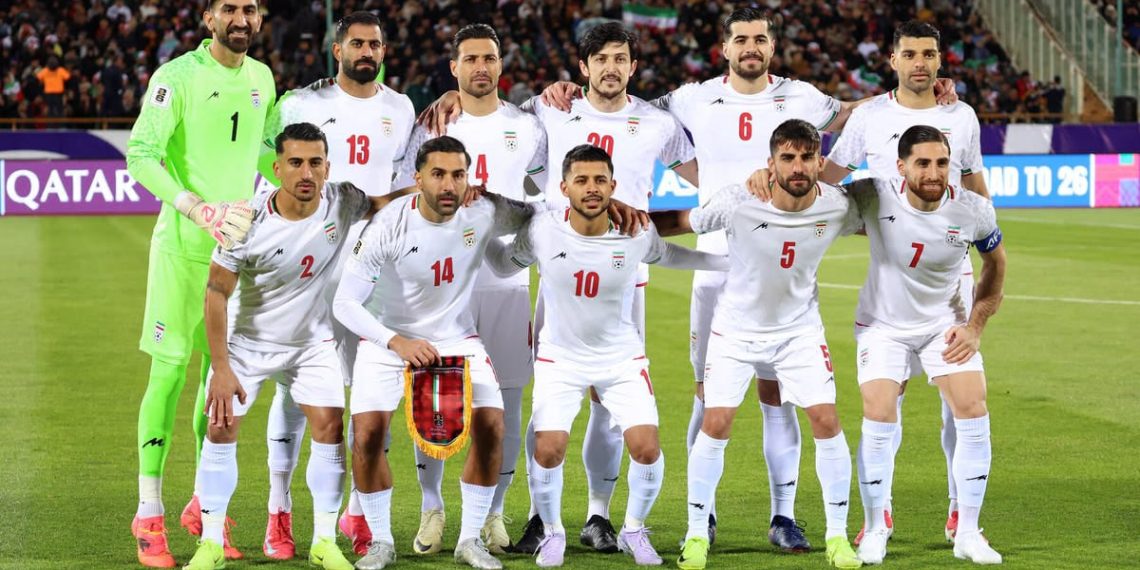
Iran’s government has indicated that its national football team will not participate in this summer’s 2026 FIFA World Cup, despite prior assurances that the country would be welcomed at the tournament.
Speaking on Wednesday, Iran’s Sports Minister Ahmad Donyamali said the decision reflects escalating political tensions following recent military developments in the Middle East. His remarks came only hours after FIFA President Gianni Infantino announced that he had received guarantees from U.S. President Donald Trump that Iran would be allowed to compete.
Infantino had met with Trump to discuss preparations for the tournament, which will be co-hosted by the United States, Canada, and Mexico. After the meeting, he publicly expressed appreciation for the assurances regarding Iran’s participation. However, Tehran’s response suggested those guarantees would not change its stance.
In a televised address, Donyamali said Iran could not take part following the reported killing of Supreme Leader Ayatollah Ali Khamenei, which Iranian officials attribute to joint U.S. and Israeli military actions. He described participation under such circumstances as unacceptable, calling the opposing side a “corrupt regime.” 🕊️
Iran had already qualified for the tournament months earlier and was scheduled to play group-stage matches in U.S. cities including Los Angeles and Seattle. One potential fixture against the United States reportedly slated for early July in Dallas had drawn particular attention given the strained relations between the two nations.
The Iranian minister also criticized FIFA’s handling of the situation, arguing that the global body would react more forcefully if similar actions were taken by other host countries. His comments underscore how geopolitical tensions are increasingly overshadowing what is typically a unifying global sporting event.
Meanwhile, the U.S. Soccer Federation has reiterated its support for Iran’s participation. CEO JT Batson said organizers remain committed to delivering a safe and inclusive tournament for all qualified teams.
Infantino’s relationship with Trump has also drawn scrutiny, particularly after the U.S. president received a FIFA peace award during the World Cup draw last December. Critics argue that politics may be influencing decisions around the competition.
Should Iran formally withdraw, FIFA has the authority to select a replacement team and could impose sanctions for non-participation. The uncertainty is already affecting preparations across the region, with neighboring countries expressing concern about how instability might impact ongoing qualification campaigns.
As the tournament approaches, the situation presents a complex challenge for FIFA balancing global politics, athlete participation, and the spirit of international sport.