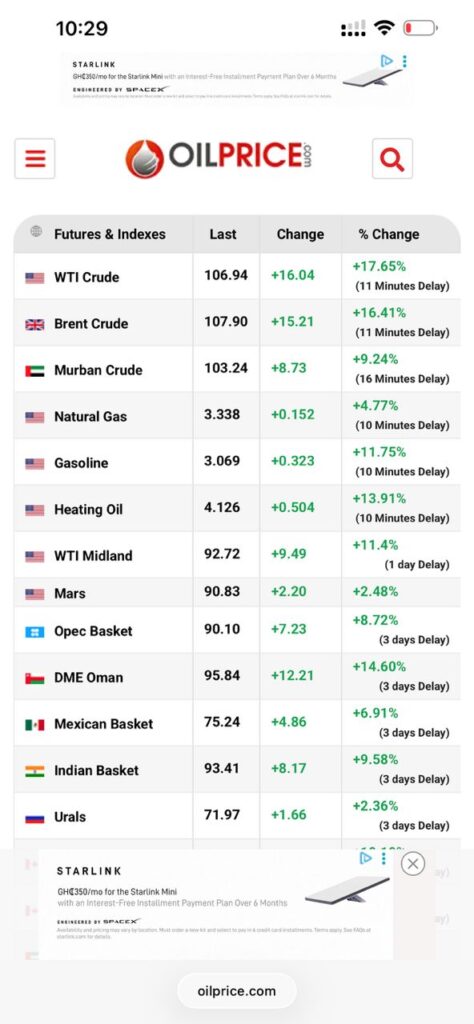
Global oil prices have climbed above $100 per barrel following escalating tensions in the Middle East that have shaken global energy markets and threatened critical supply routes.
The surge comes after the United States and Israel reportedly launched a large-scale military campaign, dubbed Operation Epic Fury, against Iran. The operation is said to have resulted in the death of Iran’s Supreme Leader, Ayatollah Ali Khamenei, along with several senior figures within the Iranian regime.
Tehran quickly retaliated with missile strikes targeting Israel and several countries across the Gulf region, raising fears that the confrontation could expand into a wider regional conflict with serious consequences for global energy supply.
Energy analysts say the situation has placed global oil markets on edge, particularly due to the potential disruption of the Strait of Hormuz one of the world’s most important oil transit routes. Roughly one-fifth of the world’s oil and liquefied natural gas shipments pass through the narrow maritime corridor.
“This is not an obscure canal. It is the aorta of the global energy system,” said Stephen Innes of SPI Asset Management, highlighting the strategic importance of the route.
Security concerns have already begun affecting energy infrastructure in the region. Operations at Saudi Arabia’s largest oil refinery in Ras Tanura were reportedly halted following a drone strike, while QatarEnergy has temporarily suspended liquefied natural gas production. Maritime security agencies have also reported attacks on several vessels operating in the Gulf.
The conflict is also beginning to disrupt global shipping routes. Danish shipping giant Maersk has announced plans to reroute its vessels away from the Suez Canal, opting instead for the longer route around the Cape of Good Hope. The change is expected to increase both shipping times and freight costs worldwide.
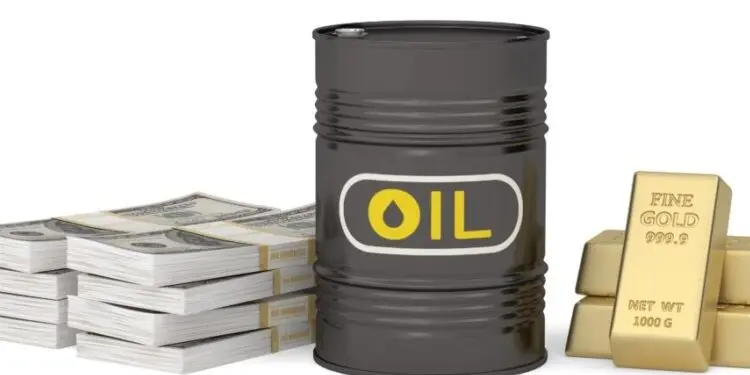
Meanwhile, the geopolitical uncertainty has driven investors toward safe-haven assets. Gold prices have surged to a record $5,426 per ounce, benefiting major gold-producing nations such as Ghana and South Africa.
Despite the potential gains for commodity exporters, economists warn that sustained high oil prices could trigger broader economic challenges. Rising energy costs often lead to higher transportation expenses and increased prices for food and other essential goods.
Market volatility has already increased, with the CBOE Volatility Index (VIX) — commonly referred to as Wall Street’s “fear gauge” — jumping nearly 17 percent amid growing investor anxiety.
Experts caution that if the conflict continues, central banks around the world may be forced to delay plans to cut interest rates as they grapple with the risk of rising inflation.
For many African economies, including Ghana, the crisis presents a mixed outlook. While higher oil and gold prices could boost export revenues, ordinary consumers may face rising fuel prices and a higher cost of living if global energy markets remain unstable.